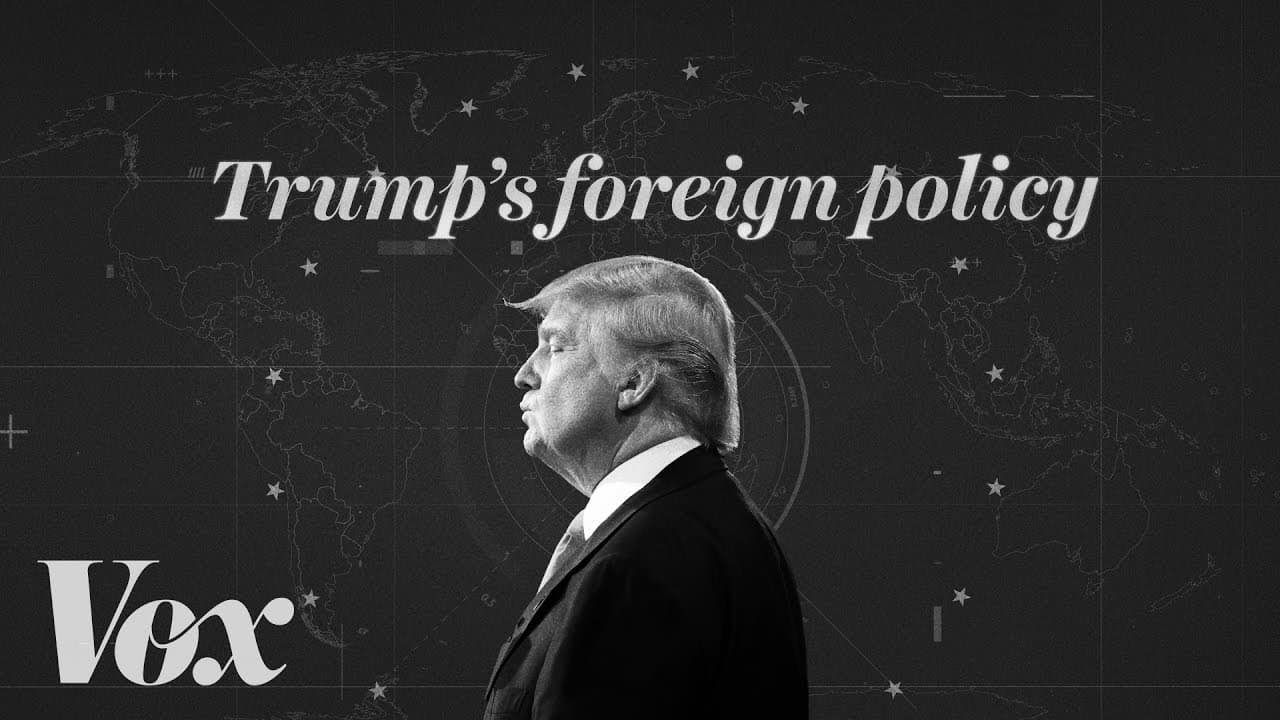
How Donald Trump thinks about foreign policy
TL;DR
Trump's foreign policy is transactional and challenges traditional alliances.
Transcript
Who are you consulting with consistently so that you're ready on day one I'm speaking with myself number one because I have a very good brain and I've said a lot of things stabilizing dangerous, dangerous to United States dangerous to the world order if you will Here to explain at Donald trump's foreign policy Oh boy, don't do that to me it's very ... Read More
Key Insights
- Donald Trump's foreign policy is characterized by a transactional worldview, where U.S. support is contingent on financial contributions from allies.
- Trump's approach to foreign policy emphasizes American interests, often advocating for the U.S. to control resources like oil to benefit economically.
- His stance on NATO challenges traditional alliances, suggesting that U.S. support depends on whether member countries meet financial commitments.
- Trump's comments on nuclear proliferation suggest a shift from traditional U.S. policy, advocating for allies like Japan and South Korea to develop their own nuclear capabilities.
- The transactional nature of Trump's foreign policy could lead to destabilization in regions like East Asia, affecting long-standing security structures.
- Trump's admiration for authoritarian figures like Vladimir Putin reflects his view of strong leadership, which contrasts with democratic governance models.
- His foreign policy rhetoric often includes militaristic solutions, such as bombing oil fields, which could lead to complex and dangerous international conflicts.
- The analysis suggests that Trump's foreign policy, while often perceived as incoherent, is underpinned by a consistent, albeit controversial, philosophy.
Install to Summarize YouTube Videos and Get Transcripts
Explore YouTube Video Summarizer or Get YouTube Transcript Extractor
Questions & Answers
Q: What is the core principle of Trump's foreign policy?
The core principle of Donald Trump's foreign policy is transactionalism, where the United States' support and involvement in international affairs are heavily influenced by financial contributions from other countries. This approach challenges traditional alliances and emphasizes American interests, focusing on economic benefits for the U.S.
Q: How does Trump view NATO and its member countries?
Trump views NATO through a transactional lens, criticizing member countries for not meeting their financial commitments. He suggests that U.S. support could be contingent on these contributions, which challenges NATO's foundational principle of collective defense and could undermine the alliance's stability.
Q: What is Trump's stance on nuclear proliferation?
Trump's stance on nuclear proliferation deviates from traditional U.S. policy by suggesting that allies like Japan and South Korea should consider developing their own nuclear weapons. This approach could lead to destabilization in East Asia and marks a significant shift from the U.S.'s historical role in preventing nuclear proliferation.
Q: How does Trump perceive authoritarian leaders like Vladimir Putin?
Trump perceives authoritarian leaders like Vladimir Putin as models of strong and effective leadership. He admires their ability to control and influence their countries, which contrasts with democratic governance models. This admiration reflects Trump's preference for decisive leadership, even if it challenges democratic norms.
Q: What are the potential risks of Trump's foreign policy approach?
The potential risks of Trump's foreign policy approach include destabilization of international alliances, increased likelihood of conflicts due to militaristic solutions, and erosion of democratic norms. His transactional worldview could lead to significant geopolitical shifts, particularly in regions like East Asia and within NATO.
Q: How does Trump's foreign policy affect U.S. relations with East Asia?
Trump's foreign policy could destabilize U.S. relations with East Asia by advocating for allies like Japan and South Korea to develop their own nuclear capabilities. This shift from the U.S.'s role as a security guarantor could lead to increased tensions and alter the region's security dynamics significantly.
Q: What is the significance of Trump's comments on oil and resources?
Trump's comments on oil and resources signify his mercantilist approach to foreign policy, where controlling resources is seen as beneficial for the U.S. economically. This perspective could lead to aggressive actions, such as taking control of oil fields, which may result in complex international conflicts.
Q: How does Trump's foreign policy philosophy contrast with previous administrations?
Trump's foreign policy philosophy contrasts with previous administrations by prioritizing transactional relationships over long-standing alliances and collective security. His focus on economic benefits and admiration for authoritarian leadership diverge from traditional U.S. diplomatic practices, which emphasized cooperation, stability, and democratic values.
Summary & Key Takeaways
-
Donald Trump's foreign policy is centered around a transactional approach, where U.S. support is linked to financial contributions from allies. This philosophy challenges traditional alliances and could lead to significant changes in international relations, particularly with NATO and in East Asia.
-
Trump's worldview emphasizes American interests, advocating for control over resources like oil to benefit the U.S. economically. His stance on nuclear proliferation marks a departure from established U.S. policy, suggesting allies should develop their own nuclear capabilities.
-
Admiration for authoritarian leaders like Vladimir Putin highlights Trump's preference for strong leadership, which contrasts with democratic norms. Despite perceptions of incoherence, Trump's foreign policy is underpinned by a distinct philosophy that could have far-reaching implications.
Read in Other Languages (beta)
Share This Summary 📚
Summarize YouTube Videos and Get Video Transcripts with 1-Click
Try YouTube Summary with ChatGPT & Claude or YouTube Transcript Generator
Explore More Summaries from Vox 📚

Summarize YouTube Videos and Get Video Transcripts with 1-Click
Try YouTube Summary with ChatGPT & Claude or YouTube Transcript Generator