How to Effectively Manage Project Risks
TL;DR
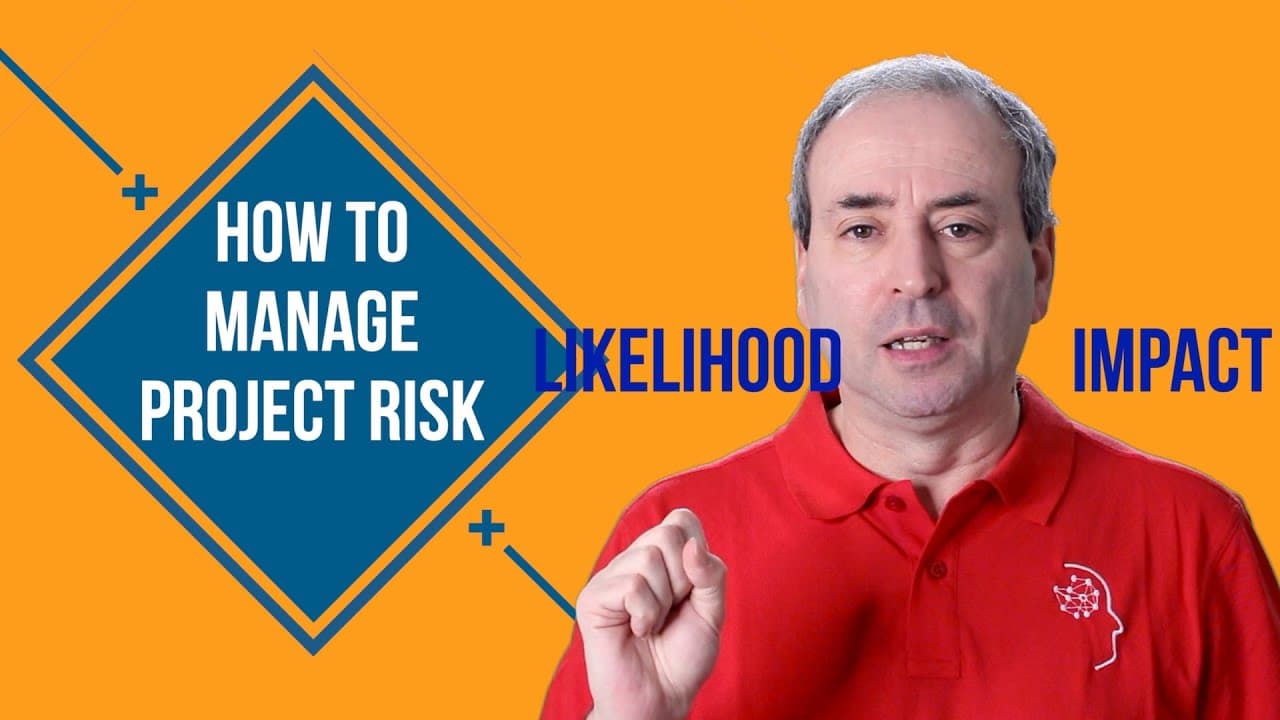
Effective project risk management involves four key steps: identifying risks, analysing their likelihood and impact, planning strategies to address those risks, and implementing actions while monitoring outcomes. A risk register is essential for tracking and managing risks throughout the project life cycle, ensuring that risks do not control the project's success.
Transcript
in this video I want to give you an overview of risk management and how to manage project risk risk management is a core part of all project management and the reason is simple projects are novel and uncertain endeavors and that novelty that uncertainty means that things can happen that you're not expecting projects are inherently risky and so we n... Read More
Key Insights
- 📽️ Risk management is essential in project management due to the inherent uncertainty and novelty of projects.
- 📽️ Identifying risks can be done through brainstorming, category analysis, and referencing previous projects.
- ✳️ Effective risk analysis involves estimating the likelihood and impact of each risk, keeping it simple to avoid inaccurate estimations.
- 💯 The six core strategies for handling risks include removal, reduction, transfer, acceptance with contingency planning, and acceptance without mitigation.
- ✳️ The risk register or risk log is a vital tool for managing risks throughout the project and ensuring accountability for each risk.
- 🌱 Regularly taking action, monitoring the impact of implemented plans, and reviewing outcomes are crucial for successful risk management.
Install to Summarize YouTube Videos and Get Transcripts
Explore YouTube Video Summarizer or Get YouTube Transcript Extractor
Questions & Answers
Q: What is the importance of risk management in project management?
Risk management is crucial in project management as projects are inherently risky and unpredictable, and managing risks allows project managers to stay in control of their projects and minimize potential negative impacts.
Q: How can you identify risks in a project?
Risks can be identified by brainstorming with a group of stakeholders, considering different aspects of the project, and analyzing risks from previous projects. Keeping a master list of risks from previous projects can also help in identifying potential risks for new projects.
Q: How do you analyze risks in project management?
Risk analysis involves understanding the likelihood and impact of each risk. Estimating likelihood can be done using a simple scale of low, medium, and high, while impact can be measured based on factors like budget, schedule, reputation, or project objectives.
Q: What are the core strategies for handling risks in project management?
The six core strategies for handling risks are: removing the risk entirely, reducing the likelihood or impact of the risk, transferring the risk to a third party (e.g., insurance), accepting the risk and building a contingency plan, or accepting the risk if it is low-threat and not cost-effective to mitigate.
Summary & Key Takeaways
-
Risk management is a core aspect of project management, as projects are novel and uncertain endeavors.
-
The risk management process involves four steps: identifying risks, understanding and analyzing risks, planning strategies to handle risks, and implementing and reviewing those plans.
-
The primary tool for risk management is the risk register or risk log, which helps track and manage risks throughout the project.
Read in Other Languages (beta)
Share This Summary 📚
Summarize YouTube Videos and Get Video Transcripts with 1-Click
Try YouTube Summary with ChatGPT & Claude or YouTube Transcript Generator
Explore More Summaries from Online PM Courses - Mike Clayton 📚





Summarize YouTube Videos and Get Video Transcripts with 1-Click
Try YouTube Summary with ChatGPT & Claude or YouTube Transcript Generator