Weathering and erosion | The geosphere | Middle school Earth and space science | Khan Academy
TL;DR
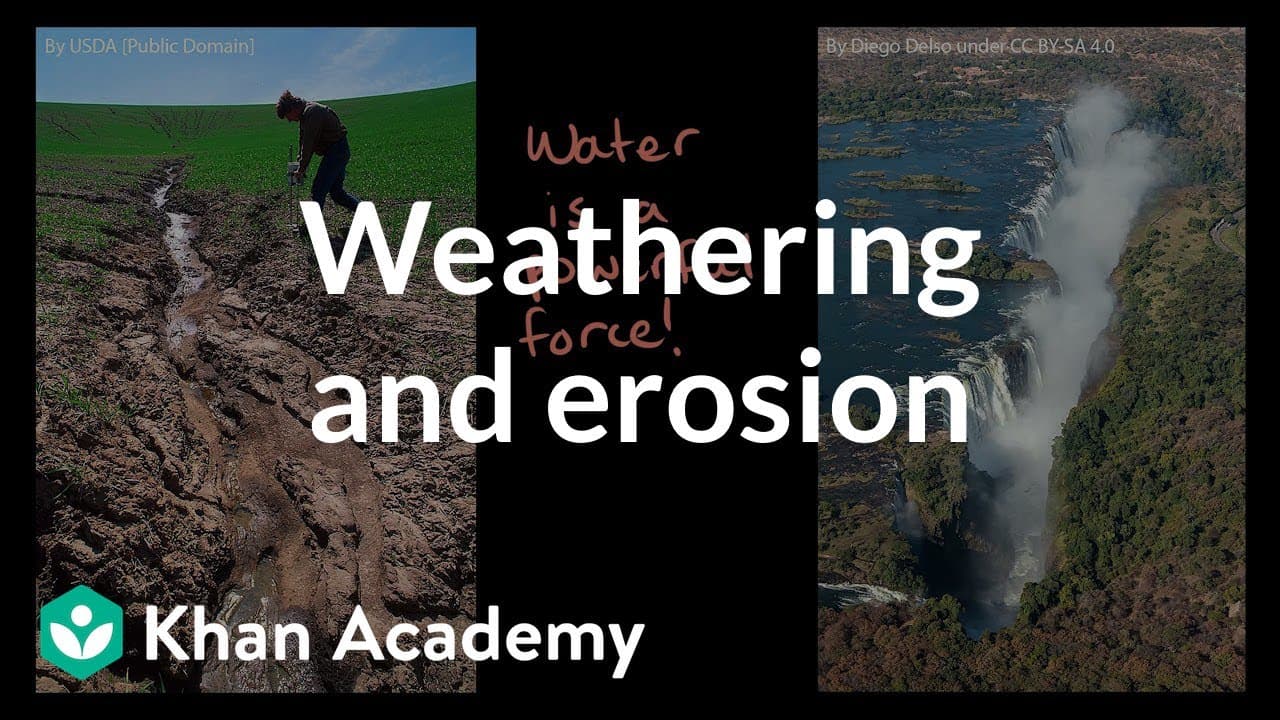
Water is a powerful force that shapes the earth through weathering and erosion processes, carving canyons, valleys, cliffs, and coastlines.
Transcript
- [Instructor] Growing up in Southern Idaho, one of my favorite places to visit was Swan Falls, a gorgeous canyon formed by the snake river. All throughout my childhood, I remember scrambling over the boulders down in this canyon and playing in the cool water at the edge of the river. Over thousands and thousands of years, water slowly eroded away ... Read More
Key Insights
- 💦 Water is a powerful force that shapes the earth's landscapes over thousands of years.
- 💦 Weathering and erosion are two processes by which water acts on rocks and sediments.
- 💦 Water erosion can be destructive by removing soil and rock, but it is also responsible for creating stunning landscapes.
- 💦 The speed of water flow and the volume of water determine its erosional power.
- 🦾 Mechanical weathering occurs when raindrops dislodge soil particles and damage soil structure.
- 🥺 Erosion by water starts with rain and leads to the transportation of sediment by streams and rivers.
- 🥺 Chemical weathering occurs when water dissolves certain rocks and minerals, leading to the formation of sinkholes, caves, and cliffs.
Install to Summarize YouTube Videos and Get Transcripts
Explore YouTube Video Summarizer or Get YouTube Transcript Extractor
Questions & Answers
Q: How does water shape the earth's landscapes?
Water shapes the earth by slowly eroding rock and sediment over time, forming canyons, valleys, cliffs, and coastlines. It has the power to wash away soil and carve away rock bit by bit.
Q: What is the difference between weathering and erosion?
Weathering is the process of water breaking rocks apart, while erosion refers to water carrying away surface soil, sediments, and broken-down rock. Weathering prepares the materials for erosion to transport.
Q: How does the speed of water flow affect erosion?
Faster moving water can carry more sediment, leading to increased erosion. A larger river can erode more soil and rock quicker than a smaller river. The fastest water flow occurs on the outside of bends in rivers, causing erosion, while the inside of bends experiences slower flow and sedimentation.
Q: How does water cause chemical weathering?
Water can dissolve certain types of rocks and minerals through chemical weathering. Acids in water can dissolve these materials, leading to the formation of sinkholes, caves, and cliffs. Limestone is particularly susceptible to this type of erosion.
Summary & Key Takeaways
-
Water slowly erodes rock and sediment over thousands of years, forming canyons like Swan Falls in Southern Idaho.
-
Weathering is the process of water breaking rocks apart, while erosion refers to water carrying away surface soil and sediment.
-
Water erosion starts with rainstorms, which dislodge soil particles and damage soil structure, eventually leading to the transportation of sediment by streams and rivers.
Read in Other Languages (beta)
Share This Summary 📚
Summarize YouTube Videos and Get Video Transcripts with 1-Click
Try YouTube Summary with ChatGPT & Claude or YouTube Transcript Generator
Explore More Summaries from Khan Academy 📚



Summarize YouTube Videos and Get Video Transcripts with 1-Click
Try YouTube Summary with ChatGPT & Claude or YouTube Transcript Generator