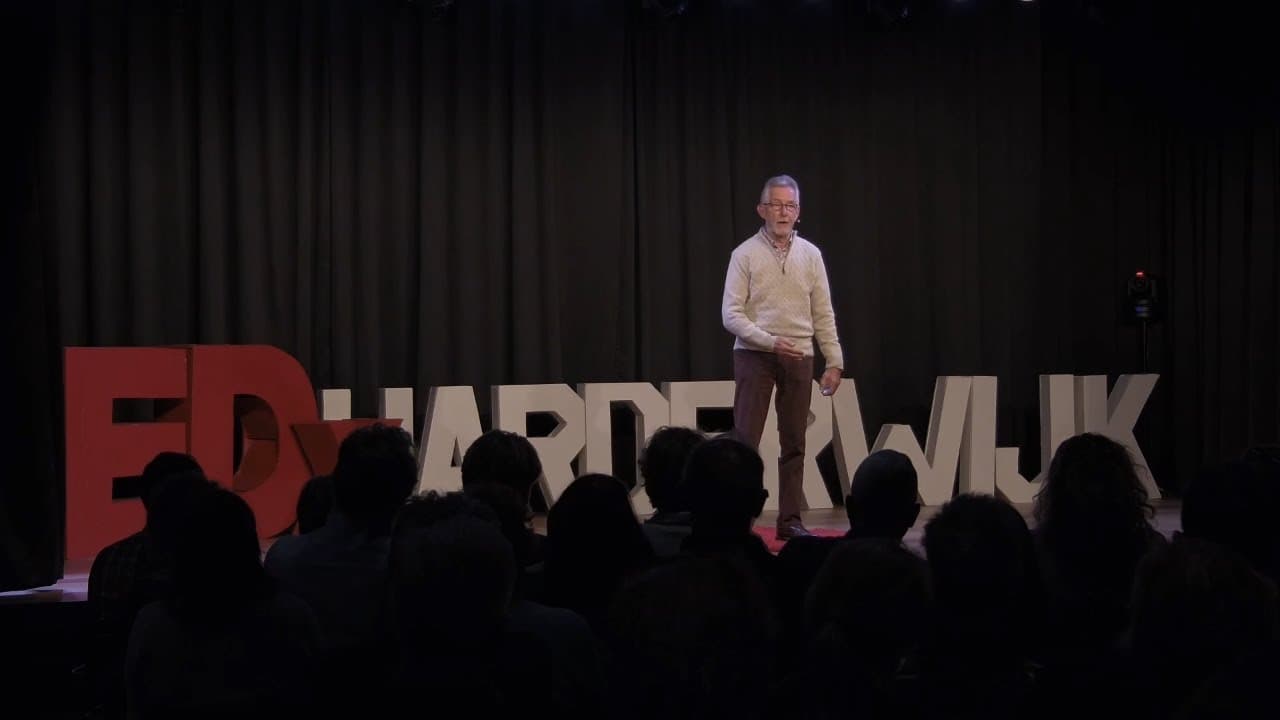
It's time to stop telling time | Richard Gault | TEDxHarderwijk
TL;DR
Clock time drives technology and growth but disconnects us from nature.
Transcript
[Applause] I want to talk about time our time the time we are living in it is a time of unprecedented ecological and environmental threats but it is also a time when the airports are as busy as ever and when governments are reluctant to address the problems or are even scaling back on attempts to do so for example here in the Netherlands the speed ... Read More
Key Insights
- ⏲️ The invention of accurate mechanical clocks allowed for precise time measurement, which enabled scientific and technological progress but distanced us from the natural world.
- ⏲️ Standardized clock time promotes a culture of productivity and growth, often at the expense of environmental sustainability and health.
- 👶 Technological solutions to ecological problems tend to overlook the underlying issues, as new innovations can introduce different environmental concerns.
- ⏲️ The distinction between natural time and clock time is crucial; the former encourages a deeper understanding of our existence and connection to the past.
- 🧑🏭 Complacency regarding ecological threats stems from an over-reliance on technological solutions, which undermines the urgency to act.
- 🍝 A focus on the past provides valuable lessons for preparing for the future, emphasizing the importance of learning from historical civilizations.
- ⏲️ The artificial nature of clock time invites a disconnect from the inherent cycles of nature, fostering carelessness toward environmental stewardship.
Install to Summarize YouTube Videos and Get Transcripts
Explore YouTube Video Summarizer or Get YouTube Transcript Extractor
Questions & Answers
Q: How did the invention of the mechanical clock change our relationship with time and nature?
The mechanical clock introduced a standardized, artificial measurement of time that divorced us from natural rhythms, such as sunrise and sunset. This change facilitated technological advancements, which, while improving life standards, also led to neglect of ecological impacts, contributing to pollution and climate change.
Q: What are the consequences of our society's focus on growth measured by clock time?
Our focus on relentless growth results in prioritizing short-term productivity and economic performance over ecological well-being. This has led to unsustainable practices that damage the environment, highlighting a disconnect between our technological achievements and the natural world that supports us.
Q: Can technology genuinely solve environmental problems caused by modern advances?
While technology has the potential to mitigate some issues, such as developing electric cars to reduce pollution, it can also introduce new problems. For example, mining for lithium for batteries poses environmental risks, and technology may not be capable of fully addressing the root causes of ecological crises.
Q: How does natural time differ from clock time in understanding our existence?
Natural time emphasizes experiences and feelings rather than the rigid intervals dictated by clocks. In natural time, we are present and aware, learning from our past to inform our actions, while clock time separates us from the essence of our existence and the rhythms of nature.
Q: Why do we often overlook the urgency of ecological threats in favor of technological optimism?
The confidence in science and technology fosters a belief that solutions will emerge from innovation, leading to complacency regarding urgent ecological issues. This reliance often downplays the gravity of environmental degradation because we assume human ingenuity can easily resolve these challenges.
Q: How can society benefit from a shift back to natural time?
By embracing natural time, society can reconnect with the environment and prioritize sustainable living. This approach encourages learning from historical patterns and past civilizations, allowing for deeper insights into fostering a balance between technological advancement and ecological preservation.
Summary & Key Takeaways
-
The advent of accurate mechanical clocks has transformed our perception and management of time, fostering technological advancements at the cost of ecological damage.
-
Our reliance on standardized clock time has led to a focus on productivity and growth, often neglecting environmental consequences and our connection to the natural world.
-
Addressing ecological threats requires a shift from clock time to natural time, allowing us to learn from the past and prepare meaningfully for the future.
Read in Other Languages (beta)
Share This Summary 📚
Summarize YouTube Videos and Get Video Transcripts with 1-Click
Try YouTube Summary with ChatGPT & Claude or YouTube Transcript Generator
Explore More Summaries from TEDx Talks 📚




Summarize YouTube Videos and Get Video Transcripts with 1-Click
Try YouTube Summary with ChatGPT & Claude or YouTube Transcript Generator