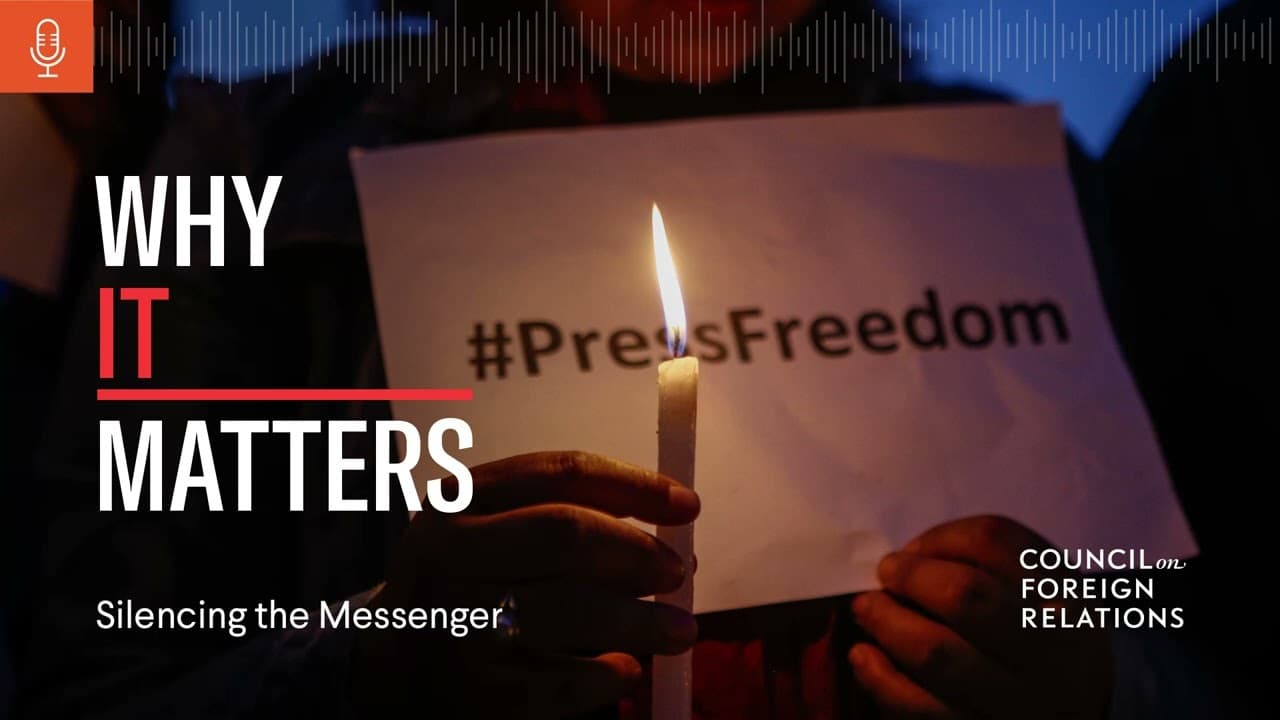
Silencing the Messenger: Are Global Threats to Press Freedom Getting Worse?
TL;DR
Journalists face increasing dangers worldwide, especially in Latin America.
Transcript
Gabrielle SIERRA: Hey everyone - I am so happy to report that our show has been nominated for a Webby! And we’re super honored to be recognized alongside such amazing podcasts BUT we’d be even more honored if we won! So if you could vote for us, head over to vote.webbyawards.com and vote for Why It Matters. Thanks! On with the show. The news ... Read More
Key Insights
- The rise of authoritarian populism globally is making journalism an increasingly perilous profession, especially in Latin America.
- Mexico is one of the most dangerous places for journalists, with a high number of journalist deaths attributed to gang violence and political corruption.
- The use of spyware like Pegasus has made it easier for governments to surveil journalists, increasing the risks they face.
- In Mexico, verbal attacks on journalists by high-level government officials have normalized criticism and doubt towards the press.
- Salvadoran President Nayib Bukele has cracked down on press freedom, using social media to attack journalists and restricting access to information.
- Populist leaders worldwide, such as Viktor Orbán and Recep Tayyip Erdogan, have systematically dismantled press freedom to consolidate power.
- Despite the dangers, journalists continue to report and find new ways to circumvent obstacles, highlighting the resilience of the press.
- Press freedom is essential for healthy democracies, and the erosion of this freedom serves as a warning of democratic decay.
Install to Summarize YouTube Videos and Get Transcripts
Explore YouTube Video Summarizer or Get YouTube Transcript Extractor
Questions & Answers
Q: What are the main challenges journalists face in Latin America?
Journalists in Latin America face numerous challenges, including violence from gangs and political corruption. Mexico is particularly dangerous, with a high number of journalist deaths. Additionally, the rise of authoritarian populism has led to increased surveillance and verbal attacks from government officials, further endangering journalists.
Q: How has spyware affected journalists' safety?
The use of spyware like Pegasus has significantly affected journalists' safety by allowing governments to surveil them and their sources. This technology can access calls, texts, and other data, making it a powerful tool for authoritarian regimes to monitor and intimidate journalists, thus increasing the risks they face.
Q: Why is Mexico considered dangerous for journalists?
Mexico is considered dangerous for journalists due to a combination of factors, including gang violence, political corruption, and a lack of arrests and prosecutions for crimes against journalists. The government's verbal attacks on the press have normalized doubt and criticism, contributing to an environment where violence against journalists is prevalent.
Q: How have populist leaders worldwide impacted press freedom?
Populist leaders worldwide have systematically dismantled press freedom to consolidate power. They employ tactics such as verbal attacks, restrictive laws, and surveillance to control the media narrative. Examples include leaders like Viktor Orbán in Hungary and Recep Tayyip Erdogan in Turkey, who have significantly restricted press freedom in their countries.
Q: What is the significance of press freedom in democracies?
Press freedom is crucial for healthy democracies as it ensures accountability and transparency by holding governments and institutions responsible. The erosion of press freedom serves as a warning of democratic decay, as it often precedes the consolidation of power by authoritarian regimes, stifling dissent and public discourse.
Q: How has President Bukele of El Salvador restricted press freedom?
President Bukele has restricted press freedom in El Salvador by attacking journalists on social media, limiting access to information, and using legal measures to intimidate the press. His administration has enacted laws that threaten journalists with imprisonment for reporting on gangs, and his popularity has enabled him to consolidate power and erode democratic institutions.
Q: What are the consequences of verbal attacks on journalists by government officials?
Verbal attacks on journalists by government officials can normalize public doubt and criticism of the media, leading to a culture where violence against journalists becomes more acceptable. This erosion of trust in the press undermines its role in democracy, making it harder for journalists to hold power to account and report independently.
Q: How do journalists continue to report despite the threats they face?
Despite the threats, journalists continue to report by finding new ways to circumvent obstacles, such as using secure communication methods and collaborating across borders. Their resilience highlights the importance of press freedom and the public's demand for critical journalism, which remains a vital component of democratic societies.
Summary & Key Takeaways
-
Journalists worldwide are facing increased threats, particularly in Latin America, due to authoritarian populism and anti-press sentiment. Mexico is notably dangerous for reporters, with many journalist deaths linked to violence and corruption. The rise of surveillance technology like spyware exacerbates these challenges.
-
In Mexico, government officials' verbal attacks on journalists have led to widespread doubt and criticism of the press, contributing to a culture of violence against reporters. Similar dynamics are observed in El Salvador, where President Bukele's authoritarian tactics have restricted press freedom.
-
Globally, populist leaders are targeting the press to consolidate power, echoing historical patterns of repression. Despite these challenges, journalists remain committed to their work, underscoring the importance of press freedom in sustaining democratic societies.
Read in Other Languages (beta)
Share This Summary 📚
Summarize YouTube Videos and Get Video Transcripts with 1-Click
Try YouTube Summary with ChatGPT & Claude or YouTube Transcript Generator
Explore More Summaries from Council on Foreign Relations 📚

Summarize YouTube Videos and Get Video Transcripts with 1-Click
Try YouTube Summary with ChatGPT & Claude or YouTube Transcript Generator