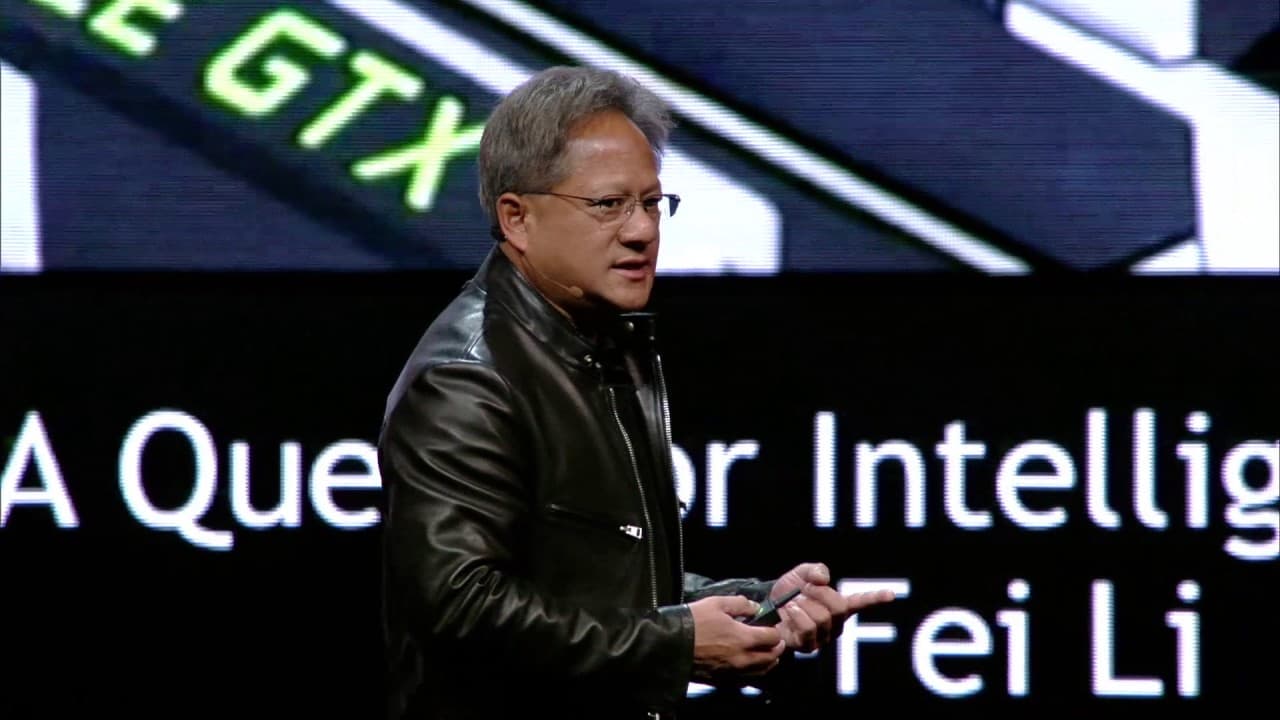
GTC 2017: Big Bang of Modern AI (NVIDIA keynote part 4)
TL;DR
Machine learning revolutionizes computing through deep learning, GPUs, and enormous data sets.
Transcript
so the first dynamic is the emergence the rise of GPU computing the second thing that happened started happened several years ago and in fact some would call this the second era not of not of processing but the second era of computing all together as you know when you guys are doing a search on Google somehow it magically knows what kind of informa... Read More
Key Insights
- 🎰 GPU computing and machine learning have transformed computing dynamics.
- 💢 The emergence of deep learning represents a new era in computing and artificial intelligence.
- 😨 Deep learning breakthroughs, like image recognition and self-driving cars, are fueled by vast data sets and GPU acceleration.
- 👤 Machine learning algorithms learn from user behavior, becoming predictive and personalized.
- 😌 The success of deep learning lies in the algorithm, data availability, and GPU utilization.
- 💻 The Big Bang of deep learning has revolutionized perception and sensing tasks in computer science.
- ❓ Generative adversarial networks are advancing image generation, style transfers, and natural language translation.
Install to Summarize YouTube Videos and Get Transcripts
Explore YouTube Video Summarizer or Get YouTube Transcript Extractor
Questions & Answers
Q: How has machine learning transformed computing?
Machine learning has enabled personalized services by learning from user behavior and interactions, making predictions and recommendations without being explicitly programmed by engineers.
Q: What is deep learning, and how has it impacted computer science?
Deep learning, facilitated by GPUs and vast data sets, has revolutionized perception tasks like image recognition, speech recognition, and even self-driving cars, advancing computer science significantly.
Q: What are the key components that enabled the breakthrough in deep learning?
The breakthrough in deep learning was made possible by the algorithm itself, enormous data sets for training, and the discovery of using GPUs to accelerate the training process, collectively leading to a Big Bang in modern AI.
Q: How are generative adversarial networks changing the landscape of deep learning?
Generative adversarial networks are training two networks simultaneously, leading to advancements in image generation, style transfers, voice synthesis, and natural language translation, showcasing the diverse applications of deep learning.
Summary & Key Takeaways
-
GPU computing and machine learning have revolutionized computing, leading to personalized services like Google search and Netflix recommendations.
-
Machine learning algorithms now learn from user behavior, becoming predictive and anticipating needs.
-
Deep learning, accelerated by GPUs and enormous data sets, has led to significant progress in computer science, especially in perception and sensing tasks.
Read in Other Languages (beta)
Share This Summary 📚
Summarize YouTube Videos and Get Video Transcripts with 1-Click
Try YouTube Summary with ChatGPT & Claude or YouTube Transcript Generator
Explore More Summaries from NVIDIA 📚


Summarize YouTube Videos and Get Video Transcripts with 1-Click
Try YouTube Summary with ChatGPT & Claude or YouTube Transcript Generator