How Old Is HD 140283 and Why Is It Significant?
TL;DR
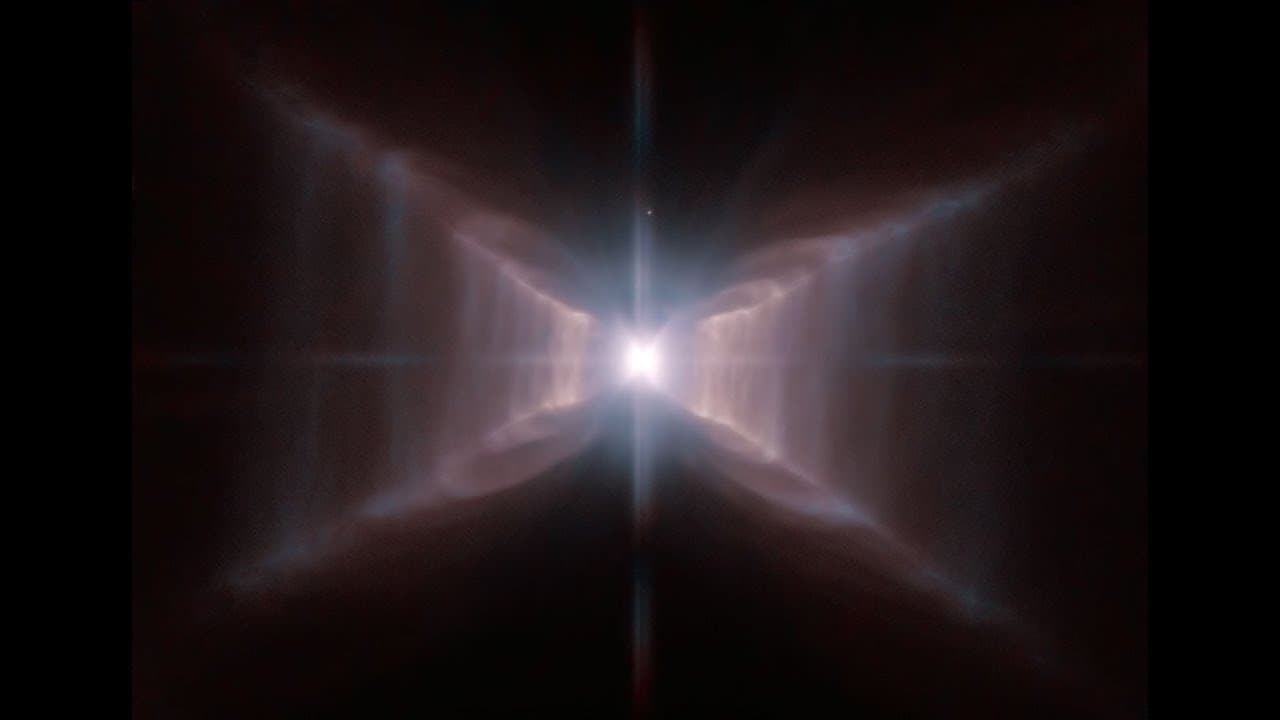
HD 140283 is estimated to be 14.46 billion years old, potentially making it older than the universe itself. This discrepancy challenges our understanding of the big bang theory, as the universe is currently thought to be 13.8 billion years old. The star's low metallicity suggests it may be a second-generation star, having formed after a primordial star went supernova.
Transcript
As our knowledge of the universe grows, so does a list of anomalous objects that don't seem to fit into established categories. Some of these are famous, such as KIC 8462852, and others are more obscure, such as Przybylski's star, link to that video in the end screen. But one star stands out as not merely an anomaly in its behavior or characteristi... Read More
Key Insights
- 🤕 HD 140283 is a subgiant star with an age that appears to conflict with the age of the universe.
- 🌟 Stars can be aged based on their metallicity, with low metal stars indicating older ages.
- 🤕 The age determination of HD 140283 raises questions about our understanding of the universe's age and the big bang theory.
- 🤩 The star's potential age older than the universe challenges current scientific knowledge.
- 🤩 The presence of metals in HD 140283 suggests it is a second-generation star, formed after a progenitor star went supernova.
- 🤩 Population III stars, the first-generation stars, are believed to have kickstarted the formation of other stars and planets.
- 🥳 HD 140283 has likely witnessed most of the universe's history.
Install to Summarize YouTube Videos and Get Transcripts
Explore YouTube Video Summarizer or Get YouTube Transcript Extractor
Questions & Answers
Q: How is the age of a star determined?
The age of a star can be determined based on various factors, including the abundance of metals it contains. Stars with lower metallicity are generally considered older.
Q: What does the age of HD 140283 imply?
If HD 140283 is indeed older than the universe, it could mean that our understanding of the age of the universe is incorrect or that there are stars that existed before the big bang.
Q: What are population III stars?
Population III stars are hypothetical first-generation stars that were believed to be composed entirely of hydrogen and helium. They are thought to have kickstarted the process of star and planet formation.
Q: Can HD 140283 have any planets?
HD 140283 is unlikely to have any planets because it formed when there were fewer heavy elements available for planet formation. Unless it captured planets later, it is likely to be planet-less.
Summary & Key Takeaways
-
HD 140283 is a subgiant star that stands out as an anomaly in time, appearing to be older than the universe.
-
Stars can be aged based on the abundance of metals they contain, and HD 140283 is a low metal star, indicating it could be very old.
-
However, the star's age conflicts with the age of the universe as determined by the Planck satellite.
Read in Other Languages (beta)
Share This Summary 📚
Summarize YouTube Videos and Get Video Transcripts with 1-Click
Try YouTube Summary with ChatGPT & Claude or YouTube Transcript Generator
Explore More Summaries from John Michael Godier 📚
Summarize YouTube Videos and Get Video Transcripts with 1-Click
Try YouTube Summary with ChatGPT & Claude or YouTube Transcript Generator