Products
Features
YouTube Video Summarizer
Summarize YouTube videos
Web & PDF Highlighter
Highlight web pages & PDFs
Chat with PDF
Ask any PDF questions with AI
Ask AI Clone
Chat with your highlights & memories
Audio Transcriber
Transcribe audio files to text
Glasp Reader
Read and highlight articles
Kindle Highlight Export
Export your Kindle highlights
Idea Hatch
Hatch ideas from your highlights
Integrations
Obsidian Plugin
Notion Integration
Pocket Integration
Instapaper Integration
Medium Integration
Readwise Integration
Snipd Integration
Hypothesis Integration
Apps & Extensions
Chrome Extension
Safari Extension
Edge Add-ons
Firefox Add-ons
iOS App
Android App
Discover
Discover
Ideas
Discover new ideas and insights
Articles
Curated articles and insights
Books
Book recommendations by great minds
Posts
Essays and notes from readers
Quotes
Inspiring quotes collection
Videos
Curated videos and summaries
Explore Glasp
Glasp Newsletter
Weekly insights and updates
Glasp Talk
Interview series with great minds
Glasp Blog
Latest news and articles
Glasp Use Cases
Learn how others use Glasp
Build & Support
Glasp API
Access Glasp's API for developers
MCP Connector
Connect Glasp to Claude & ChatGPT
Community
Glasp Reddit Community
Students
Student discount and benefits
FAQs
Frequently Asked Questions
AboutPricing
DashboardLog inSign up

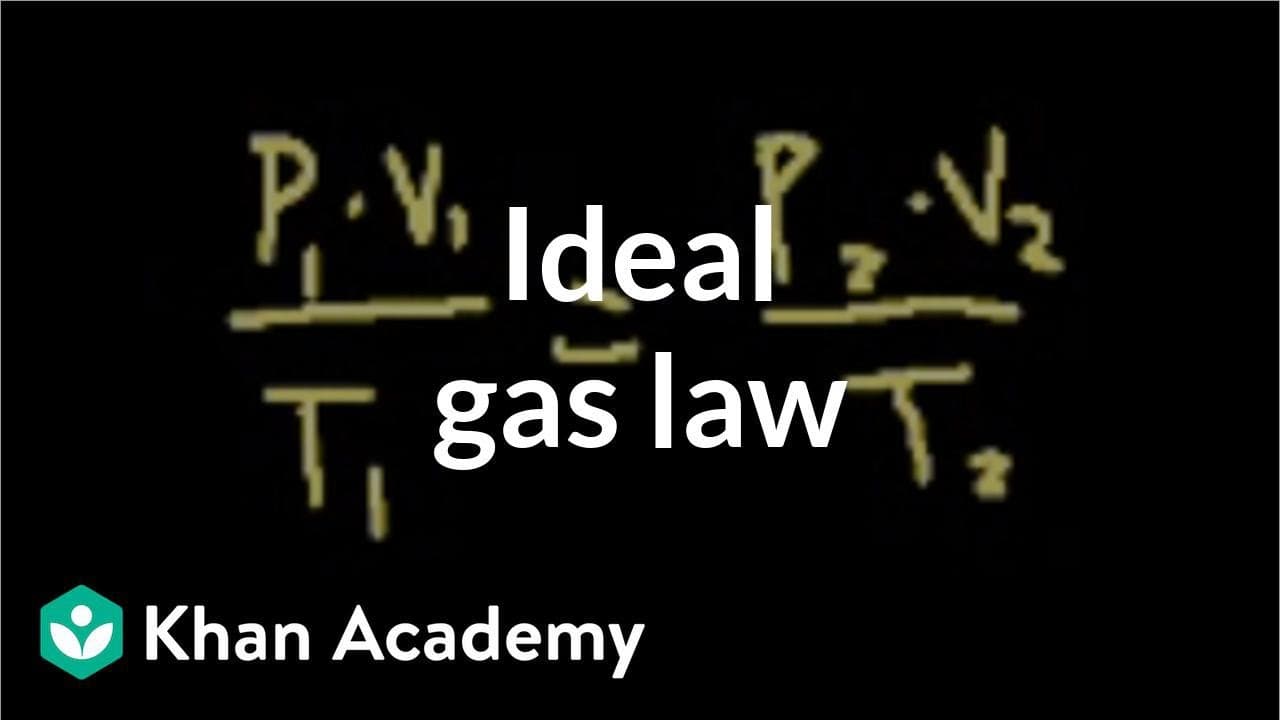
Thermodynamics part 2: Ideal gas law | Thermodynamics | Physics | Khan Academy
April 25, 2008
by
Khan Academy
YouTube video player
Thermodynamics part 2: Ideal gas law | Thermodynamics | Physics | Khan Academy

TL;DR

When pressure is increased or volume is decreased, the pressure within a container increases. Similarly, when temperature increases, both pressure and volume also increase.

Transcript

Welcome back. In the last video, I told you that pressure times volume is a constant. That if you increase the pressure-- or if you increase the volume, you're going to decrease the pressure. Hopefully, you got an intuitive sense why. Or likewise, if you squeezed the balloon, or the box, and there are no openings there, then the pressure within the... Read More

Key Insights

  • 🔇 Pressure and volume have an inverse relationship in a container.
  • 🥺 When a container is compressed, the pressure inside increases, while an expansion of the container leads to a decrease in pressure.

Install to Summarize YouTube Videos and Get Transcripts

Explore YouTube Video Summarizer or Get YouTube Transcript Extractor

Questions & Answers

Q: How does pressure change when volume decreases?

When volume decreases, the pressure inside a container increases. This is because the same amount of gas molecules is confined in a smaller space, leading to more collisions with the container walls.

Q: What happens to the pressure when a container is compressed?

When a container is compressed, the pressure inside increases. This is because the volume decreases, causing the same number of gas molecules to occupy a smaller space and collide with the container walls more frequently.

Q: How does temperature affect pressure?

An increase in temperature leads to an increase in pressure. This is because an increase in temperature causes gas molecules to move faster, resulting in more frequent collisions with the container walls and thus higher pressure.

Q: How does temperature affect volume?

When temperature increases, the volume of a gas expands. This is because an increase in temperature causes gas molecules to move more vigorously, leading to a greater separation between the molecules and an expansion of the gas.

Summary & Key Takeaways

  • Pressure is inversely related to volume, meaning that when volume decreases, pressure increases.

  • When a container is compressed, the pressure inside increases.

  • Temperature affects pressure and volume, with an increase in temperature leading to an increase in both.


Read in Other Languages (beta)

English

Share This Summary 📚

Summarize YouTube Videos and Get Video Transcripts with 1-Click

Download browser extensions on:

Try YouTube Summary with ChatGPT & Claude or YouTube Transcript Generator

Explore More Summaries from Khan Academy 📚

Breakthrough Junior Challenge Winner Reveal! Homeroom with Sal - Thursday, December 3 thumbnail
Breakthrough Junior Challenge Winner Reveal! Homeroom with Sal - Thursday, December 3
Khan Academy
Interview with Karina Murtagh thumbnail
Interview with Karina Murtagh
Khan Academy
Classical Japan during the Heian Period | World History | Khan Academy thumbnail
Classical Japan during the Heian Period | World History | Khan Academy
Khan Academy

Summarize YouTube Videos and Get Video Transcripts with 1-Click

Download browser extensions on:

Try YouTube Summary with ChatGPT & Claude or YouTube Transcript Generator

Apps & Extensions

  • Chrome Extension
  • Safari Extension
  • Edge Add-ons
  • Firefox Add-ons
  • iOS App
  • Android App

Key Features

  • YouTube Video Summarizer
  • Web & PDF Summarizer
  • Web & PDF Highlighter
  • Chat with PDF
  • Ask AI Clone
  • Audio Transcriber
  • Glasp Reader
  • Kindle Highlight Export
  • Idea Hatch

Integrations

  • Obsidian Plugin
  • Notion Integration
  • Pocket Integration
  • Instapaper Integration
  • Medium Integration
  • Readwise Integration
  • Snipd Integration
  • Hypothesis Integration

More Features

  • APIs
  • MCP Connector
  • Blog & Post
  • Embed Links
  • Image Highlight
  • Personality Test
  • Quote Shots

Company

  • About us
  • Blog
  • Community
  • FAQs
  • Job Board
  • Newsletter
  • Pricing
Terms

•

Privacy

•

Guidelines

© 2026 Glasp Inc. All rights reserved.

