What Was the KGB and Why Was It Feared?
TL;DR
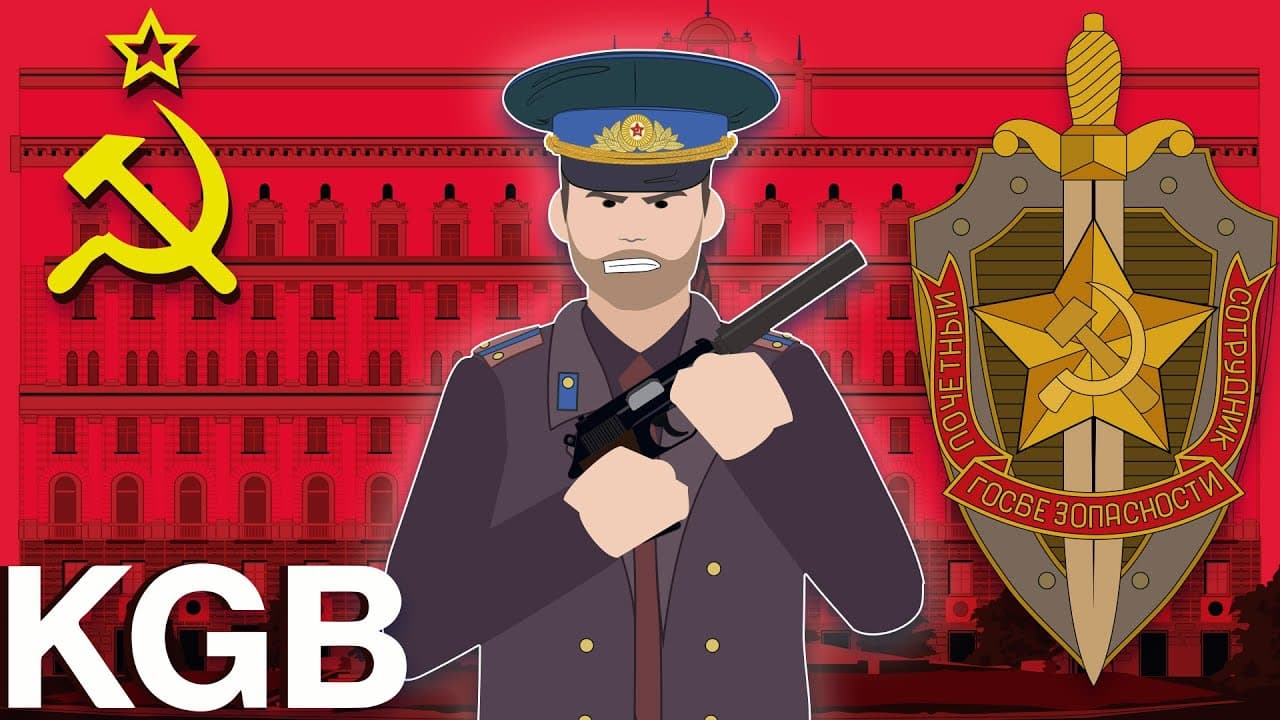
The KGB, the Soviet Union's primary intelligence and security agency active from 1954 to 1991, was feared for its role as secret police and its intense surveillance of the populace. It engaged in significant global espionage and played a crucial part in suppressing dissent, particularly during events like the Hungarian Revolution and Prague Spring.
Transcript
the KGB who they were and what they did the KGB was the chief government intelligence and Security Agency of the Soviet Union from 1954 until its collapse in 1991. the Soviet Union was made up of 15 republics Russia Armenia Azerbaijan belarusia Estonia Georgia Latvia Lithuania Moldavia Tajikistan turkmenia Ukraine Kazakhstan and Uzbekistan in some ... Read More
Key Insights
- 👮 The KGB operated as a powerful intelligence agency and secret police force, ensuring conformity to Soviet ideals and suppressing dissent within the USSR.
- 🖐️ The KGB played a significant role in international espionage, with a large network of spies operating in various countries.
- 🌍 The KGB's involvement in quashing uprisings in Eastern Europe showcased its ability to maintain control and suppress dissent through infiltration and surveillance.
- 👣 The KGB exerted influence in South Asia, particularly in Bangladesh, by manipulating political opinion and printing defamatory news articles.
Install to Summarize YouTube Videos and Get Transcripts
Explore YouTube Video Summarizer or Get YouTube Transcript Extractor
Questions & Answers
Q: What was the role of the KGB in Soviet society?
The KGB served as both an intelligence agency and a form of secret police, monitoring and suppressing political dissidents who didn't conform to Soviet ideals.
Q: How did the KGB compare to Germany's Gestapo?
The KGB was often compared to the Gestapo, as both organizations invaded homes, arrested dissidents, and maintained a pervasive surveillance system.
Q: How did the KGB impact the United States during the Cold War?
The KGB had a significant presence in the United States, with numerous Soviet spies operating there. This heightened fears of communist infiltration and led to investigations by Senator Joseph McCarthy, resulting in imprisonments and job losses.
Q: How did the KGB contribute to the quashing of uprisings in Hungary and Czechoslovakia?
The KGB worked alongside the Red Army to infiltrate pro-democratic institutions, undermine political sentiments, and report back to the Soviet government. This ultimately led to the invasion and suppression of the Hungarian Revolution and Prague Spring.
Summary & Key Takeaways
-
The KGB was the main intelligence and security agency of the USSR, consisting of intelligence services and military units.
-
It acted as a form of secret police, ensuring Soviet citizens adhered to communist ideals and suppressing political dissidents.
-
The KGB played a significant role in international espionage and was involved in major events such as the Hungarian Revolution and Prague Spring.
Read in Other Languages (beta)
Share This Summary 📚
Summarize YouTube Videos and Get Video Transcripts with 1-Click
Try YouTube Summary with ChatGPT & Claude or YouTube Transcript Generator
Explore More Summaries from Simple History 📚



Summarize YouTube Videos and Get Video Transcripts with 1-Click
Try YouTube Summary with ChatGPT & Claude or YouTube Transcript Generator