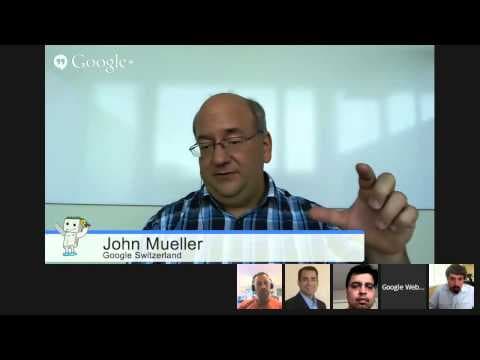
English Google SEO office-hours from January 29, 2021

TL;DR
Google SEO experts discuss Core Web Vitals, duplicate content, and site moves.
Transcript
JOHN MUELLER: All right. Welcome, everyone, to today's Google Search Central SEO Office Hours Hangout. My name is John Mueller. I'm a search advocate at Google here in Switzerland. And part of what we do are these Office Hour Hangouts, where people can join in and ask their questions around Search, and we can try to find some answers. A bunch of th... Read More
Key Insights
- Core Web Vitals are crucial for ranking, and Google aims to use them for badges in search results, requiring compliance across all factors.
- Knowledge panels are generated algorithmically without specific guidelines; aligning site content with entities can help.
- Duplicate content doesn't cause negative scores but can affect which page Google chooses to display in search results.
- Linking between language versions of a page can help distribute signals but doesn't automatically improve rankings in new languages.
- Structured data helps Google understand video content, and captions or headings can enhance this understanding.
- Embedding videos from platforms like YouTube might create competing landing pages; choosing the right platform is important.
- Site moves should involve redirecting all indexable content to transfer signals effectively; fluctuations in rankings are normal during this process.
- Subdomains and subdirectories are treated similarly by Google, but the choice should depend on infrastructure and tracking needs.
Install to Summarize YouTube Videos and Get Transcripts
Explore YouTube Video Summarizer or Get YouTube Transcript Extractor
Questions & Answers
Q: How does Google handle Core Web Vitals for ranking?
Core Web Vitals are considered in Google's ranking algorithm, with a focus on ensuring all factors are met for a page to be considered compliant. Google aims to use these metrics for displaying badges in search results, requiring full compliance across all factors, including HTTPS.
Q: What steps can be taken to generate a knowledge panel?
Knowledge panels are generated algorithmically, and there are no specific guidelines to enable them. Google considers various sources of information to associate entities with a page. Aligning site content with relevant entities can improve chances, though it's not guaranteed.
Q: Does duplicate content lead to negative SEO scores?
Duplicate content doesn't result in negative scores. Instead, Google chooses the best matching page to display in search results. It's common to have shared content across pages, and Google handles this by selecting one page to show when the same information appears on multiple pages.
Q: How does Google treat language versions of a page?
Google treats language versions as separate pages, ranking them individually. Linking between language versions can help distribute signals, but it doesn't automatically improve rankings in different languages. Competition in various languages can also affect rankings.
Q: How can video content be optimized for Google?
Structured data can be used to optimize video content, with fields for descriptions and titles. Additionally, including captions or headings near the video can provide context. Google treats uploaded and embedded videos similarly, focusing on accessibility and user experience.
Q: Is there a difference between hosting and embedding videos?
From an SEO perspective, hosting and embedding videos are treated similarly. However, embedding from platforms like YouTube can create competing landing pages. Choosing the right platform depends on user experience and content accessibility.
Q: What considerations are there for site moves?
During a site move, redirecting all indexable content is crucial to transfer signals effectively. Rankings may fluctuate initially, but Google aims to transfer signals to the new domain completely. Ensuring all technical aspects are covered is essential for a smooth transition.
Q: How does Google view subdomains versus subdirectories?
Google treats subdomains and subdirectories similarly, and the choice should depend on infrastructure and tracking needs. Both can be effective, and the decision should be based on what works best for the site's technical setup and content organization.
Summary & Key Takeaways
-
The session covers various SEO topics, focusing on Core Web Vitals and their impact on search rankings. Google plans to use these metrics for displaying badges in search results, emphasizing the need for sites to comply with all factors.
-
Knowledge panels are discussed, with insights into how they're generated algorithmically. Aligning site content with relevant entities can improve chances of obtaining a knowledge panel, although there are no specific guidelines to follow.
-
The conversation touches on duplicate content, explaining that it doesn't lead to negative scores but affects which page Google displays. Linking between language versions of a page can help distribute signals, though it doesn't guarantee improved rankings in new languages.
Read in Other Languages (beta)
Share This Summary 📚
Summarize YouTube Videos and Get Video Transcripts with 1-Click
Try YouTube Summary with ChatGPT & Claude or YouTube Transcript Generator
Explore More Summaries from Google Search Central 📚

Summarize YouTube Videos and Get Video Transcripts with 1-Click
Try YouTube Summary with ChatGPT & Claude or YouTube Transcript Generator