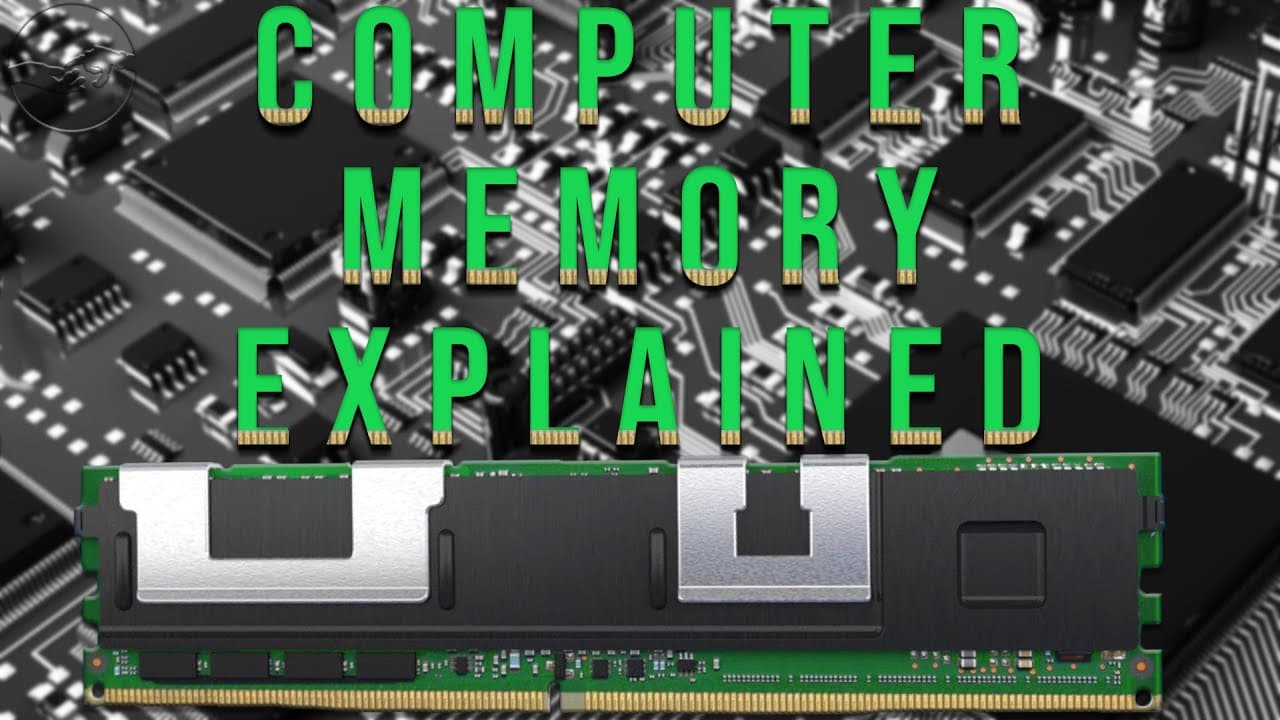
Computer Memory Explained | How RAM Works
TL;DR
Memory performance and capacity advancements vs. latency issues are tackled, highlighting new memory technologies bridging the gap.
Transcript
Hi, thanks for tuning into Singularity Prosperity. This video is the fifth in a multi-part series discussing computing. In this video, we'll be discussing the gap between competing performance and memory and how this 'memory wall' is to be the demolished. While computer performance and memory capacity have followed the trend of Moore's Law, memory... Read More
Key Insights
- 📣 Moore's Law drives performance growth but a widening latency gap challenges system efficiency.
- 🪡 Different memory devices cater to varied performance, cost, and capacity needs.
- 👈 X-Point technology revolutionizes memory performance with DRAM-like speed and NAND-like cost.
- ❓ Memory pooling and software optimizations enhance memory performance and efficiency.
- ✈️ NVME protocol revolutionizes data transfer by maximizing the potential of PCIe lanes.
- ❓ Continuous advancements in memory technologies are reshaping the memory landscape.
- 🚦 Memory vertical scaling with technologies like 3D NAND and X-Point is decreasing the memory gap.
Install to Summarize YouTube Videos and Get Transcripts
Explore YouTube Video Summarizer or Get YouTube Transcript Extractor
Questions & Answers
Q: How has Moore's Law impacted the gap between memory performance and access time?
Moore's Law has led to exponential growth in performance and capacity but a minimal increase in memory access time, resulting in severe bottlenecks in applications due to the widening performance gap.
Q: What are the key categories of memory devices based on their performance and capacity?
Memory devices range from high-speed, high-cost volatile memory like SRAM and DRAM to cheaper, slower but high-capacity options like mechanical hard drives, with new X-Point technology promising to bridge the gap between them.
Q: How is memory pooling changing the memory landscape?
Memory pooling configurations can increase memory capacity and efficiency, with Intel's memory drive technology allowing for displacement of some DRAM to reduce overall memory costs, enabling smart performance optimization.
Q: How are new data transfer protocols like NVME improving memory performance?
NVME allows for parallel data handling with multiple queues, leveraging PCIe lanes to unleash the performance of SSDs and providing significantly faster and more efficient data transfer compared to AHCI and SATA.
Summary & Key Takeaways
-
Moore's Law sees a widening gap between memory access time and performance growth, causing bottlenecks in various applications.
-
Various memory devices are categorized based on performance, capacity, and cost, with a focus on new X-Point technology bridging the performance gap.
-
Memory pool technologies, optimized software, and new data transfer protocols like NVME are transforming computer memory landscapes.
Read in Other Languages (beta)
Share This Summary 📚
Summarize YouTube Videos and Get Video Transcripts with 1-Click
Try YouTube Summary with ChatGPT & Claude or YouTube Transcript Generator
Explore More Summaries from Futurology — An Optimistic Future 📚






Summarize YouTube Videos and Get Video Transcripts with 1-Click
Try YouTube Summary with ChatGPT & Claude or YouTube Transcript Generator