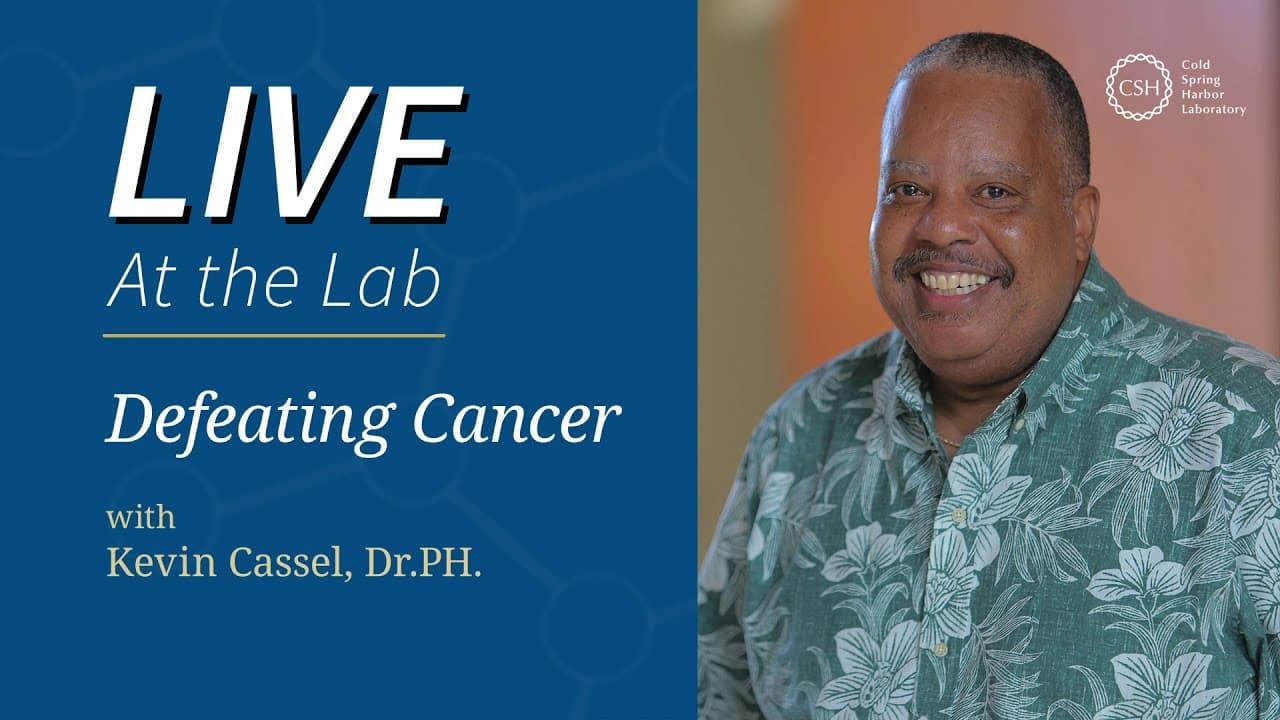
LIVE At the Lab with Kevin Cassel: Defeating Cancer in the Pacific Islands
TL;DR
Kevin Cassel discusses cancer prevention in Pacific Islands using community-based research.
Transcript
Okay, so I'll get going with the introduction. Welcome, everybody. My name is Lloyd Trotman, I'm a professor in cancer research at Cold Spring Harbor Laboratory, and it is my special pleasure to host this event of our public lecture series. And our guest today is Kevin Cassel from the University of Hawaii Cancer Center . Kevin had been invited ... Read More
Key Insights
- Kevin Cassel emphasizes the importance of community-based participatory research (CBPR) in effectively implementing cancer control strategies in diverse communities.
- Cassel's work focuses on adapting evidence-based cancer prevention programs to fit the cultural and social contexts of Pacific Island populations.
- Understanding the historical and cultural background of a community is crucial for successful engagement and implementation of health interventions.
- The Pacific Island populations face unique cancer challenges, including high rates of cervical and liver cancers due to limited healthcare infrastructure.
- Cassel highlights the importance of involving community members in the research process, from planning to execution, to ensure the interventions are culturally appropriate and effective.
- Community advisory boards play a critical role in bridging the gap between researchers and communities, ensuring that research findings are communicated effectively.
- Cassel advocates for leveraging cultural strengths and traditions as a means to enhance health interventions, such as using 'culture as intervention' in native Hawaiian communities.
- The COVID-19 pandemic has highlighted existing health disparities in Pacific Island populations, emphasizing the need for targeted interventions and community engagement.
Install to Summarize YouTube Videos and Get Transcripts
Explore YouTube Video Summarizer or Get YouTube Transcript Extractor
Questions & Answers
Q: What is community-based participatory research (CBPR)?
Community-based participatory research (CBPR) is a collaborative approach to research that involves community members in the research process. It emphasizes the importance of understanding the community's cultural and social context, and aims to create interventions that are culturally appropriate and effective. This method promotes co-learning and empowers communities by integrating their knowledge and experiences into the research process.
Q: Why is it important to understand the cultural background of a community in health research?
Understanding the cultural background of a community is crucial in health research because it ensures that interventions are culturally appropriate and resonate with the community's values and norms. It helps researchers design programs that are more likely to be accepted and effective, as they consider the community's historical, social, and cultural context. This understanding fosters trust and collaboration between researchers and the community.
Q: What are some unique cancer challenges faced by Pacific Island populations?
Pacific Island populations face unique cancer challenges, including high rates of cervical and liver cancers. These challenges are exacerbated by limited healthcare infrastructure, which mirrors that of third-world countries. Factors such as limited access to screening and diagnostic tests, high rates of obesity-related diseases, and cultural norms around tobacco use contribute to these challenges, leading to higher morbidity and mortality rates.
Q: How does Cassel involve community members in his research?
Cassel involves community members in his research by forming community advisory boards and training community members to participate in the research process. This includes conducting focus groups, interviews, and discussion groups to gather insights and feedback. By involving the community, Cassel ensures that the research is relevant and beneficial to the community, fostering trust and collaboration.
Q: What role do community advisory boards play in Cassel's research?
Community advisory boards play a critical role in Cassel's research by serving as a bridge between researchers and the community. They provide valuable insights into the community's needs and preferences, help validate research findings, and ensure that interventions are culturally appropriate. Advisory boards also facilitate communication and dissemination of research findings to the community, enhancing the impact and sustainability of the interventions.
Q: How does Cassel use 'culture as intervention' in his work?
Cassel uses 'culture as intervention' by leveraging cultural strengths and traditions to enhance health interventions. For example, in native Hawaiian communities, he adapts cultural practices such as the Hale Mua, where men prepare meals and engage in discussions, to introduce cancer control education. By integrating cultural elements into health programs, Cassel makes interventions more relatable and effective for the community.
Q: What impact has the COVID-19 pandemic had on Pacific Island populations?
The COVID-19 pandemic has highlighted existing health disparities in Pacific Island populations, with higher infection rates compared to their population size. Contributing factors include socioeconomic conditions, such as high representation in essential workforces, multi-generational housing, and limited access to healthcare. The pandemic underscores the need for targeted interventions and community engagement to address these disparities and improve health outcomes.
Q: What strategies does Cassel use to adapt evidence-based programs for different populations?
Cassel adapts evidence-based programs by first understanding the cultural and social context of the target population. He involves community members in the adaptation process, gathers insights through focus groups and interviews, and leverages cultural strengths. By tailoring interventions to fit the local context, Cassel ensures that programs are culturally appropriate, effective, and sustainable, ultimately improving health outcomes for diverse populations.
Summary & Key Takeaways
-
Kevin Cassel's work focuses on implementing cancer control strategies in Pacific Island populations through community-based participatory research. By understanding cultural norms and engaging communities, he adapts evidence-based programs to fit local contexts.
-
Cassel emphasizes the importance of involving community members in the research process to ensure interventions are culturally appropriate and effective. This approach helps address unique cancer challenges faced by Pacific Islanders.
-
The COVID-19 pandemic has underscored health disparities in Pacific Island populations. Cassel's work highlights the need for targeted interventions and community engagement to improve cancer prevention and health outcomes.
Read in Other Languages (beta)
Share This Summary 📚
Summarize YouTube Videos and Get Video Transcripts with 1-Click
Try YouTube Summary with ChatGPT & Claude or YouTube Transcript Generator
Explore More Summaries from Cold Spring Harbor Laboratory 📚
Summarize YouTube Videos and Get Video Transcripts with 1-Click
Try YouTube Summary with ChatGPT & Claude or YouTube Transcript Generator