How to Calculate the Area of Composite Figures with Triangles
TL;DR
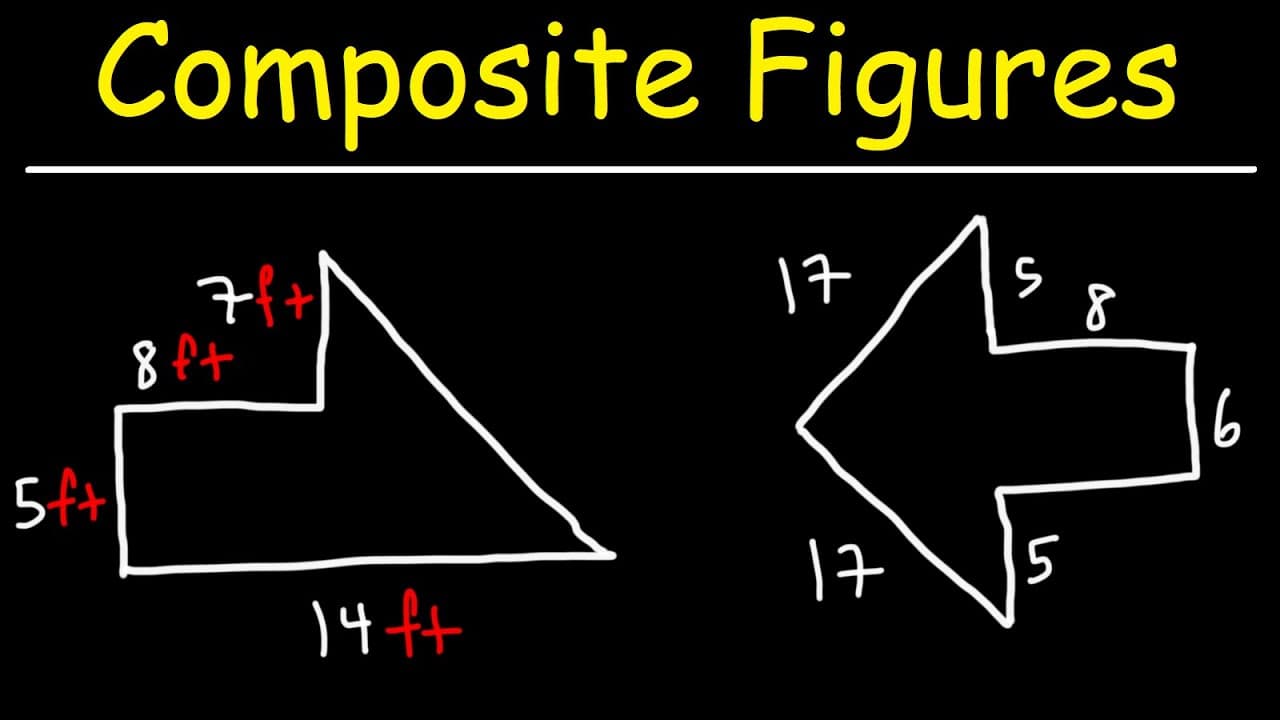
To calculate the area of a composite figure with triangles, break it down into simpler shapes like rectangles and triangles. Use the formulas: area of a rectangle is length times width, and area of a triangle is half of the base times height. Sum the areas of these individual shapes to find the total area.
Transcript
in this video we're going to talk about how to calculate the area of a composite figure that has triangles so let's start with this example what we need to do is we need to break up this figure into Parts where it's going to be easy to calculate the area I recommend drawing a line right here so we have two figures a triangle and a rectangle now jus... Read More
Key Insights
- 🍳 Breaking down a composite figure into simpler shapes like rectangles and triangles makes it easier to calculate the area.
- ⚾ The area of a rectangle is found by multiplying its length and width, while the area of a triangle is half of the product of its base and height.
- 🙃 The height and base of a triangle in a composite figure can be determined by subtracting the lengths of certain sides or segments.
Install to Summarize YouTube Videos and Get Transcripts
Explore YouTube Video Summarizer or Get YouTube Transcript Extractor
Questions & Answers
Q: How do you calculate the area of a composite figure with triangles?
To find the area of a composite figure with triangles, break it down into simpler shapes like rectangles and triangles. Calculate the area of each shape using the appropriate formulas and then add them together to get the total area.
Q: What is the formula for calculating the area of a rectangle?
The formula for calculating the area of a rectangle is length multiplied by width. For example, if the length is 10 cm and the width is 7 cm, the area would be 10 cm * 7 cm = 70 square cm.
Q: How do you determine the height and base of a triangle in a composite figure?
To determine the height and base of a triangle in a composite figure, look for information about the sides or segments in the figure. Subtracting the lengths of two sides can give you the length of the base or height. For example, if one side is 15 cm and the other is 7 cm, the height would be 15 cm - 7 cm = 8 cm.
Q: Can you explain how to use the Pythagorean theorem to find the height of a triangle?
Using the Pythagorean theorem, you can find the height of a triangle in a composite figure by first identifying the triangle as a right triangle. Then, you can use the formula a^2 + b^2 = c^2, where a and b are the legs of the triangle and c is the hypotenuse. Solve for the missing value, in this case, the height.
Summary & Key Takeaways
-
The video discusses how to calculate the area of a composite figure with triangles by breaking it down into simpler shapes.
-
The area of a rectangle is calculated by multiplying its length and width.
-
The area of a right triangle is found by multiplying half of its base by its height.
Read in Other Languages (beta)
Share This Summary 📚
Summarize YouTube Videos and Get Video Transcripts with 1-Click
Try YouTube Summary with ChatGPT & Claude or YouTube Transcript Generator
Explore More Summaries from The Organic Chemistry Tutor 📚





Summarize YouTube Videos and Get Video Transcripts with 1-Click
Try YouTube Summary with ChatGPT & Claude or YouTube Transcript Generator