How to Optimize SEO for Multiple Countries

TL;DR
To target multiple countries with similar content, create one English version if content is identical to avoid unnecessary duplication. Use hreflang tags for minor differences like currency or contact information. Google can't restrict content visibility to specific countries, so one version simplifies maintenance and improves ranking.
Transcript
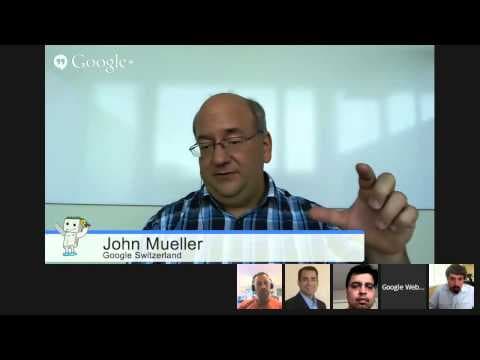
JOHN MUELLER: OK. All right. Welcome, everyone, to today's Google Search Central SEO office-hours hangout. My name is John Mueller. I'm a Search Advocate at Google. And part of what we do are these office-hour sessions, where people can jump in and ask their questions around their website and web search, and maybe we have some answers. We'll see. A... Read More
Key Insights
- Google can't restrict page visibility to specific countries; English pages can appear globally.
- Use hreflang tags if there are minor content differences like currency or contact details.
- Maintaining one English version of identical content simplifies management and boosts ranking.
- Canonicalizing all paginated pages to the first can prevent indexing of unique content on later pages.
- Google doesn't interact with page elements like 'Add to Cart' during crawling.
- Image format changes, like JPEG to WebP, can affect image search rankings if URLs change.
- AMP isn't required for fast websites; other frameworks can achieve similar speed.
- Quality changes on a site can take months for Google to reassess and reflect in rankings.
Install to Summarize YouTube Videos and Get Transcripts
Explore YouTube Video Summarizer or Get YouTube Transcript Extractor
Questions & Answers
Q: How to target multiple countries with the same content?
When targeting multiple English-speaking countries with identical content, create a single version to avoid unnecessary duplication. Use hreflang tags if there are minor differences like currency or contact details. Google cannot restrict content visibility to specific countries, so having one version simplifies maintenance and improves ranking.
Q: What is the impact of canonicalizing paginated pages?
Canonicalizing all paginated pages to the first can prevent indexing of unique content on later pages. This approach is suitable if the content is not unique. However, if pages 2, 3, and beyond have unique content, self-canonicalizing each page ensures they are indexed and remain visible in search results.
Q: Does Google interact with page elements like 'Add to Cart'?
Google does not interact with page elements like 'Add to Cart' during crawling. It only renders the page to see static content. For product search, Google might check if the 'Add to Cart' functionality works as expected, but this is not part of the regular crawling process.
Q: Can changing image formats affect search rankings?
Changing image formats, such as from JPEG to WebP, can impact image search rankings if the image URLs change. To preserve rankings, consider maintaining the same URLs by swapping the content while keeping the URL unchanged. This approach ensures continuity in image search visibility.
Q: Is AMP necessary for fast websites?
AMP is not mandatory for creating fast websites. Other frameworks or even a well-optimized standard WordPress setup can achieve similar speeds. While AMP simplifies certain aspects of speed optimization, it's not a requirement for improving page load times or enhancing SEO performance.
Q: How does Google reassess site quality changes?
Google's reassessment of site quality changes can take several months. Quality evaluation involves understanding how a site fits into the broader web context, which is a complex and time-consuming process. Significant improvements or declines in quality are reflected gradually in search rankings.
Q: How does Google handle out-of-stock pages?
Google may treat out-of-stock pages as soft 404s if they are deemed irrelevant, causing them to drop from search results. If the page remains indexed, its ranking isn't affected by the out-of-stock status. Removing structured data indicating out-of-stock status doesn't change this behavior.
Q: What are handshake domains and their impact on indexing?
Handshake domains are part of an alternate DNS system based on blockchain technology. Google's indexing systems are tuned to the traditional DNS setup, so handshake domains might face indexing delays. If handshake domains become widely used, Google might adapt its systems to accommodate them.
Summary & Key Takeaways
-
To manage SEO for multiple English-speaking countries, create a single version of identical content to simplify maintenance and improve search rankings. Use hreflang tags for minor regional differences. Google can't limit page visibility to specific countries, so a unified approach is more efficient.
-
For pagination, self-canonicalize individual pages to ensure unique content is indexed. Avoid canonicalizing all to the first page unless content duplication is acceptable. This approach helps maintain visibility of all relevant content in search results.
-
Switching images to WebP format can impact image search rankings if URLs change. Consider maintaining the same URLs to preserve rankings. AMP is not mandatory for fast websites; other frameworks can achieve similar speeds without compromising on SEO.
Read in Other Languages (beta)
Share This Summary 📚
Summarize YouTube Videos and Get Video Transcripts with 1-Click
Try YouTube Summary with ChatGPT & Claude or YouTube Transcript Generator
Explore More Summaries from Google Search Central 📚

Summarize YouTube Videos and Get Video Transcripts with 1-Click
Try YouTube Summary with ChatGPT & Claude or YouTube Transcript Generator