How to Calculate the Magnetic Field of a Current-Carrying Wire
TL;DR
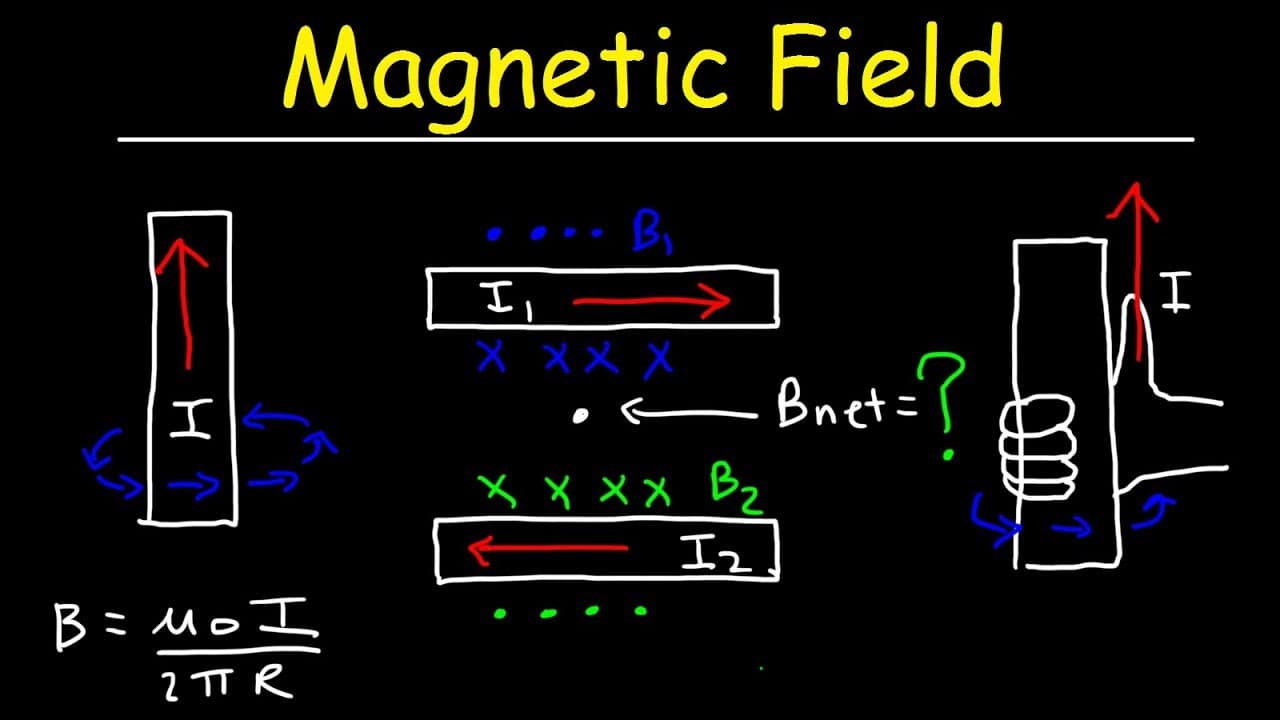
To calculate the magnetic field of a straight current-carrying wire, use the right-hand rule to determine its direction and the formula B = (μ₀ * I) / (2πr) to find its magnitude, where μ₀ is the permeability of free space, I is the current in amperes, and r is the distance from the wire. Remember, the magnetic field strength decreases with increased distance from the wire.
Transcript
a current of 15 amps flows north along a wire so let's draw a picture so let's say if we have a wire or even a conductor and the current is flowing in this direction calculate the magnitude and direction of the magnetic field at a point 10 centimeters east of the wire so east is this direction so 10 centimeters away from it we wish to calculate the... Read More
Key Insights
- 🫱 The right-hand rule is a useful technique for determining the direction of the magnetic field around a current-carrying wire.
- 🏑 The magnetic field equation, involving the current and the distance, allows for the calculation of the magnitude of the magnetic field at a specific point.
- 🏑 The strength of the magnetic field decreases as the distance from the wire increases.
- 🏑 Increasing the current or decreasing the distance can increase the strength of the magnetic field.
Install to Summarize YouTube Videos and Get Transcripts
Explore YouTube Video Summarizer or Get YouTube Transcript Extractor
Questions & Answers
Q: How can the direction of the magnetic field be determined for a current-carrying wire?
The right-hand rule can be used by curling the fingers of the right hand around the wire in the direction of the current, and the thumb will point in the direction of the magnetic field.
Q: How does the magnetic field change as the distance from the wire increases?
As the distance from the wire increases, the strength of the magnetic field decreases. It follows an inverse relationship with the distance, as described by the magnetic field equation.
Q: What factors affect the strength of the magnetic field?
The two main factors are the current and the distance. Increasing the current proportionally increases the magnetic field strength, while increasing the distance reduces the magnetic field by a factor inversely proportional to the distance.
Q: How can the net magnetic field be calculated for multiple current-carrying wires?
The net magnetic field is calculated by summing the magnetic fields created by each wire. The direction and distance of the currents are taken into account using the right-hand rule and the magnetic field equation.
Summary & Key Takeaways
-
A current of 15 amps flows north along a wire, and the magnetic field is calculated at a point 10 centimeters east of the wire.
-
The direction of the magnetic field is determined using the right-hand rule, and the magnitude is calculated using the magnetic field equation.
-
The strength of the magnetic field decreases as the distance from the wire increases, and the current can be increased or the distance decreased to increase the magnetic field.
-
In a second problem, the magnetic field is calculated at positions above and below two current-carrying wires, taking into account the directions and distances of the currents.
Read in Other Languages (beta)
Share This Summary 📚
Summarize YouTube Videos and Get Video Transcripts with 1-Click
Try YouTube Summary with ChatGPT & Claude or YouTube Transcript Generator
Explore More Summaries from The Organic Chemistry Tutor 📚


Summarize YouTube Videos and Get Video Transcripts with 1-Click
Try YouTube Summary with ChatGPT & Claude or YouTube Transcript Generator