Why Is Social Media Full of Misinformation and Hate?
TL;DR
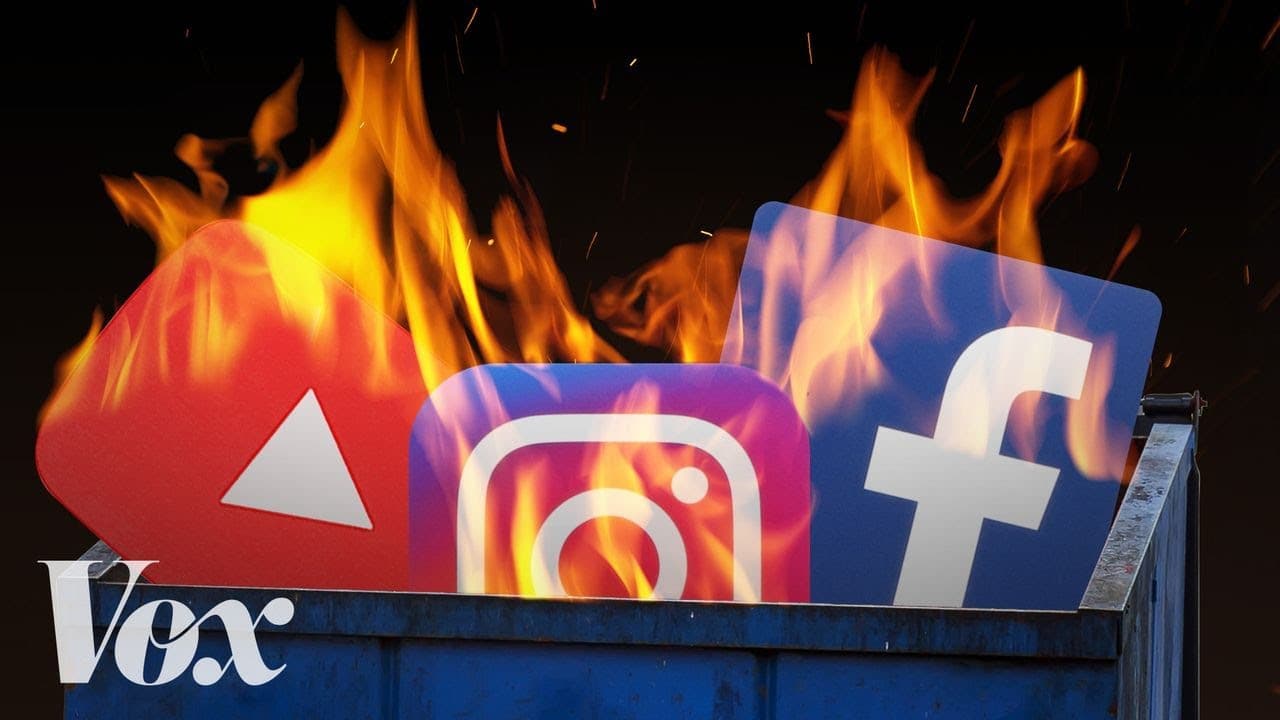
Social media platforms are rife with divisive content because their algorithms prioritize engagement over accuracy, often promoting fake news and extreme viewpoints. This creates echo chambers that encourage tribalism, where emotionally charged posts gain more traction. Until these companies shift their focus from profit to user well-being, the cycle of misinformation and harmful content will persist.
Transcript
Time to unwind with a little Facebook. Facebook continues to be under fire for failing to crack down on fake news. It's been called a haven for fake news. Russian trolls used Facebook to exploit racial tension. Did you fall for propaganda from a Russian troll? Jesus. Facebook is dead. YouTube! YouTube is the latest social media company under the mi... Read More
Key Insights
- Social media platforms like Facebook and YouTube are criticized for failing to control fake news and divisive content, often benefiting from the spread of such content.
- Research shows that tweets with moral or emotional language are more likely to go viral, highlighting the role of tribal language in online engagement.
- Social media sites are designed to maximize user engagement by showing content that aligns with users' beliefs, creating echo chambers that reinforce extreme views.
- Platforms protect users from social disapproval by allowing them to curate their feeds, leading to a dissonance-free environment that encourages extreme content.
- Algorithms on social media sites often recommend more extreme content, pushing users towards radical views and conspiracy theories.
- Social media is a fertile ground for trolls and con artists, who exploit users' tribal instincts to spread false and incendiary content for profit.
- Efforts to ban bad actors on social media do not address the underlying incentive structure that rewards divisive content and misinformation.
- Until social media companies prioritize user well-being over ad revenue, these platforms will continue to reflect and amplify the worst aspects of human nature.
Install to Summarize YouTube Videos and Get Transcripts
Explore YouTube Video Summarizer or Get YouTube Transcript Extractor
Questions & Answers
Q: Why are social media platforms criticized in the video?
Social media platforms like Facebook and YouTube are criticized for failing to control the spread of fake news and divisive content. These platforms often benefit from increased user engagement when such content goes viral, as it aligns with users' tribal instincts and reinforces group identity, leading to more time spent on the sites.
Q: What role does tribal language play in online engagement?
Tribal language, characterized by moral or emotional words, plays a significant role in online engagement. Research shows that tweets using such language are more likely to go viral because they tap into users' tribal instincts, signaling group identity and reinforcing a sense of belonging, which drives higher engagement and sharing.
Q: How do social media sites create echo chambers?
Social media sites create echo chambers by designing algorithms to maximize user engagement through content that aligns with users' beliefs. This leads to a dissonance-free environment where users are exposed only to information that reinforces their views, encouraging more extreme content and reducing exposure to diverse perspectives.
Q: What impact do algorithms have on user behavior?
Algorithms on social media platforms impact user behavior by recommending increasingly extreme content, which pushes users towards radical views and conspiracy theories. This recommendation system exploits users' tribal instincts, leading them down a path of more polarized and incendiary content, further entrenching their beliefs.
Q: Why are social media platforms attractive to trolls and con artists?
Social media platforms are attractive to trolls and con artists because they can exploit users' tribal instincts to spread false and incendiary content for profit. The platforms' design rewards high engagement, often achieved through divisive content, making them fertile ground for spreading misinformation and gaining followers.
Q: What are the limitations of banning bad actors on social media?
Banning bad actors on social media is limited in effectiveness because it doesn't address the underlying incentive structure that rewards divisive content and misinformation. New bad actors can easily emerge to exploit the same system, as the platforms continue to prioritize engagement and ad revenue over user well-being.
Q: How do social media platforms protect users from social disapproval?
Social media platforms protect users from social disapproval by allowing them to curate their feeds, creating a dissonance-free environment. Users can follow like-minded individuals and block dissenting voices, leading to echo chambers where extreme content is reinforced without facing the social costs of disagreement.
Q: What changes are necessary for social media platforms to improve?
For social media platforms to improve, they must prioritize user well-being over ad revenue. This involves redesigning algorithms to promote diverse perspectives, reducing the spread of misinformation, and creating environments that encourage healthy discourse rather than exploiting users' tribal instincts for engagement.
Summary & Key Takeaways
-
Social media platforms are criticized for failing to control the spread of fake news and divisive content, benefiting from increased user engagement. Research shows that tweets using moral or emotional language are more likely to go viral, as they tap into users' tribal instincts and reinforce group identity.
-
Social media sites are designed to maximize engagement by showing users content that aligns with their beliefs, creating echo chambers that reinforce extreme views. Algorithms often recommend more extreme content, pushing users towards radical views and conspiracy theories, exploiting their tribal instincts.
-
Efforts to ban bad actors on social media do not address the underlying incentive structure that rewards divisive content and misinformation. Until companies prioritize user well-being over ad revenue, these platforms will continue to reflect and amplify the worst aspects of human nature.
Read in Other Languages (beta)
Share This Summary 📚
Summarize YouTube Videos and Get Video Transcripts with 1-Click
Try YouTube Summary with ChatGPT & Claude or YouTube Transcript Generator
Explore More Summaries from Vox 📚


Summarize YouTube Videos and Get Video Transcripts with 1-Click
Try YouTube Summary with ChatGPT & Claude or YouTube Transcript Generator