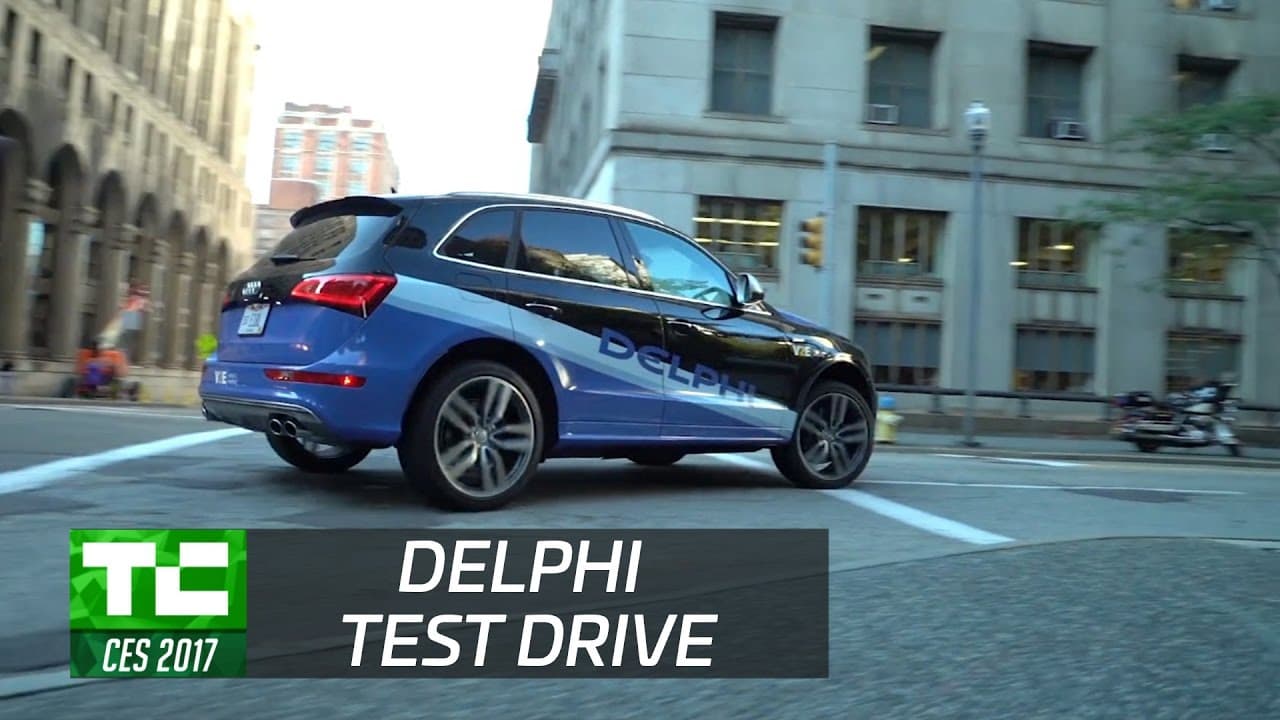
Taking a ride in Delphi's latest autonomous drive
TL;DR
This content discusses the development of an automotive-grade automated driving system that aims to eliminate the need for traffic signs and lights, creating smooth traffic flow without congestion.
Transcript
ultimately if every car was talking to each other you wouldn't need stop signs or stop lights at all right I mean that would be that would be kind of an end state and the traffic flow would be incredibly smooth no traffic jams that you said you would you wouldn't need roundabouts you wouldn't need lights it's one thing to have the technology it's a... Read More
Key Insights
- 🚥 The development of an automotive-grade automated driving system has the potential to revolutionize traffic flow by eliminating the need for traditional traffic signs and lights.
- 😨 The integration of various sensors, including vision, lidar, and radar, allows for accurate detection, classification, and evaluation of the car's surroundings.
- 🤑 The goal is to provide a turnkey system that can be used by car companies and other interested parties, saving them time, money, and resources in developing their own technology.
- 🎁 The system's path planning capabilities involve evaluating numerous potential paths based on the presented scenario, ensuring quick and appropriate action in response to any obstacles or events.
- 🛄 The company is confident in its partnership with Mobileye and aims to offer a production-ready automated driving system by 2019.
- 😒 The use of electromechanical lidar technology ensures comprehensive 360-degree coverage, enabling precise identification and classification of objects on the road.
- 👰♀️ The development of this automated driving system is anticipated to accelerate the adoption of ride-sharing and mobility services in the future.
Install to Summarize YouTube Videos and Get Transcripts
Explore YouTube Video Summarizer or Get YouTube Transcript Extractor
Questions & Answers
Q: What is the purpose of creating an automotive-grade automated driving system?
The purpose is to eliminate the need for stop signs, stop lights, and roundabouts, resulting in incredibly smooth traffic flow without congestion. It aims to be the bridge between technology and the automotive world.
Q: What technology is integrated into the automated driving system?
The system integrates computational power, algorithms, and a suite of sensors, including vision, lidar, and radar sensors. This combination ensures accurate detection and classification of objects and a comprehensive evaluation of the car's surroundings.
Q: What is the significance of the electromechanical lidar in the system?
The electromechanical lidar technology provides 360 degrees of coverage by integrating sensors on each corner of the vehicle. This allows for precise identification of objects, such as pedestrians or signposts, ensuring accurate path planning and action contingency.
Q: When can we expect to see this automated driving system on the roads?
The company aims to have the turnkey system ready for car companies and other interested parties by 2019. It is projected that automated driving will be on the road in various places around the world within four to five years.
Summary & Key Takeaways
-
The content highlights a platform partnership between the company and Mobileye to create a centralized sensing and planning module for automated driving at levels four and five.
-
The system includes a combination of sensors such as vision, lidar, and radar to provide comprehensive coverage of the vehicle's surroundings.
-
The goal is to offer a turnkey system by 2019 that car companies and other interested parties can use for production-ready automated driving.
Read in Other Languages (beta)
Share This Summary 📚
Summarize YouTube Videos and Get Video Transcripts with 1-Click
Try YouTube Summary with ChatGPT & Claude or YouTube Transcript Generator
Explore More Summaries from TechCrunch 📚




Summarize YouTube Videos and Get Video Transcripts with 1-Click
Try YouTube Summary with ChatGPT & Claude or YouTube Transcript Generator