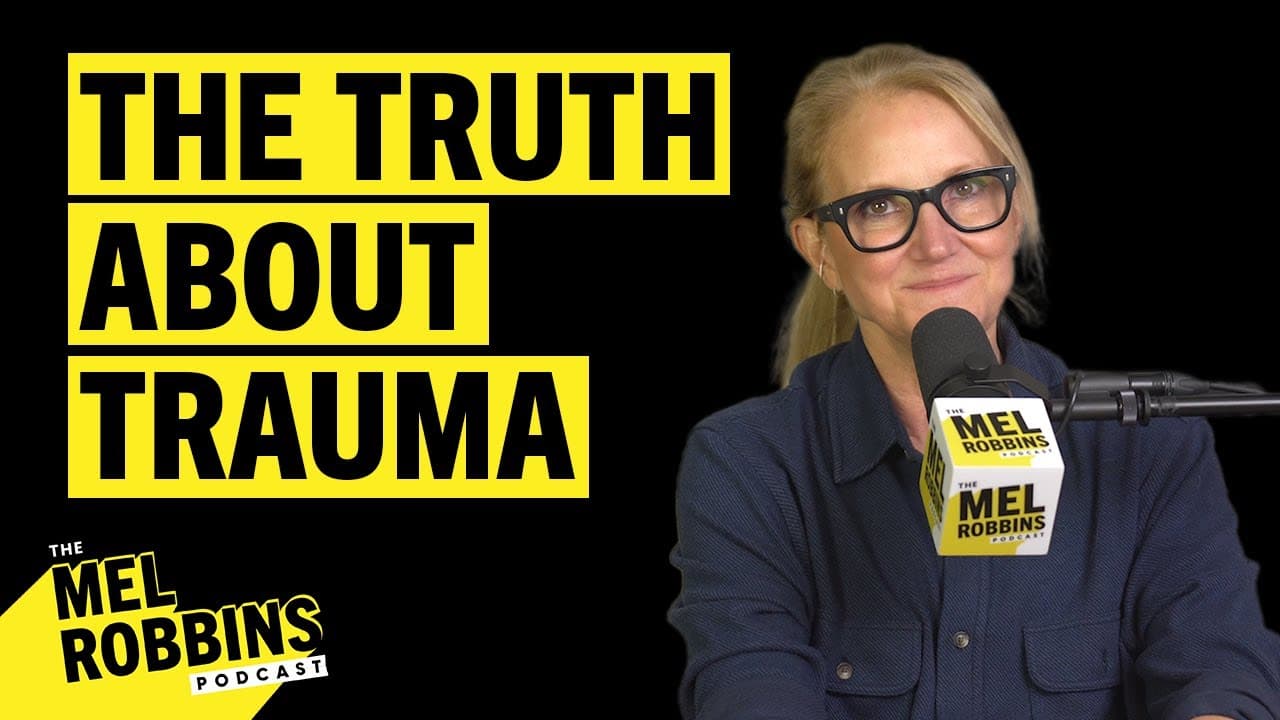
Something Scary Happened The Other Day and I Wanted To Talk To You About It | Mel Robbins Podcast
TL;DR
Understanding and processing traumatic experiences through integration and emotional healing.
Transcript
foreign a little bit different it's going to be a tough one I was a witness to a horrible tragedy even if it's hard or it feels very uncomfortable to listen to parts of what we're going to talk about this is important I'm going to take you back a few weeks ago to a moment as these events were unfolding where I was sitting in a chair in a bedroom an... Read More
Key Insights
- 🥺 Traumatic events lead to fragmented memory files that require integration for healing.
- 🦻 Emotional processing and narrative storytelling aid in integrating traumatic experiences.
- ❓ Shame inhibits trauma healing and must be addressed for effective integration.
- 🪪 Trigger identification and emotional integration are crucial for trauma recovery.
- 🦻 Meaning assigning to traumatic events aids in emotional healing and integration.
- 🧠 Understanding the brain's trauma response can guide effective healing strategies.
- ❓ Integrating emotional experiences from trauma enables healing and reduces triggers.
Install to Summarize YouTube Videos and Get Transcripts
Explore YouTube Video Summarizer or Get YouTube Transcript Extractor
Questions & Answers
Q: How does the brain respond to traumatic events?
The brain re-prioritizes functions during trauma, leading to fragmented memory files that require integration for healing.
Q: Why do people have varied trauma responses to the same event?
Trauma responses differ due to how memory files are processed, impacting emotional integration and individual experiences.
Q: How can individuals stop intrusive traumatic memories?
Integrating traumatic memories by narrating the event, connecting with emotions, and assigning meaning aids in reducing intrusive thoughts.
Q: Why is emotional processing crucial for trauma healing?
Emotional processing allows for the integration of fragmented memory files, enabling healing and reducing triggers and traumatic responses.
Summary & Key Takeaways
-
Mel Robbins discusses a traumatic event she witnessed and the emotional impact it had on her, emphasizing the importance of processing trauma.
-
Dr. Mary Catherine McDonald explains the brain's response to trauma, the importance of integration, and how to navigate traumatic triggers.
-
Integration involves storytelling, emotional processing, and assigning meaning to the traumatic experience for healing.
Read in Other Languages (beta)
Share This Summary 📚
Summarize YouTube Videos and Get Video Transcripts with 1-Click
Try YouTube Summary with ChatGPT & Claude or YouTube Transcript Generator
Explore More Summaries from The Mel Robbins Podcast 📚



Summarize YouTube Videos and Get Video Transcripts with 1-Click
Try YouTube Summary with ChatGPT & Claude or YouTube Transcript Generator