How Did Our Solar System Form and Function?
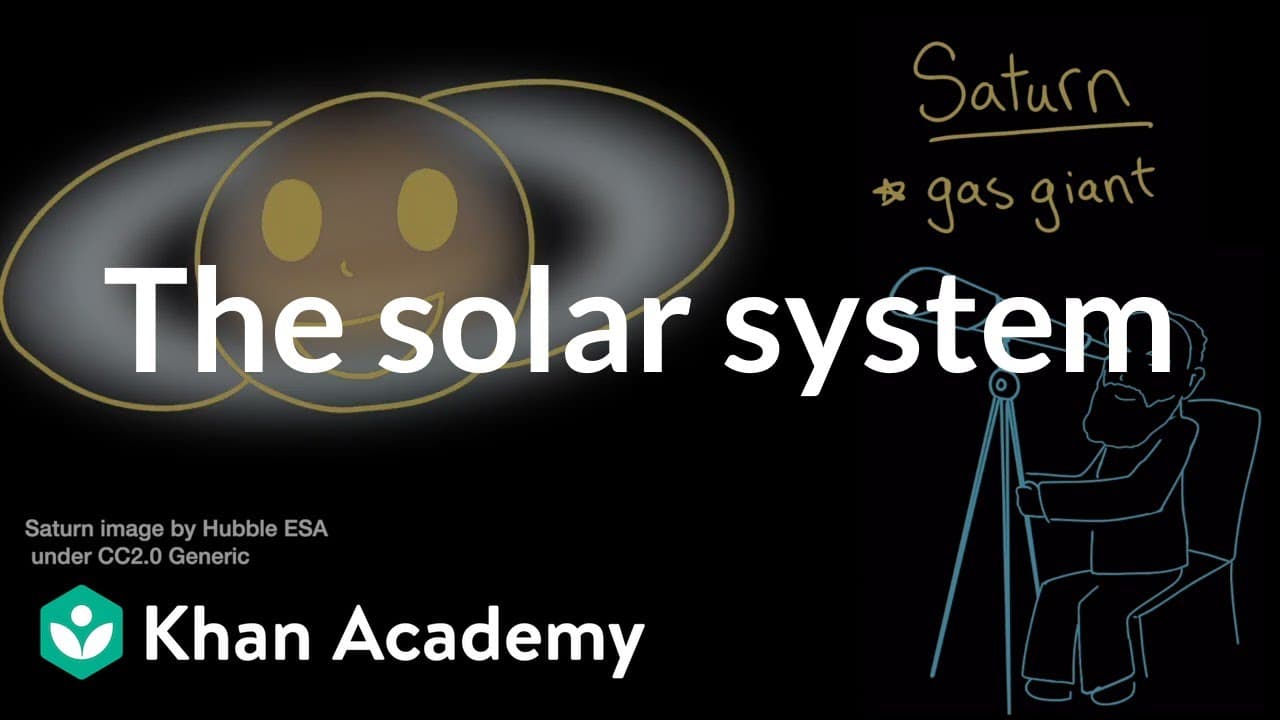
TL;DR
The solar system originated from a nebula of gas and dust that collapsed under gravity, forming the sun and eight distinct planets. The inner planets are rocky, while the outer planets are gas giants, each with unique characteristics. Despite extensive research, many mysteries of the solar system remain unsolved.
Transcript
- [Narrator] The Earth isn't flat, but the solar system is. About 4.6 billion years ago, the material that makes up our solar system was in the form of a nebula, which is pretty much a big cloud of gas and dust in space. Gravity flattened this material into a disc like this one and then pulled everything towards the center. Eventually, the pressure... Read More
Key Insights
- 💁 The solar system formed from a nebula cloud that collapsed under gravity, forming the sun and planets.
- 😶🌫️ Asteroids are rocky objects found in the asteroid belt, while comets exist in the Oort cloud.
- 🪐 The solar system consists of eight planets, divided into terrestrial and gas giant planets.
- 🫢 Gas giants like Jupiter and Saturn are much larger than the terrestrial planets.
- 🪐 Each planet in the solar system has unique characteristics, such as Mercury being the smallest and hottest planet, Venus having a dense and inhospitable atmosphere, Earth being the only known planet with life, and Neptune being the windiest and coldest planet.
- 🥡 The planets have different orbital periods, with Jupiter taking the longest at 12 years.
- 🥮 Humans have explored the moon but have not yet sent missions to other planets, relying on telescopes and probes for discoveries.
Install to Summarize YouTube Videos and Get Transcripts
Explore YouTube Video Summarizer or Get YouTube Transcript Extractor
Questions & Answers
Q: How did the solar system form?
The solar system formed when a nebula collapsed under gravity, causing the gas and dust to flatten into a disc and eventually form the sun and planets.
Q: What are asteroids and where are they located?
Asteroids are rocks that orbit the sun and are found in the asteroid belt, which is located between Mars and Jupiter. They are smaller than planets and made up of nickel and iron.
Q: What is the Oort cloud?
The Oort cloud is a region at the edge of the solar system filled with comets. Comets are icy objects that occasionally enter the inner part of the solar system and can be seen from Earth with their characteristic tails.
Q: What are the differences between terrestrial and gas giant planets?
Terrestrial planets, like Mercury, Venus, Earth, and Mars, have solid surfaces, thin atmospheres, few or no moons, and no rings. Gas giants, like Jupiter, Saturn, Uranus, and Neptune, are larger, made up of gases and liquids, have many moons and rings, and are much colder.
Summary & Key Takeaways
-
The solar system formed from a nebula, a cloud of gas and dust, which flattened into a disc under the force of gravity.
-
The sun and planets are the main objects in the solar system, while asteroids and comets also exist.
-
The solar system consists of eight planets, with the inner terrestrial planets closer to the sun and the outer gas giants farther away.
Read in Other Languages (beta)
Share This Summary 📚
Summarize YouTube Videos and Get Video Transcripts with 1-Click
Try YouTube Summary with ChatGPT & Claude or YouTube Transcript Generator
Explore More Summaries from Khan Academy 📚



Summarize YouTube Videos and Get Video Transcripts with 1-Click
Try YouTube Summary with ChatGPT & Claude or YouTube Transcript Generator