How Does Project-Based Learning Improve Science Education?
TL;DR
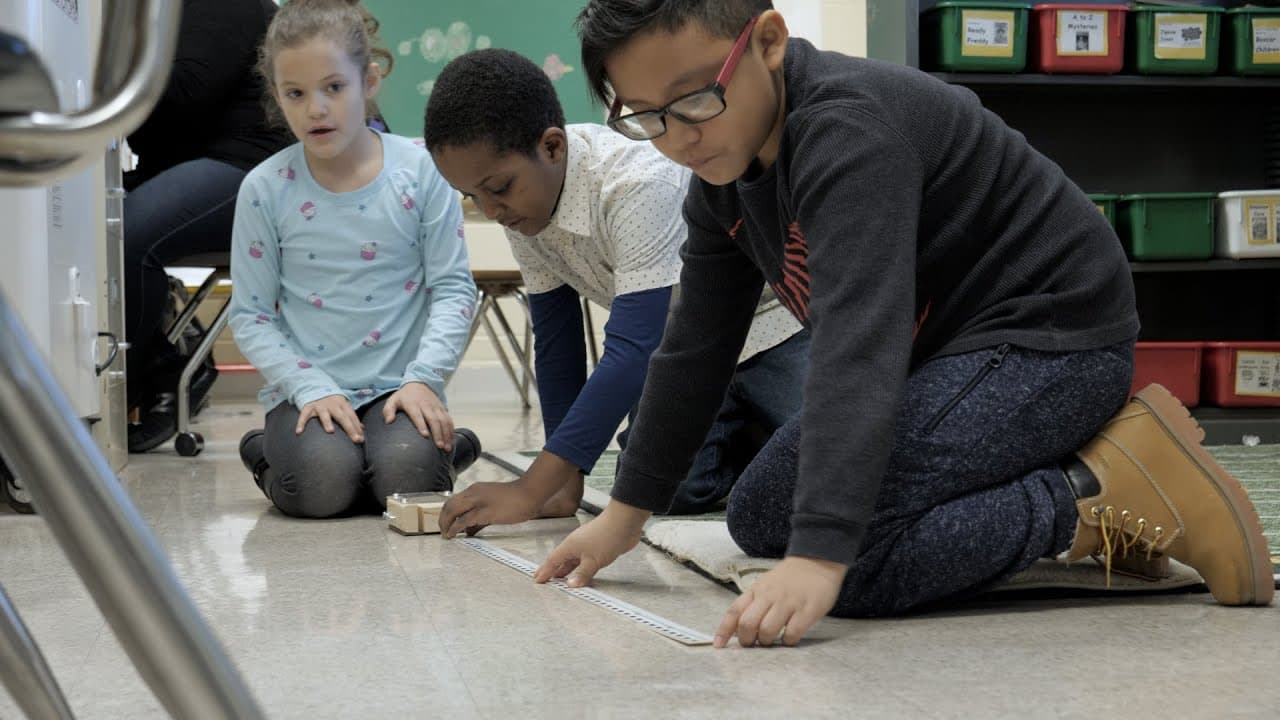
Project-based learning significantly enhances science education by engaging students in real-world investigations and problem-solving. Research shows that integrating literacy and math into science lessons boosts students' understanding and excitement for the subject, leading to improved proficiency across diverse demographics.
Transcript
Teacher: So, what I'm going to do is I'm going to give you some fossils to actually look at, real fossils, and you can use the evidence to support what you're going to tell me about the fossils, all right? Some of the things I want you to tell me about-- >>Joseph: Our goal was to design, develop, and test materials to see does project-based learn... Read More
Key Insights
- 🧑🎓 Project-based learning in science engages students in real-world problem-solving and inquiry.
- 🧑🎓 Integrating literacy and math into science education enhances student understanding and motivation.
- 🧑🎓 Research suggests project-based learning significantly improves science proficiency across student demographics.
- 🤗 Students benefit socially and emotionally from hands-on learning experiences.
- 🧑🎓 Changing instructional strategies to focus on inquiry-based learning can improve student outcomes.
- 🤔 Encouraging students to ask questions and find answers independently fosters critical thinking skills.
- 🤗 Hands-on projects create a more engaging learning environment for students.
Install to Summarize YouTube Videos and Get Transcripts
Explore YouTube Video Summarizer or Get YouTube Transcript Extractor
Questions & Answers
Q: How does project-based learning differ from traditional science instruction?
Project-based learning involves hands-on investigations and problem-solving, unlike traditional lectures and cookbook experiments. It focuses on real-world applications and engaging students in scientific inquiry.
Q: How does integrating literacy and math enhance science education?
By incorporating literacy and math, students see the connections between subjects, making learning more meaningful. It helps students develop a deeper understanding of science concepts by utilizing various skills.
Q: What were the findings of the research comparing project-based learning to traditional science instruction?
The study found a significant improvement in science proficiency among students in the project-based learning group. This effect was consistent across demographics, showing the effectiveness of hands-on learning in science education.
Q: How does project-based learning benefit students beyond academics?
Project-based learning not only enhances science proficiency but also promotes social-emotional learning. Students become more engaged, put in more effort, and develop critical thinking skills that are valuable for lifelong learning.
Summary & Key Takeaways
-
Project-based learning in science engages students in real-world investigations and problem-solving.
-
Integrating literacy and math into science lessons enhances student understanding and excitement.
-
Research shows project-based learning boosts science proficiency regardless of student demographics.
Read in Other Languages (beta)
Share This Summary 📚
Summarize YouTube Videos and Get Video Transcripts with 1-Click
Try YouTube Summary with ChatGPT & Claude or YouTube Transcript Generator
Explore More Summaries from Edutopia 📚



Summarize YouTube Videos and Get Video Transcripts with 1-Click
Try YouTube Summary with ChatGPT & Claude or YouTube Transcript Generator