Why Friendship Can Be Just As Meaningful as Romantic Love | Rhaina Cohen | TED
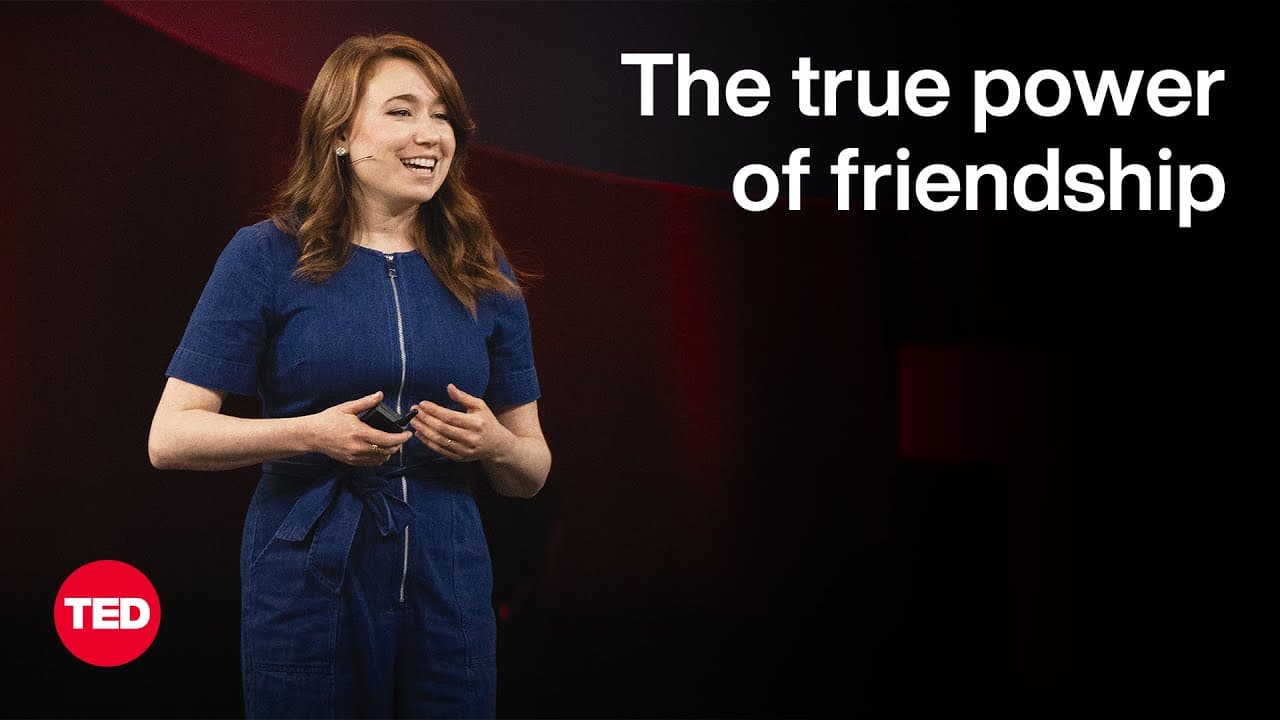
TL;DR
The content explores the importance of deep friendships as essential forms of companionship, equal to romantic relationships.
Transcript
There is a Supreme Court case that you could mistake for a sermon. It's the case that recognized that same-sex couples have a constitutional right to marry. Here is a sense of what Justice Kennedy wrote: “Marriage responds to the universal fear that a lonely person might call out only to find no one there." He goes on to say that marriage offers ca... Read More
Key Insights
- 💗 The Supreme Court's recognition of same-sex marriage underscores a growing understanding of diverse relationship types and the fundamental need for companionship.
- 🛟 The emotional depth of friendships can often rival that of romantic partnerships, providing essential support through life’s trials.
- ⛔ Society's narrow definition of relationships can limit individuals' recognition of the value of deep friendships, often sidelining them in favor of romantic narratives.
- 🫚 Historical practices, such as sworn brotherhoods, illustrate that the value placed on deep friendships has roots in various cultures.
- 🤕 The challenges of loneliness and support in old age necessitate a reevaluation of how we prioritize friendships in our lives.
- 💗 The growing acceptance of non-romantic living arrangements reflects a potential shift in societal views on companionship.
- 😚 Individuals can actively redefine their life structures to include close friends as primary sources of emotional fulfillment and support.
Install to Summarize YouTube Videos and Get Transcripts
Explore YouTube Video Summarizer or Get YouTube Transcript Extractor
Questions & Answers
Q: How does the Supreme Court case relate to the discussion of friendship?
The Supreme Court case recognizing the right of same-sex couples to marry emphasizes the fundamental human need for companionship that transcends romantic relationships. The speaker uses this context to illustrate how these same feelings of connection and support can be found in deep friendships, challenging conventional views on the importance of different types of relationships.
Q: What examples are provided to illustrate the depth of friendships?
The speaker shares stories of remarkable friendships, such as Natasha and Linda, Canada's first legally recognized platonic co-parents, and Joe and John, whose lifelong friendship helped them battle personal demons together. These examples highlight how friendships can provide support and care that are often associated only with romantic partnerships.
Q: How does society currently view friendships compared to romantic relationships?
Society often treats friendship as secondary to romance, a notion reinforced by cultural narratives in movies and policies that prioritize familial or romantic ties. The speaker argues that this view undermines the potential of friendships to deliver emotional fulfillment and support actively, which can be as significant as traditional partnerships.
Q: What changes can individuals advocate for regarding recognition of friendships?
Individuals can push for policy changes that recognize significant friendships, such as allowing family medical leave for friends or bereavement leave. By acknowledging the importance of platonic relationships in our legal and workplace systems, society can facilitate a broader understanding and acceptance of diverse forms of companionship.
Q: What does the speaker propose for the future of relationships?
The speaker envisions a future where people can freely build lives with their friends, integrating them into their families and communities. By promoting the idea of shared living arrangements and supportive networks among friends, individuals can cultivate emotional richness outside traditional romantic frameworks.
Q: How does the speaker's personal experience shape their perspective on friendships?
The speaker's own life, where they live with their spouse and two close friends, showcases the unique structure of their family. This experience illustrates practical ways to foster cooperative support systems and emphasizes the potential for friendships to fulfill emotional needs that have been historically associated with marriage.
Summary & Key Takeaways
-
The Supreme Court case recognizing same-sex marriage highlights the universal human need for companionship, urging a reevaluation of how we view relationships, especially friendship.
-
The speaker discusses friendships that resemble romantic partnerships, demonstrating how these connections can provide deep emotional support and companionship throughout life’s challenges.
-
Society often overlooks the significance of platonic relationships, yet the bonds formed by friends can fulfill emotional needs traditionally associated with marriage or partnerships.
Read in Other Languages (beta)
Share This Summary 📚
Summarize YouTube Videos and Get Video Transcripts with 1-Click
Try YouTube Summary with ChatGPT & Claude or YouTube Transcript Generator
Explore More Summaries from TED 📚





Summarize YouTube Videos and Get Video Transcripts with 1-Click
Try YouTube Summary with ChatGPT & Claude or YouTube Transcript Generator