What Is Direct and Indirect Speech in English?
TL;DR
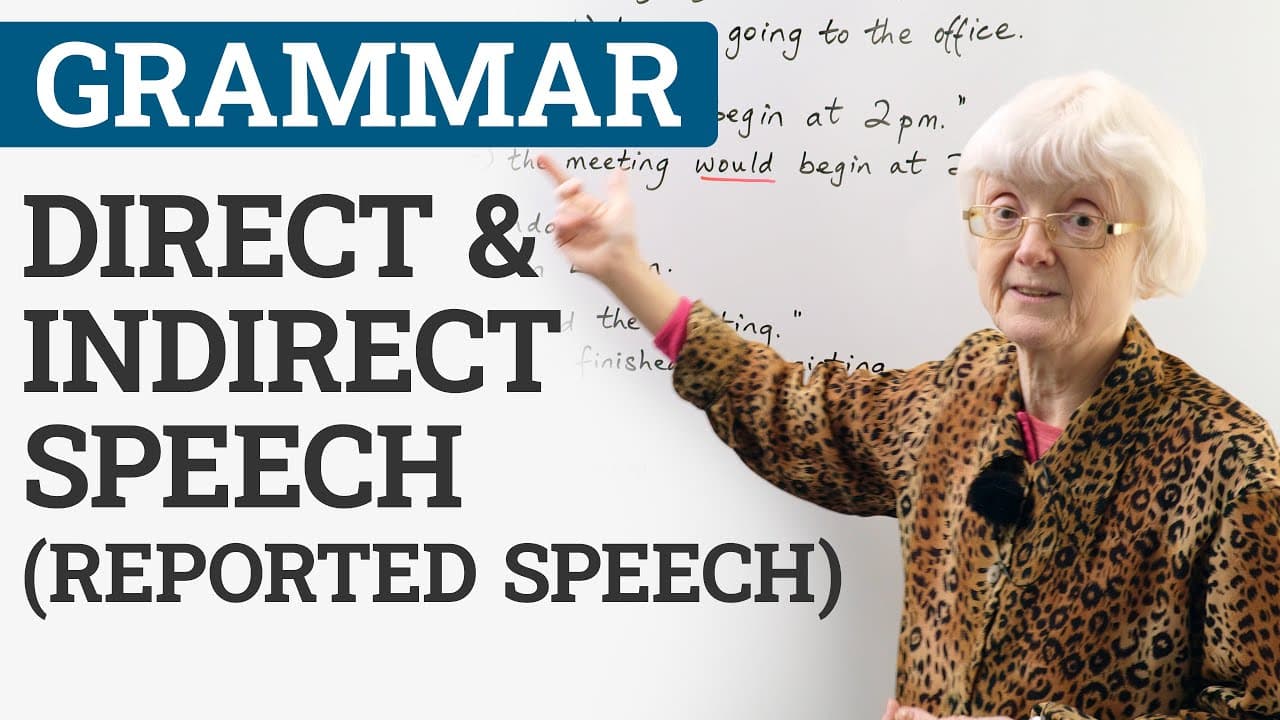
Direct speech quotes a person's exact words using present tense, while indirect speech paraphrases those words and changes the tense to reflect the past. Mastery of these concepts is essential for proper communication in both writing and speaking.
Transcript
Hello. I'm Gill at engVid, and today we have a lesson on direct and indirect speech. So, what do I mean by that? So, this is whenever you're either talking about or you're writing about what somebody said, and there are two different ways of doing it. So, you might be just having a conversation with a friend, and you're telling them about a previou... Read More
Key Insights
- 😯 Direct speech involves quoting exactly what was said, while indirect speech requires paraphrasing with tense changes to reflect the past.
- 😯 Verb tense changes from direct to indirect speech are crucial in accurately portraying the original message.
- 😯 Knowing how to switch between direct and indirect speech is essential for effective communication in both writing and speaking.
- ❓ Quoting from other sources requires accurately reflecting the original words in direct speech with the use of quotation marks.
- 😯 Indirect speech allows for flexibility in paraphrasing what was said, with the need for tense adjustments to convey the past accurately.
- 😯 Understanding verb tense changes when switching from direct to indirect speech is essential for conveying the timing of the original message effectively.
- 😯 Practice and quizzes can help solidify understanding and application of direct and indirect speech concepts.
Install to Summarize YouTube Videos and Get Transcripts
Explore YouTube Video Summarizer or Get YouTube Transcript Extractor
Questions & Answers
Q: What is direct speech, and how does it differ from indirect speech?
Direct speech entails quoting exactly what was said, while indirect speech involves paraphrasing what was said with tense changes to reflect the past when reporting.
Q: Why do verb tense changes occur when switching from direct to indirect speech?
Verb tense changes are necessary to accurately reflect the timing of the original speech in indirect reporting, ensuring the message is conveyed accurately.
Q: What are some examples of tense changes when switching from direct to indirect speech?
Examples include changing from present simple to past simple and from present perfect to past perfect to accurately reflect the timeline of the original speech when reporting indirectly.
Q: How does using direct and indirect speech impact writing and speaking?
Direct speech requires the use of quotation marks and precise wording, while indirect speech allows for paraphrasing with appropriate tense changes when relayed in writing or speech.
Summary & Key Takeaways
-
Direct speech involves quoting exactly what was said, using present tense if the speech is in the present.
-
Indirect speech involves paraphrasing what was said, with tense changes necessary to reflect the past when reporting.
-
Verb tense changes from direct to indirect speech are crucial in accurately portraying the original message.
Read in Other Languages (beta)
Share This Summary 📚
Summarize YouTube Videos and Get Video Transcripts with 1-Click
Try YouTube Summary with ChatGPT & Claude or YouTube Transcript Generator
Explore More Summaries from Learn English with Gill · engVid 📚





Summarize YouTube Videos and Get Video Transcripts with 1-Click
Try YouTube Summary with ChatGPT & Claude or YouTube Transcript Generator