Sounds of Pi - Numberphile
TL;DR
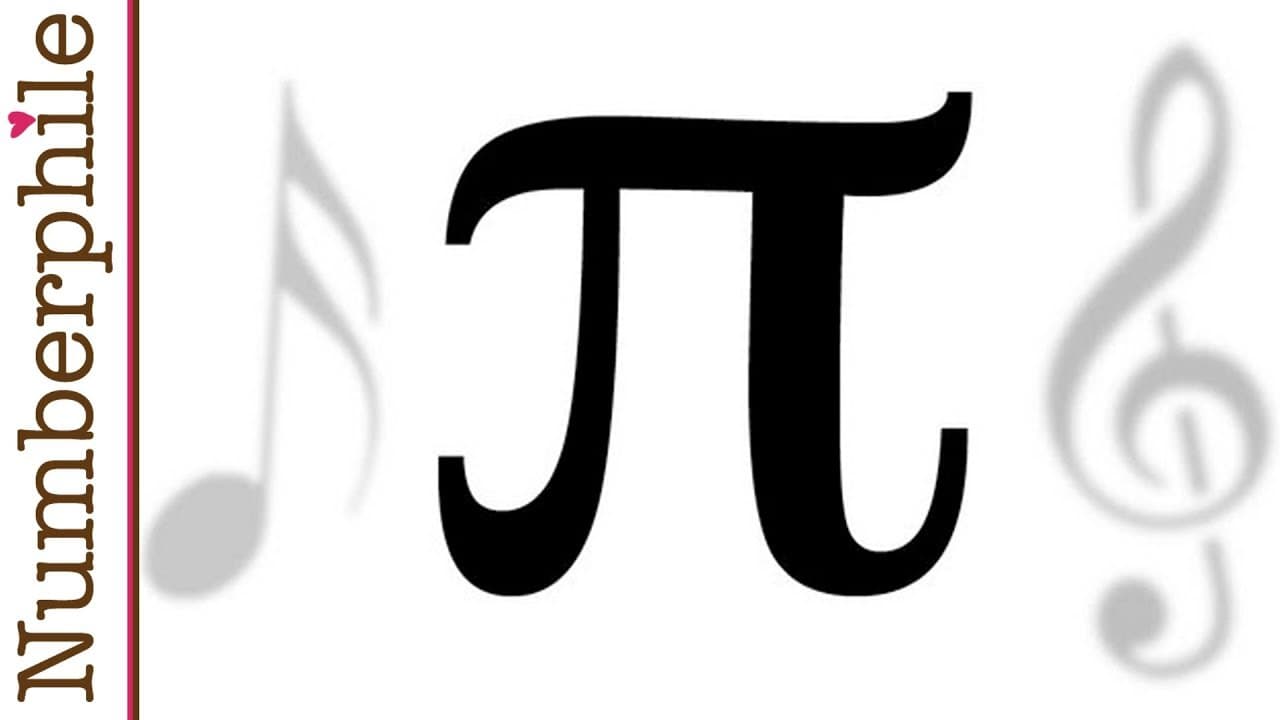
Pi digits mapped to music notes create surprising musical motifs.
Transcript
PHILIP MORIARTY: We all know what pi, the number, looks like. But this is what it sounds like. [COMPUTER TONES] PHILIP MORIARTY: SO what I've done is I've taken the digits of pi to 3.1415, et cetera, et cetera, et cetera. And I've mapped those onto a C major scale. So basically I've said 1 is C, 2 is D, 3 is E, 4 is F, 5 is G, et cetera. And I've g... Read More
Key Insights
- 🎵 Pi digits can be translated into musical notes, resulting in unique compositions.
- 🎹 Despite pi's randomness, musical interpretations reveal surprising patterns and motifs.
- 🤨 Richard Feynman observed non-random patterns in the digits of pi, challenging its irrational nature.
- 🎹 Mapping pi to a musical scale restricts certain musical compositions due to key limitations.
- 🤨 The idea of finding any sequence of numbers, including personal information, within the infinite digits of pi raises interesting theoretical possibilities.
- 🎹 The musical rendering of pi showcases the creative applications of mathematical concepts.
- 🎹 The interplay between mathematical abstraction and musical expression adds depth to understanding complex numbers like pi.
Install to Summarize YouTube Videos and Get Transcripts
Explore YouTube Video Summarizer or Get YouTube Transcript Extractor
Questions & Answers
Q: How are pi digits converted into musical notes?
Pi digits are mapped onto a C major scale, with each digit corresponding to a specific note, creating a unique musical composition.
Q: What did Richard Feynman observe about the digits of pi?
Feynman noted unusual recurring patterns in pi, such as six nines in a row at the 762nd digit, which challenges the idea of pi being entirely random.
Q: Can any sequence of numbers be found within pi?
If pi extends infinitely, there is a finite probability of finding any sequence of numbers within it, including mobile phone numbers or DNA codes.
Q: How does mapping pi to musical notes impact the compositions?
Mapping pi to a musical scale limits the compositions to the key of C major, restricting certain musical pieces like Beethoven's Fifth due to the absence of flats and sharps.
Summary & Key Takeaways
-
Pi digits are converted to a C major scale, producing musical tones.
-
Despite the randomness of pi, mapping to a musical scale creates unique motifs.
-
Richard Feynman noted unusual recurring patterns in the digits of pi.
Read in Other Languages (beta)
Share This Summary 📚
Summarize YouTube Videos and Get Video Transcripts with 1-Click
Try YouTube Summary with ChatGPT & Claude or YouTube Transcript Generator
Explore More Summaries from Numberphile 📚





Summarize YouTube Videos and Get Video Transcripts with 1-Click
Try YouTube Summary with ChatGPT & Claude or YouTube Transcript Generator