Home Automation | IoT Case Studies | Internet of Things
TL;DR
Explore smart home automation using IoT and open-source software for remote control and monitoring with a focus on security and energy efficiency.
Transcript
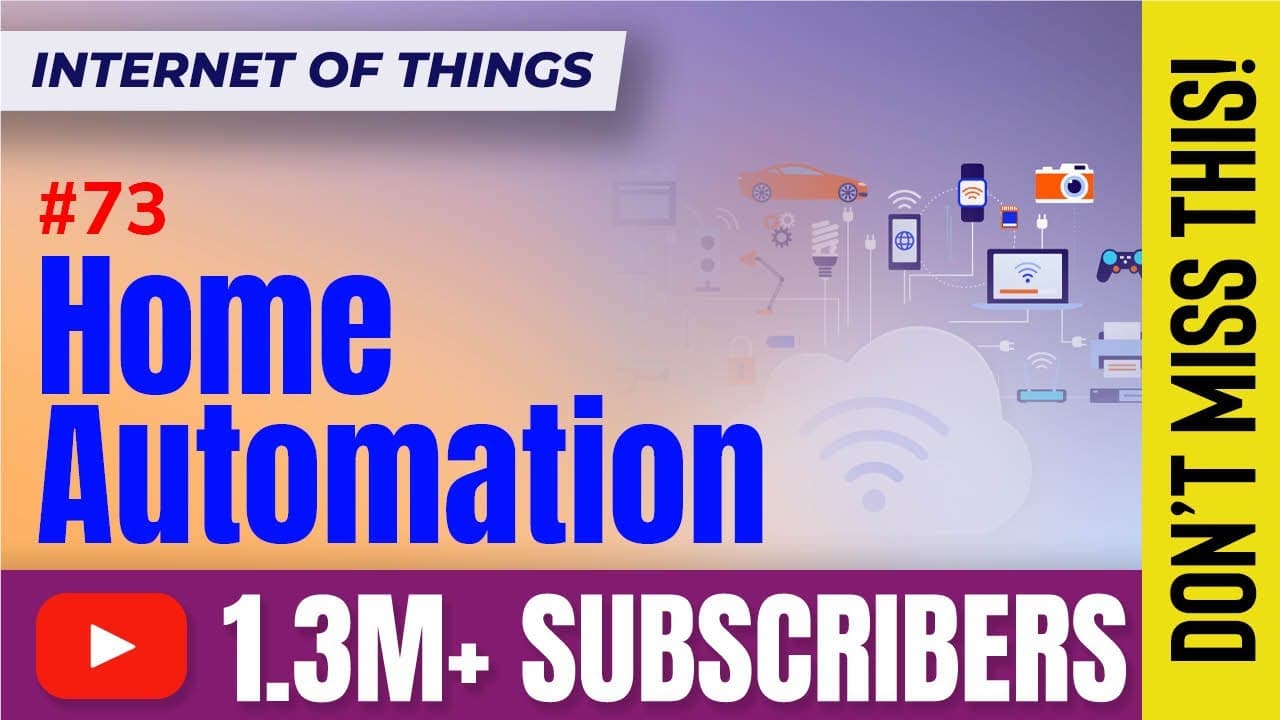
hello students welcome to today's session so in this session we are going to see about home automation using iot so home automation is the automatic control of electronic devices in your home so these devices are connected to the internet which allows them to control remotely so home automation can also lead to a greater safety with iot devices lik... Read More
Key Insights
- 👻 Home automation with IoT allows for remote control of electronic devices for convenience and safety.
- 🤗 OpenHAB serves as a Java-based open-source system for integrating diverse devices in smart homes.
- 🚗 The IoT architecture includes sensors, actuators, and mobile integration for comprehensive control and monitoring.
- 👪 DIY sensors and actuators can enhance customization and monitoring capabilities in smart home automation.
- 👪 Energy efficiency, security, and convenience are primary benefits of home automation using IoT.
- ❤️🩹 Eclipse IoT stack offers end-to-end solutions for smart home applications with Java and OSGi.
- 🤗 Smart home devices are connected through open-source platforms like OpenHAB for seamless control and automation.
Install to Summarize YouTube Videos and Get Transcripts
Explore YouTube Video Summarizer or Get YouTube Transcript Extractor
Questions & Answers
Q: What is the primary advantage of home automation using IoT technology?
Home automation enables remote control of devices for convenience, security, energy efficiency, and enhanced monitoring capabilities, improving overall lifestyle and safety.
Q: How does OpenHAB contribute to smart home automation?
OpenHAB serves as a Java-based open-source system that acts as a bridge between different devices and protocols for seamless integration, control, and automation in smart homes.
Q: What are the key components of the IoT architecture for home automation?
The IoT architecture includes sensors, actuators, a cloud-based platform, and mobile integration, enabling comprehensive control over lighting, appliances, security, and energy management in smart homes.
Q: How can DIY sensors and actuators enhance home automation?
DIY sensors and actuators like motion detectors, smoke detectors, and energy meters can be integrated into the smart home system to enable customized automation and monitoring capabilities.
Summary & Key Takeaways
-
Home automation using IoT involves controlling electronic devices remotely through the internet for enhanced safety and convenience.
-
OpenHAB is a Java-based open-source system for smart home automation, enabling control of lighting, appliances, security, and more.
-
The architecture includes cloud-based platforms, sensors, actuators, and mobile integration for comprehensive smart home solutions.
Read in Other Languages (beta)
Share This Summary 📚
Summarize YouTube Videos and Get Video Transcripts with 1-Click
Try YouTube Summary with ChatGPT & Claude or YouTube Transcript Generator
Explore More Summaries from Ekeeda 📚




Summarize YouTube Videos and Get Video Transcripts with 1-Click
Try YouTube Summary with ChatGPT & Claude or YouTube Transcript Generator