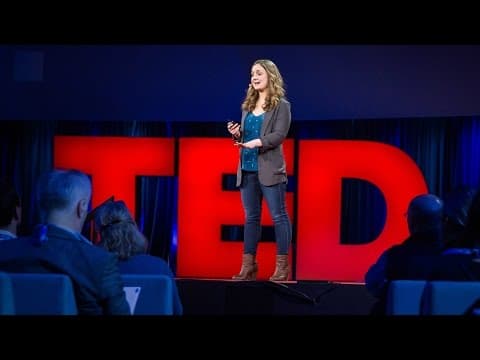
Jay Bradner: Open-source cancer research

TL;DR
This talk highlights the potential of open source research and collaboration in developing targeted therapies for cancer, using the example of a molecule called JQ1 that shows promise in treating a rare cancer called midline carcinoma.
Transcript
I moved to Boston 10 years ago from Chicago, with an interest in cancer and in chemistry. You might know that chemistry is the science of making molecules or, to my taste, new drugs for cancer. And you might also know that, for science and medicine, Boston is a bit of a candy store. You can't roll a stop sign in Cambridge without hitting a graduate... Read More
Key Insights
- 🧬 Key Insight: Boston is a hub for scientific and medical research, particularly in the field of genome medicine.
- 🧫 Key Insight: The field of genome medicine has allowed for a deeper understanding of patients and their cancers, but there is a lack of targeted medications to address the many unique mutations and genes involved in cancer.
- 🏭 Key Insight: The "undruggable genome" refers to proteins like ras, myc, and p53 that have proven difficult to target with drugs. This poses challenges in developing effective treatments for certain types of cancer.
- 🔬 Key Insight: The speaker's lab at Dana-Farber Cancer Institute developed a molecule called JQ1 that targets the undruggable protein BRD4. It has shown promise in treating rare cancers and changing cancer cells into normal cells.
- 🐭 Key Insight: The JQ1 molecule has been successfully tested in mice models for various cancers, leading to positive results and potential for future clinical trials.
- 🧪 Key Insight: The speaker emphasizes the importance of openness and collaboration in drug discovery, leveraging the resources and expertise of academia to accelerate the development of targeted therapies for cancer.
- 💼 Key Insight: The speaker's lab collaborates with a startup called Tensha Therapeutics to further develop and bring molecules like JQ1 to clinical trials, highlighting the need for external support and funding for academic research.
- 📚 Key Insight: The speaker encourages the adoption of open-source and crowdsourcing principles from the computer science industry to speed up the delivery of targeted therapeutics to cancer patients and involve public participation and support.
Install to Summarize YouTube Videos and Get Transcripts
Explore YouTube Video Summarizer or Get YouTube Transcript Extractor
Questions & Answers
Q: Why is it challenging to develop targeted medications for proteins like ras, myc, and p53?
Developing targeted medications for proteins like ras, myc, and p53 is challenging because these proteins are considered "undruggable." Despite knowing their significance in causing cancer, there is no identified greasy pocket in these proteins that can be targeted by molecular locksmiths to create an effective medication. Finding a way to successfully target these proteins remains an ongoing challenge in cancer research.
Q: What is the significance of the molecule JQ1 in cancer treatment?
JQ1 is a molecule developed by the speaker's lab at the Dana-Farber Cancer Institute that shows promise in treating a rare cancer called midline carcinoma. It targets the protein BRD4, preventing cancer cells from remembering that they are cancerous. This molecule has been shown to induce normal cell behavior in cancer cells and has been tested successfully in mice models.
Q: How does open source research and collaboration aid in the development of cancer medications?
Open source research and collaboration are essential in the development of cancer medications. By sharing information openly, researchers can receive input and insights from others in the field, leading to potentially faster and more effective drug development. Collaboration also allows for the pooling of resources, expertise, and perspectives, enabling researchers to tackle complex challenges in a more comprehensive and efficient way.
Q: What is the role of the public in supporting cancer research?
The public plays a crucial role in supporting cancer research through funding. Research projects like the speaker's are often funded by foundations and public contributions. Support from the public allows researchers to pursue innovative ideas and accelerate the development of targeted therapeutics. The speaker expresses gratitude for the unique support for cancer research in Boston, where the public has shown a willingness to participate and collaborate in various fundraising initiatives and events.
Summary & Key Takeaways
-
The speaker moved to Boston to pursue cancer and chemistry research, and highlights the scientific revolution in genome medicine over the past decade.
-
He discusses the challenges of developing targeted medications for cancer, particularly in the case of proteins like ras, myc, and p53 which are considered "undruggable" due to the inability to find a greasy pocket for targeted medications.
-
The speaker introduces the molecule JQ1 and its effectiveness in treating BRD4-addicted cancer, and emphasizes the importance of open source research and collaboration to accelerate the development of targeted therapies.
Read in Other Languages (beta)
Share This Summary 📚
Summarize YouTube Videos and Get Video Transcripts with 1-Click
Try YouTube Summary with ChatGPT & Claude or YouTube Transcript Generator
Explore More Summaries from TED 📚

Summarize YouTube Videos and Get Video Transcripts with 1-Click
Try YouTube Summary with ChatGPT & Claude or YouTube Transcript Generator