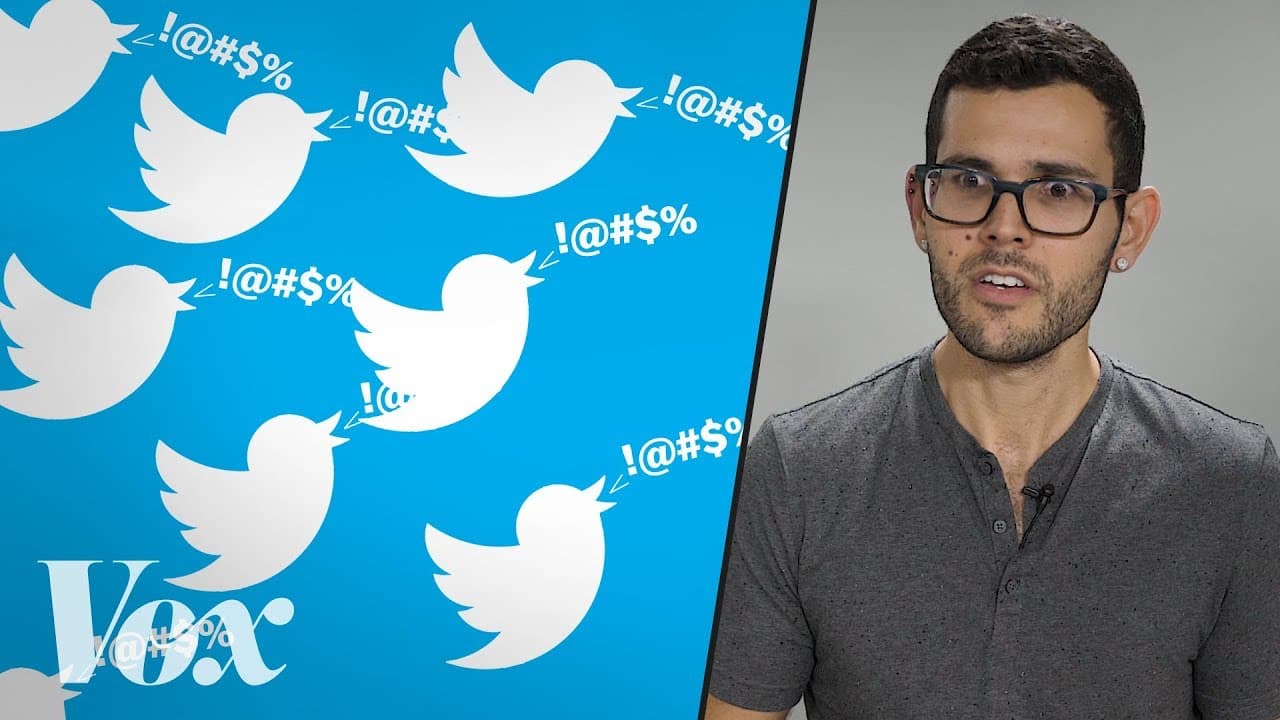
Harassment is breaking Twitter's free speech experiment
TL;DR
Twitter's free speech model is challenged by harassment issues.
Transcript
You guys are not going to believe what Trump just tweeted. He– Uh oh. Sorry. Try it again. You guys are not going to believe what Trump— Jesus. What's wrong? Um. Nothing. One more time. You guys are not going to— You know what? Never mind. Twitter's harassment problem is out of control and it's changing the way we talk about free speech on the inte... Read More
Key Insights
- Twitter began as a platform committed to free speech, allowing users to tweet anonymously and without restrictions, which was initially celebrated for promoting open dialogue.
- The platform's design, intended to foster free expression, inadvertently created an environment conducive to harassment by trolls, neo-Nazis, and misogynists.
- High-profile users, including journalists and celebrities, have left Twitter due to its inability to effectively manage harassment, highlighting a significant public relations issue.
- Twitter's former CEO acknowledged the failure of its free speech experiment, recognizing that neutrality without moderation is an illusion that fails to protect users.
- The company has introduced stricter rules against harassment and violent threats, but enforcing these rules presents complex challenges regarding intent and context.
- Critics argue that Twitter's inconsistent moderation could exacerbate problems, as some users are unfairly targeted while others exploit the platform's policies.
- Twitter faces a dilemma between maintaining its identity as a neutral platform and taking responsibility for moderating content to ensure user safety.
- The company's current approach lacks a clear goal for its rules, raising concerns about the power and responsibility it holds in shaping online discourse.
Install to Summarize YouTube Videos and Get Transcripts
Explore YouTube Video Summarizer or Get YouTube Transcript Extractor
Questions & Answers
Q: What was Twitter's original vision for its platform?
Twitter's original vision was to be a neutral platform for free speech, where users could communicate without restrictions. This design allowed for anonymous tweeting and open dialogue, aiming to create a space where rich discussions could occur and the best ideas could emerge without censorship.
Q: How did Twitter's free speech model lead to harassment issues?
Twitter's model of free speech, which included anonymity and minimal content monitoring, unintentionally created an environment conducive to harassment. This allowed trolls, neo-Nazis, and misogynists to target individuals without repercussions, leading to widespread abuse and a significant public relations challenge for the platform.
Q: What actions has Twitter taken to address harassment?
Twitter has implemented stricter rules to combat harassment, prohibiting violent threats and incitements to harass. The company has also introduced measures against violent groups and hateful images. However, enforcing these rules is complex, requiring nuanced judgments about content intent and context.
Q: What challenges does Twitter face in moderating content?
Twitter faces significant challenges in moderating content, as it must balance its free speech roots with user safety. The complexity lies in assessing intent, context, and the vast range of content. Additionally, the platform's inconsistent moderation could lead to unfair targeting of some users while others exploit policy gaps.
Q: How has Twitter's approach to free speech evolved?
Initially committed to radical free speech, Twitter's approach has evolved to include stricter moderation to combat harassment. This shift reflects a recognition that neutrality without moderation is ineffective, but it also complicates Twitter's identity as a neutral platform, raising questions about its role and responsibilities.
Q: Why are some users leaving Twitter?
Some users, including high-profile figures like journalists and celebrities, are leaving Twitter due to its inability to effectively manage harassment. The platform's free speech model, while initially appealing, has allowed for rampant abuse, creating an unsafe environment that drives users away and damages Twitter's reputation.
Q: What concerns exist about Twitter's current moderation strategy?
Critics are concerned that Twitter's current moderation strategy is inconsistent and lacks a clear goal. This inconsistency can lead to unfair targeting of certain users, while others exploit the platform's policies. The lack of transparency in decision-making processes also raises concerns about the power and responsibility Twitter holds.
Q: What is the future direction for Twitter's platform?
Twitter's future direction involves navigating the tension between its free speech ideals and the need for content moderation. The platform must develop a clear goal for its rules to ensure user safety while maintaining open dialogue. This shift requires careful consideration of the power and responsibility it holds in shaping online discourse.
Summary & Key Takeaways
-
Twitter was initially designed as a radical free speech platform, allowing users to communicate freely and anonymously, which was seen as a boon for citizen journalism and political discourse.
-
Over time, the same features that promoted free speech also enabled rampant harassment, leading to a significant public relations problem as high-profile users left the platform.
-
Twitter is now caught between its original free speech ideals and the need to moderate content to protect users, a complex challenge that raises questions about its future direction.
Read in Other Languages (beta)
Share This Summary 📚
Summarize YouTube Videos and Get Video Transcripts with 1-Click
Try YouTube Summary with ChatGPT & Claude or YouTube Transcript Generator
Explore More Summaries from Vox 📚

Summarize YouTube Videos and Get Video Transcripts with 1-Click
Try YouTube Summary with ChatGPT & Claude or YouTube Transcript Generator