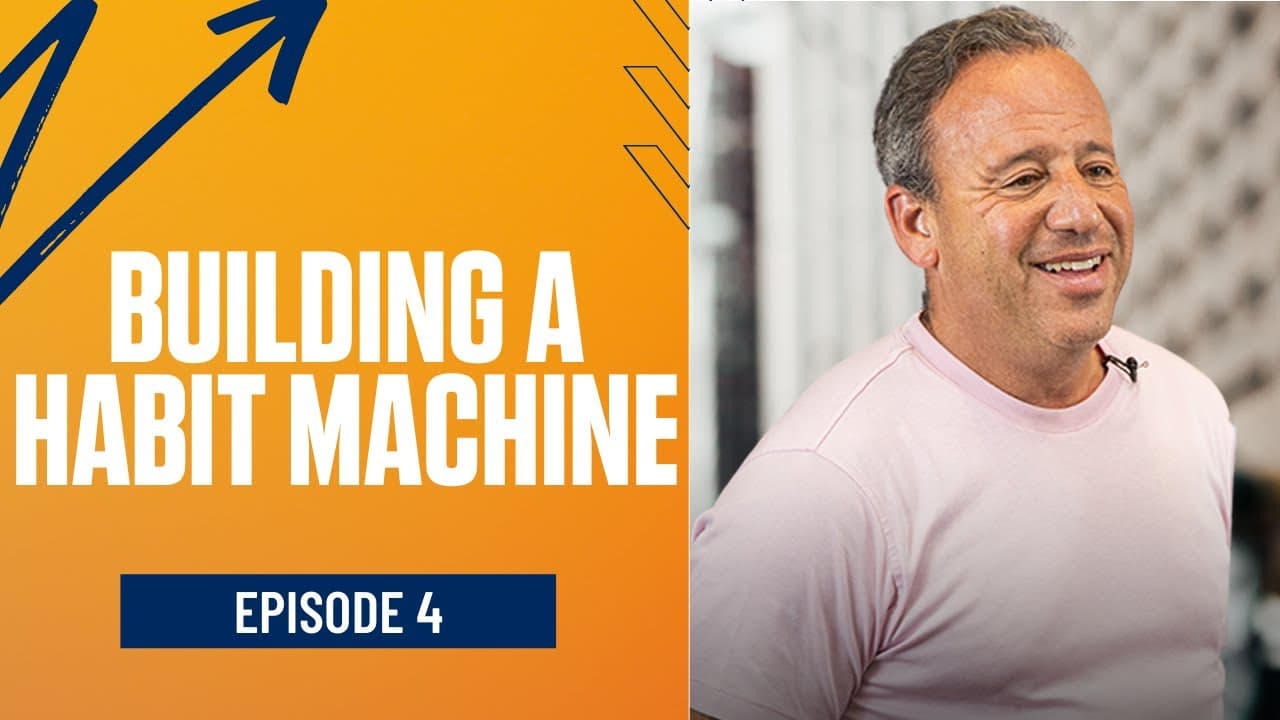
Building a Habit Machine | Road to Revenue Episode #4 | David Meltzer Live
TL;DR
David Meltzer discusses creating a habit machine for personal growth.
Transcript
I could create a habit machine for you and that's where my focus has been the last decade on what is it what machinery is it that creates these habits and how our habits form there's so much information out there about the habits but my ultimate goal in my ultimate practice is what if I could say you know what I want to you know eat clean or I want... Read More
Key Insights
- Creating a habit machine involves understanding and aligning personal values with daily actions to achieve long-term goals.
- Consistency is crucial in habit formation, requiring repetitive input to achieve incremental and exponential growth.
- The conscious mind, driven by motivation, starts the habit machine by utilizing sensory data and memory.
- The subconscious mind holds intermediate memory, processing 40,000 thoughts daily, influencing habit formation.
- Quantum memory, inherited from ancestors, affects our behavior, necessitating consistent effort to overcome negative patterns.
- Inspiration, unlike motivation, sustains habits by connecting individuals to a greater source of energy and purpose.
- The ego, while sometimes useful for motivation, often hinders progress by creating resistance and wasting energy.
- Effective habit formation requires managing inputs, practicing gratitude, and maintaining a balance between motivation and inspiration.
Install to Summarize YouTube Videos and Get Transcripts
Explore YouTube Video Summarizer or Get YouTube Transcript Extractor
Questions & Answers
Q: What is the first step in creating a habit machine?
The first step in creating a habit machine is to take inventory of your values. Understanding what you truly want and aligning it with your daily actions is crucial. This involves breaking down who you are and what you stand for, such as health, wealth, or being a better listener.
Q: How does the conscious mind contribute to habit formation?
The conscious mind contributes to habit formation by processing sensory data and memory. It relies on motivation to get started, using the five senses to input data. However, this input is often faulty, requiring consistent repetition to achieve stable results and integrate habits into cellular memory.
Q: What role does the subconscious mind play in habit formation?
The subconscious mind holds intermediate memory, processing around 40,000 thoughts daily. It bridges the conscious and unconscious minds, influencing habit formation. Consistent input into the subconscious can create neural pathways, integrating new habits into one's daily routine and overcoming negative patterns.
Q: How do quantum memory and inherited behaviors affect habits?
Quantum memory, inherited from ancestors, can influence behavior and create challenges in habit formation. These inherited patterns require consistent effort to overcome. Understanding that these behaviors may have been passed down through generations can help individuals address and change them over time.
Q: How does inspiration differ from motivation in habit formation?
Inspiration differs from motivation as it sustains habits by connecting individuals to a greater source of energy and purpose. While motivation can get you started, inspiration keeps you going and helps maintain the habit machine. It involves understanding one's connection to a larger source of light, love, and lessons.
Q: What challenges can the ego present in forming habits?
The ego can present challenges in forming habits by creating resistance and wasting energy. It often edges goodness out of life, leading to feelings of guilt, resentment, or fear. While it can motivate in the short term, relying on the ego can hinder long-term progress and habit formation.
Q: How can individuals manage inputs to improve habit formation?
Individuals can manage inputs by controlling their mindset, feelings, and actions. This involves being aware of what they say, hear, and do, and practicing gratitude. By focusing on positive inputs and eliminating negative influences, individuals can improve habit formation and achieve their goals.
Q: What is the significance of practicing gratitude in habit formation?
Practicing gratitude is significant in habit formation as it helps maintain a positive mindset and reduces resistance. Gratitude allows individuals to appreciate incremental and exponential growth, even when it is not immediately visible. It also strengthens connections to others and enhances overall well-being.
Summary & Key Takeaways
-
David Meltzer emphasizes the importance of creating a habit machine to achieve personal and professional growth. He explains that understanding and aligning one's values with daily actions is crucial for long-term success.
-
Consistency and repetition are key to forming habits that lead to incremental and exponential growth. The conscious mind, driven by motivation, plays a vital role in starting the habit machine by processing sensory data and memory.
-
The subconscious mind, holding 40,000 thoughts daily, influences habit formation, while quantum memory inherited from ancestors can affect behavior. Overcoming negative patterns requires consistent effort and the practice of gratitude.
Read in Other Languages (beta)
Share This Summary 📚
Summarize YouTube Videos and Get Video Transcripts with 1-Click
Try YouTube Summary with ChatGPT & Claude or YouTube Transcript Generator
Explore More Summaries from David Meltzer 📚



Summarize YouTube Videos and Get Video Transcripts with 1-Click
Try YouTube Summary with ChatGPT & Claude or YouTube Transcript Generator