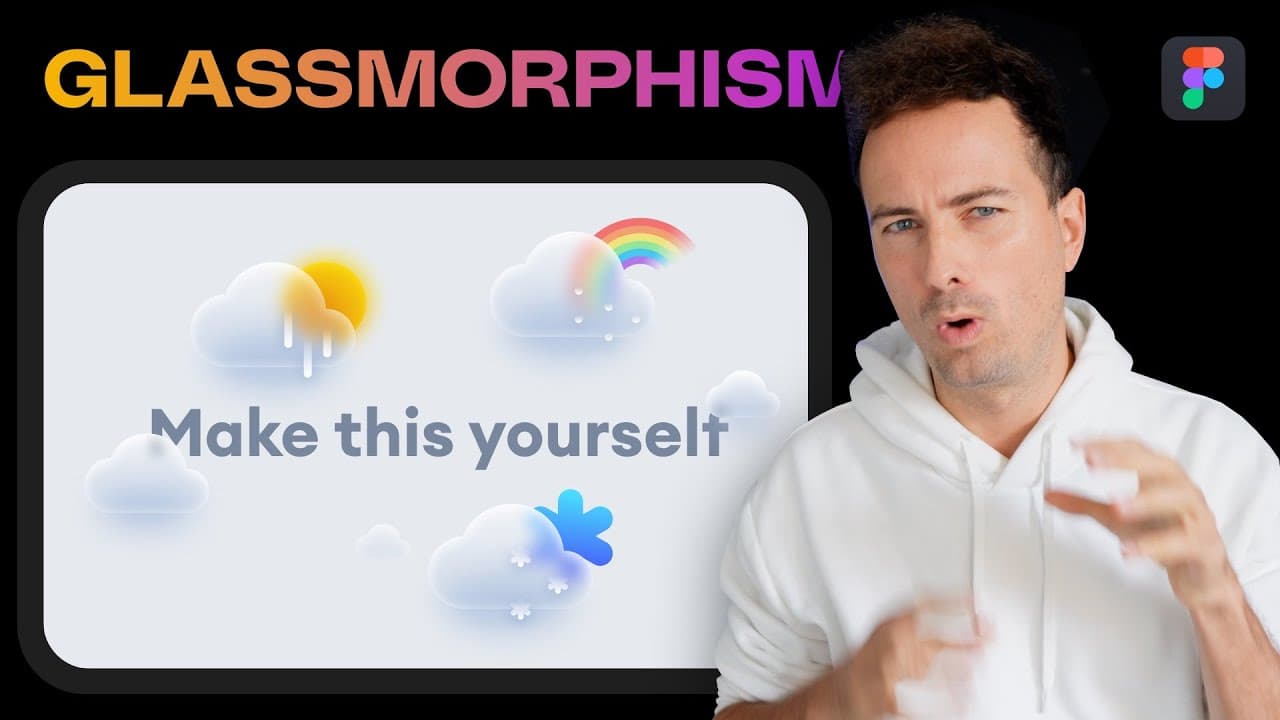
Glassmorphism weather icons tutorial in Figma
TL;DR
Learn to create glassmorphism weather icons for visual appeal in design.
Transcript
hey friends as you probably know I created the name glassmorphism I was sick and tired of everybody calling that effect something else from frosted glass all the way to acrylic so I created that glass morphe's name to unify it under one common terminology so it's gonna be a lot easier for you to search for it to find tutorials to find articles and ... Read More
Key Insights
- 🔍 Glassmorphism serves as a unifying term for various glass-style effects in design, simplifying terminology and search.
- 😎 Creating glassmorphism visuals involves layering shapes, gradients, blurs, and shadows to achieve a realistic glass-like appearance.
- 🎨 Glassmorphism techniques can be applied beyond UI design to create visually appealing illustrations and icons for various design projects.
- 🎨 Practicing glassmorphism visuals helps designers enhance creativity, portfolio quality, and skills in creating aesthetically pleasing designs.
- 😎 Utilizing gradients, blurs, and shadows can help replicate the transparency and reflections seen in glass materials for a modern design aesthetic.
- 👀 Glassmorphism tutorials provide valuable insights for designers looking to explore creative design techniques and improve their visual storytelling abilities.
- 👤 Incorporating glassmorphism effects in design projects can add a touch of sophistication and modernity, making user interfaces and illustrations visually engaging.
Install to Summarize YouTube Videos and Get Transcripts
Explore YouTube Video Summarizer or Get YouTube Transcript Extractor
Questions & Answers
Q: What is the concept of glassmorphism in design?
Glassmorphism refers to a design trend incorporating glass-like effects, such as transparency and blurring, to create a sleek and modern look in user interfaces.
Q: How can glassmorphism be applied to illustration beyond UI design?
Glassmorphism can be used to create visually appealing illustrations like weather icons by layering shapes, gradients, and shadows to achieve a glassy, realistic effect.
Q: What are some key techniques for creating glassmorphism effects in design?
Key techniques include using gradients, blurs, shadows, and layering shapes to simulate the transparency and reflections seen in glass materials for a sleek visual appearance.
Q: Why is it beneficial to practice creating glassmorphism visuals?
Practicing glassmorphism visuals helps designers think creatively, enhance portfolio projects, and develop skills in creating visually striking designs for various applications.
Summary & Key Takeaways
-
Glassmorphism is a unified term for various glass-style effects in design, simplifying search.
-
Tutorial demonstrates creating glassmorphism weather icons for UI visuals.
-
Techniques include layering shapes, gradients, blurs, shadows to achieve the glassy effect.
Read in Other Languages (beta)
Share This Summary 📚
Summarize YouTube Videos and Get Video Transcripts with 1-Click
Try YouTube Summary with ChatGPT & Claude or YouTube Transcript Generator
Explore More Summaries from Malewicz 📚


Summarize YouTube Videos and Get Video Transcripts with 1-Click
Try YouTube Summary with ChatGPT & Claude or YouTube Transcript Generator