What Are the Key Advancements in AI from Ilya Sutskever?
TL;DR
Ilya Sutskever highlights significant advancements in AI, including superhuman performance in Dota 2 through reinforcement learning scaling, dexterous manipulation using domain randomization, and breakthroughs in unsupervised language understanding. These achievements demonstrate the effectiveness of large neural network architectures and advanced training techniques, emphasizing the importance of safety and ethical considerations in AI development.
Transcript
well welcome back everybody it's my great pleasure to introduce Ilya scoot over who is one of the true luminaries of deep learning he was there at the very beginning of the current revolution getting his PhD with Geoff Hinton at Toronto where he was one of the co-authors on the very seminal paper on Alex net which is really the network that by winn... Read More
Key Insights
- 🖐️ Scaling up reinforcement learning is crucial for achieving superhuman performance in challenging tasks like playing Dota 2 competitively.
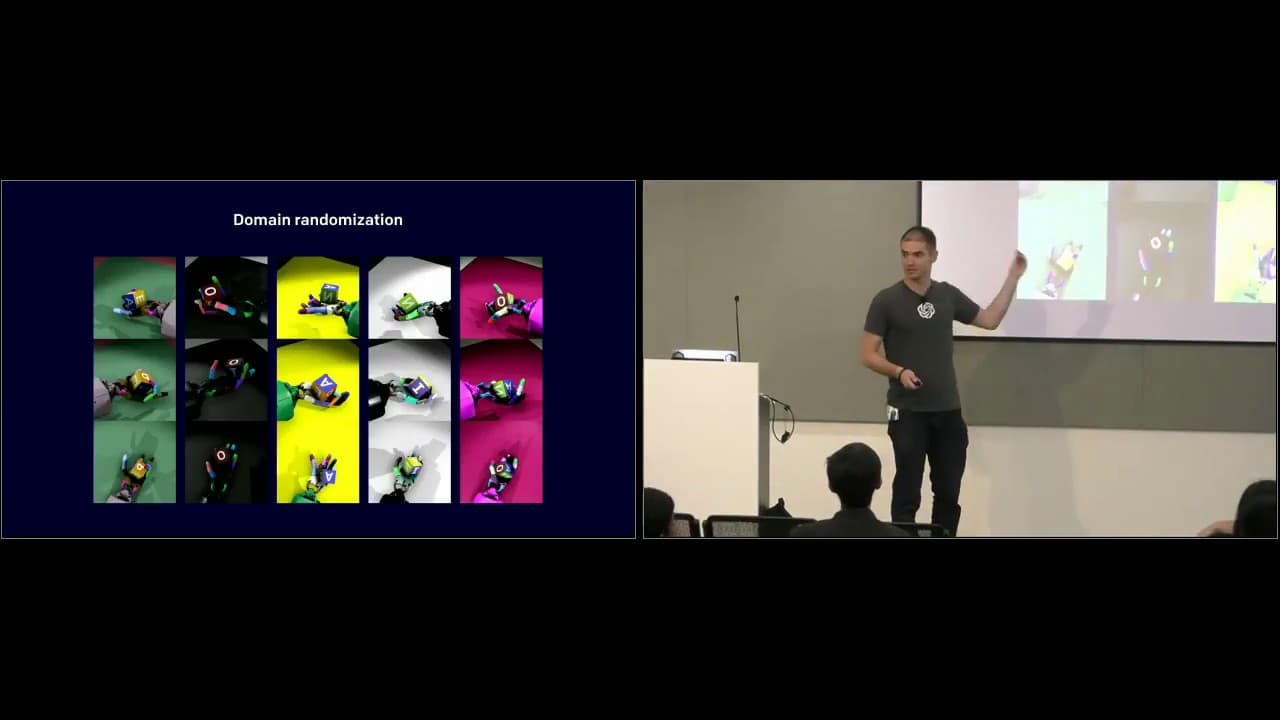
- 🌍 Domain randomization enables transfer learning from simulation to real-world environments, enhancing AI adaptability and generalization.
- 🥺 Utilizing large-scale neural network architectures and advanced training methods can lead to significant advancements in AI capabilities.
- 🦺 Addressing safety, deployment, and ethical considerations is essential in developing AI systems that are beneficial and safe for society.
Install to Summarize YouTube Videos and Get Transcripts
Explore YouTube Video Summarizer or Get YouTube Transcript Extractor
Questions & Answers
Q: What are the main goals of AI research at OpenAI?
The primary objectives are to build safe Artificial General Intelligence (AGI) and ensure its benefits are distributed widely. Achieving difficult goals in simulation, transferring skills to the real world, and developing robust world models are essential components addressed for safety and deployment concerns.
Q: How did OpenAI train AI to play Dota 2 competitively against humans?
OpenAI utilized large-scale reinforcement learning, LSTM policy networks, and domain randomization to train a powerful Dota 2 bot capable of matching human performance. The use of self-play, reward shaping, and policy improvement strategies were critical in achieving success.
Q: What was the key scientific discovery made during the work on training AI for playing Dota 2?
The breakthrough revelation was that reinforcement learning can effectively solve complex problems by scaling up the models. Despite initial skepticism towards RL's capabilities, OpenAI demonstrated that scaling up RL can lead to superhuman performance in challenging environments like Dota 2.
Q: How does the concept of domain randomization contribute to training AI systems for real-world applicability?
Domain randomization involves varying unknown factors in simulation to teach the AI model to generalize across different conditions. By training policies on diverse simulations, AI can adapt to changes in the real world without explicit hard-coding.
Summary & Key Takeaways
-
Ilya Sutskever discusses recent advancements in AI research, highlighting achievements in game-playing bots, dexterous manipulation, and unsupervised language understanding at OpenAI.
-
The talk focuses on the success of training AI models to exceed human performance in complex tasks, such as playing competitive games like Dota 2.
-
The key insights include scaling up reinforcement learning for challenging problems, utilizing domain randomization for simulation-to-real-world transfer, and developing advanced neural network architectures for various applications.
Read in Other Languages (beta)
Share This Summary 📚
Summarize YouTube Videos and Get Video Transcripts with 1-Click
Try YouTube Summary with ChatGPT & Claude or YouTube Transcript Generator
Explore More Summaries from NVIDIA 📚


Summarize YouTube Videos and Get Video Transcripts with 1-Click
Try YouTube Summary with ChatGPT & Claude or YouTube Transcript Generator