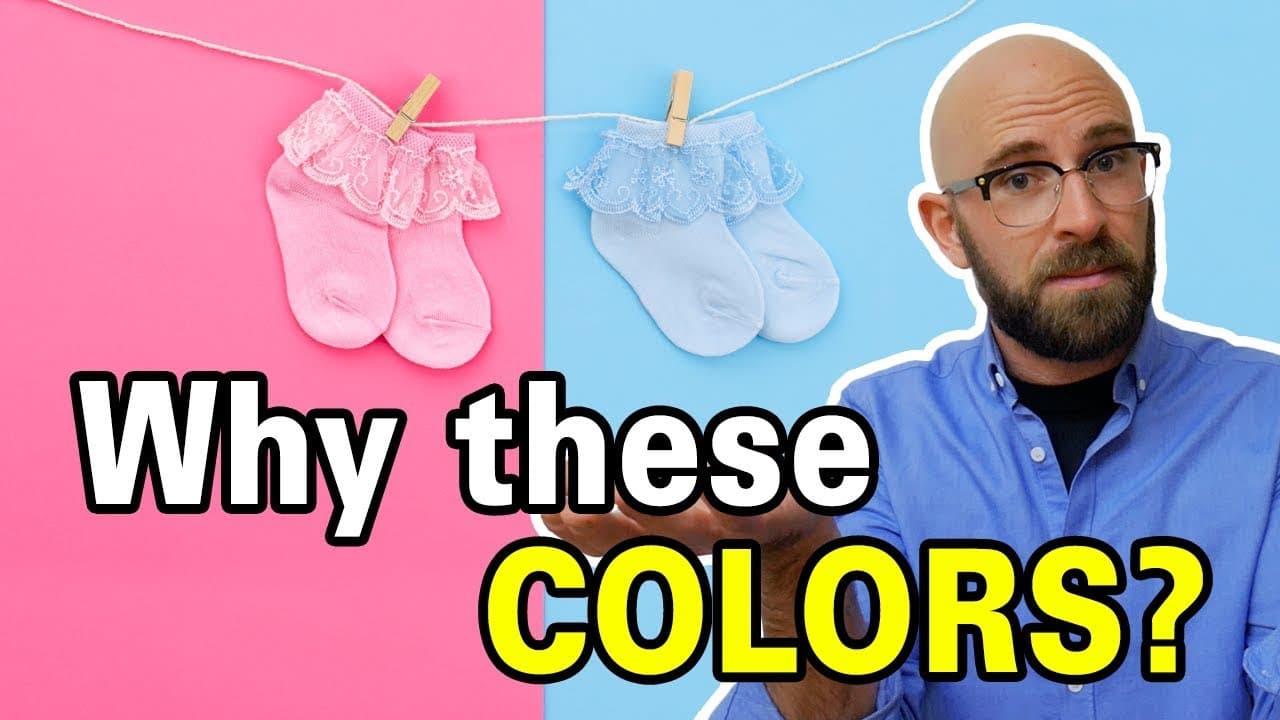
Why is it Pink for Girls and Blue for Boys?
TL;DR
Pink and blue were not originally associated with gender, but in the early 20th century, pink was considered more suitable for boys and blue for girls. This association became popular due to marketing campaigns and the need for parents to buy separate wardrobes for boys and girls.
Transcript
this video is brought to you by brilliant support today I found out and get unlimited access to all of brilliance in depth maths and science courses head over to brilliant a talk forward slash brain food to get 20% off their annual premium subscription more on them in a bit if we were to play a word association game where I said a word and you had ... Read More
Key Insights
- 🩷 Gender associations with colors like pink and blue began in the early 20th century.
- 👨👩👧👦 The pink-for-girls, blue-for-boys association was promoted by retailers and manufacturers to sell more clothes and accessories.
- ⚧️ Prior to the gender color scheme, infants were dressed in white for everyday life, and clothing preferences were not gender-specific.
- 🤕 Boys used to wear dresses until the age of five or six in the early 20th century.
- 😐 The women's liberation movement of the 1960s and 1970s led to a resurgence of gender-neutral clothing colors.
- 👨👩👧👦 The introduction of prenatal testing and the need to buy gender-specific clothes led to a return to the pink-for-girls, blue-for-boys phenomenon.
- 🤕 In many countries, children were traditionally potty-trained at a much younger age than in the Western world.
- 🥺 The introduction of disposable diapers and marketing campaigns led to delayed potty training in the West.
Install to Summarize YouTube Videos and Get Transcripts
Explore YouTube Video Summarizer or Get YouTube Transcript Extractor
Questions & Answers
Q: Why did pink become associated with girls and blue with boys?
Pink was deemed more suitable for boys, as it was seen as a stronger color, while blue was considered prettier and more delicate, making it suitable for girls. This association was promoted by retailers and manufacturers.
Q: Did people follow the gender color recommendations in the early 20th century?
While many people followed the pink-for-girls, blue-for-boys association, there were also those who ignored the recommendations and dressed their children in other colors. The gender color scheme was not universally followed.
Q: Are boys naturally predisposed to prefer blue and girls to prefer pink?
Studies have shown mixed results in determining if color preferences are innate. While the majority of humans prefer blue to pink, pink is actually one of the adult world's least favorite colors. It is challenging to conduct large-scale studies without the influence of existing color biases.
Q: When did the association between pink for girls and blue for boys become firmly entrenched in society?
The association became firmly entrenched in the mid-20th century when clothing manufacturers decided on pink for girls and blue for boys. This phenomenon continues to be prevalent in Western society today.
Summary & Key Takeaways
-
Gender associations with colors like pink and blue began in the early 20th century.
-
Prior to this, pink and blue did not hold any gender-specific connotations.
-
Clothing retailers and manufacturers played a significant role in promoting the pink-for-girls, blue-for-boys color scheme.
Read in Other Languages (beta)
Share This Summary 📚
Summarize YouTube Videos and Get Video Transcripts with 1-Click
Try YouTube Summary with ChatGPT & Claude or YouTube Transcript Generator
Explore More Summaries from Today I Found Out 📚






Summarize YouTube Videos and Get Video Transcripts with 1-Click
Try YouTube Summary with ChatGPT & Claude or YouTube Transcript Generator