How to Implement Atomicity and Durability in Transactions
TL;DR
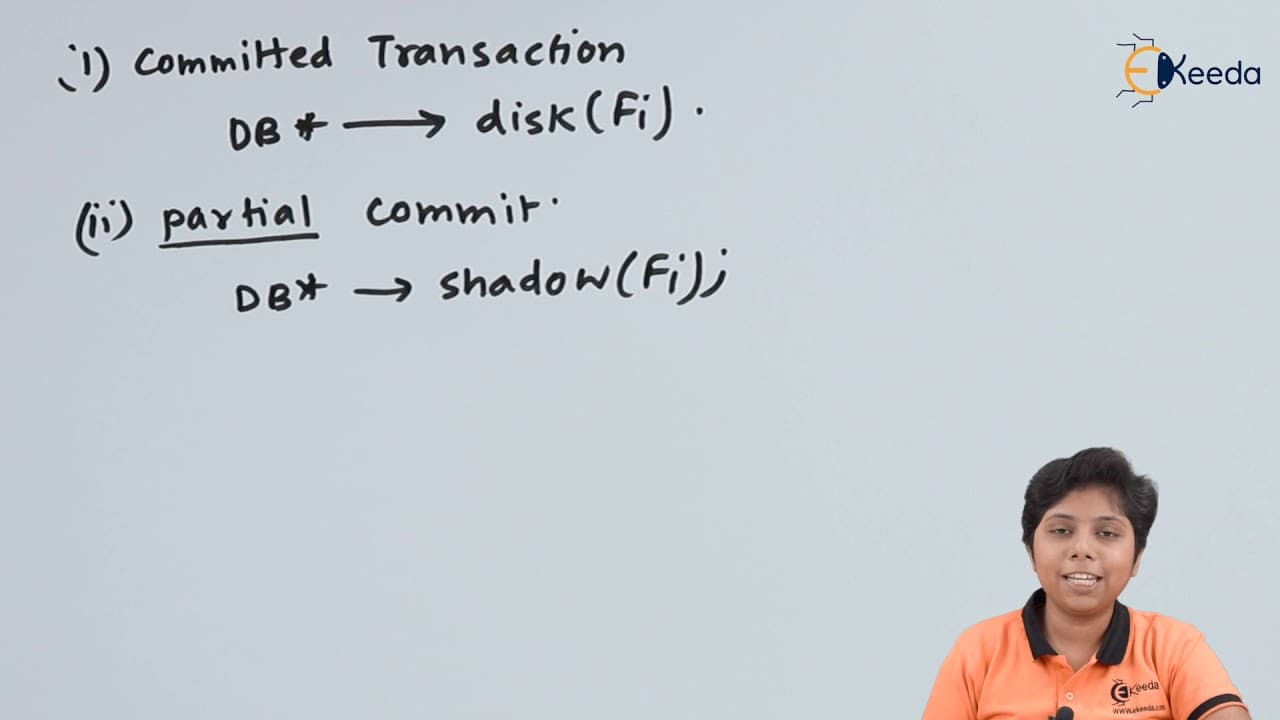
To implement atomicity and durability in transactions, use the Shadow Copy method, which creates a new copy of the database file for updates. This ensures that a transaction is either fully completed or not executed at all, although it can be inefficient for larger databases due to increased storage requirements.
Transcript
click the Bell icon to get latest videos from Akira how the friends today we'll talk about the implementation of an atom a city and durability in the transaction that means we have described the properties of atomicity and durability now today we will know that how we can implement these two properties in the transaction using some procedures we wi... Read More
Key Insights
- ❓ Atomicity and durability are crucial for ensuring transaction integrity and data persistence.
- 📁 The Shadow Copy method creates a duplicate database file for transaction updates.
- 🛟 Despite its inefficiency, Shadow Copy maintains atomicity and durability by preserving data consistency.
- 😀 Large databases may face challenges with Shadow Copy due to resource requirements.
- ❓ Commitment and synchronization of updates are critical for maintaining transaction integrity.
- ❓ Atomicity ensures complete transaction execution, while durability ensures data persistence.
- ❓ Shadow Copy provides a reliable backup mechanism for transactions.
Install to Summarize YouTube Videos and Get Transcripts
Explore YouTube Video Summarizer or Get YouTube Transcript Extractor
Questions & Answers
Q: What are the key features of atomicity and durability in transactions?
Atomicity ensures complete execution of a transaction, while durability guarantees data consistency and persistence on the disk.
Q: How does the Shadow Copy method work to implement atomicity and durability?
The Shadow Copy technique creates a separate copy of the database file for transaction updates, maintaining the original version as a backup reference for data consistency.
Q: Why is Shadow Copy considered inefficient despite its benefits?
Shadow Copy requires significant memory resources for each transaction, may lead to redundant storage, and poses challenges for large databases due to full database copying.
Q: How does Shadow Copy handle different transaction scenarios for atomicity and durability?
It points to the updated copy for committed transactions, reverts to the original for uncommitted ones, and waits for disk synchronization for durability.
Summary & Key Takeaways
-
Atomicity and durability are essential transaction features ensuring either full execution or none at all.
-
The Shadow Copy method involves creating a new copy of the database file for transaction updates.
-
Despite its inefficiency, Shadow Copy maintains atomicity and durability by handling committed and partial transactions.
Read in Other Languages (beta)
Share This Summary 📚
Summarize YouTube Videos and Get Video Transcripts with 1-Click
Try YouTube Summary with ChatGPT & Claude or YouTube Transcript Generator
Explore More Summaries from Ekeeda 📚


Summarize YouTube Videos and Get Video Transcripts with 1-Click
Try YouTube Summary with ChatGPT & Claude or YouTube Transcript Generator