That Time Kodak Accidentally Discovered the World's First Atomic Bomb
TL;DR
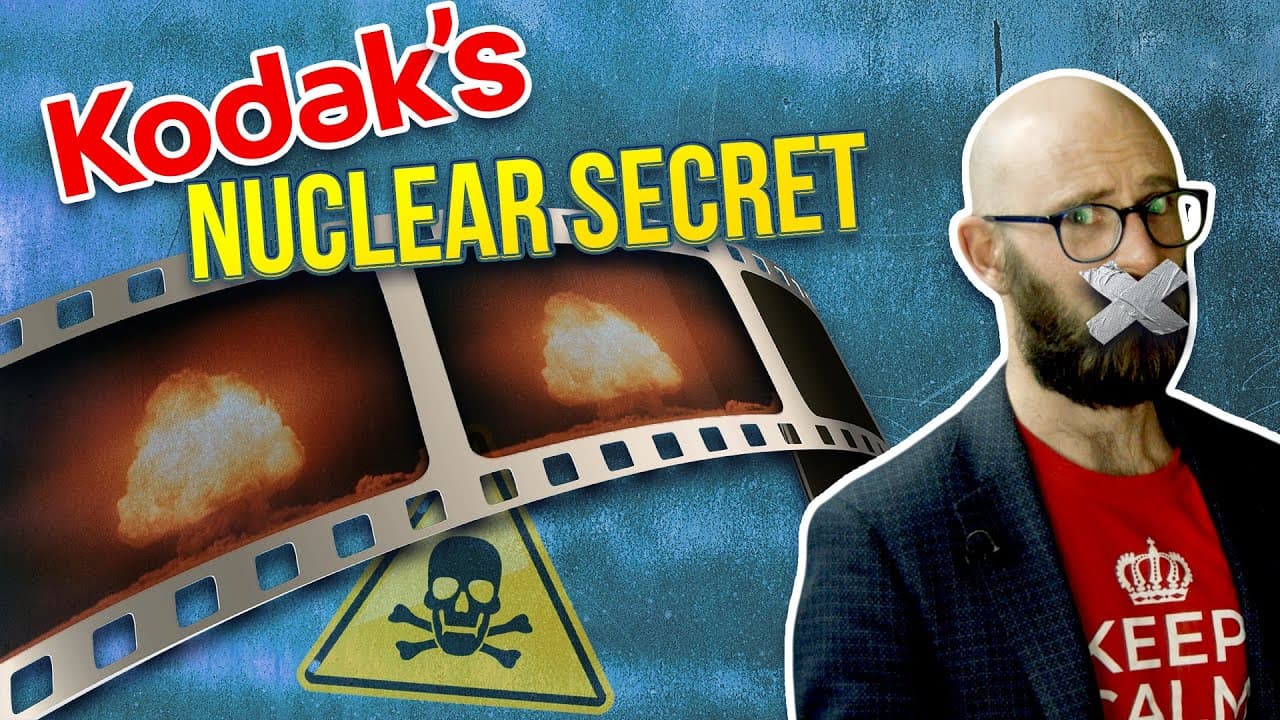
Kodak's scientists discovered radioactive contamination in their film, leading them to uncover the truth about atomic testing.
Transcript
in august 1945 eastman kodak headquarters in rochester new york began receiving unusual complaints from its customers a large batch of photographic film had become fogged with developed images emerging covered in hundreds of tiny white dots while such contamination was unacceptable in the best of cases in this instance it was particularly concernin... Read More
Key Insights
- 💀 Kodak's investigation into contaminated film revealed the dangers of atomic testing and the need to control radioactive contamination in the supply chain.
- 🏆 The fallout from the Trinity test in 1945 and subsequent above-ground nuclear tests caused widespread contamination across the US.
- 🌍 The US government prioritized national security over public safety by downplaying the risks of fallout.
- 💀 Kodak's agreement with the government highlights their complicity in concealing the dangers of atomic testing from the public.
- 🥺 Fallout from nuclear tests led to an increase in thyroid cancer cases, highlighting the long-lasting health effects of radiation exposure.
- 👪 The government's failure to warn dairy farmers and parents of children in affected areas shows a disregard for their well-being.
- 🤨 The case of Kodak and atomic testing raises ethical questions about the responsibility of corporations and governments in protecting public health.
Install to Summarize YouTube Videos and Get Transcripts
Explore YouTube Video Summarizer or Get YouTube Transcript Extractor
Questions & Answers
Q: How did Kodak discover the radioactive contamination in their film?
Kodak's scientists investigated the fogged film and determined that it was caused by radioactive contamination rather than light exposure. They traced the contamination to packaging made with cardboard that had been exposed to radiation from a nearby radium plant.
Q: What did Julian Webb discover about the source of contamination?
Julian Webb found that the contamination was not radium, as initially suspected, but cerium 141, an isotope produced by nuclear fission. He traced the source of the contamination to rivers that had been contaminated by fallout from the Trinity test.
Q: How did fallout from nuclear tests affect Kodak in 1951?
Fallout from above-ground nuclear tests reached Kodak's headquarters in Rochester, causing radioactive snowfall. Concerned about the impact on their film manufacturing process, Kodak contacted the Atomic Energy Commission (AEC) for help.
Q: How did the US government respond to Kodak's concerns about contamination?
The US government reached a secret agreement with Kodak, providing them with information about future nuclear tests and predicted fallout patterns. In exchange, Kodak agreed to keep everything it knew about the American nuclear weapons program confidential.
Summary & Key Takeaways
-
In 1945, Kodak received complaints about fogged photographic film, which turned out to be due to radioactive contamination from a nearby radium plant.
-
Scientist Julian Webb identified the contamination as cerium 141, an isotope produced by nuclear fission, and traced its source to rivers contaminated by fallout from the Trinity test.
-
In 1951, Kodak faced another contamination incident when fallout from above-ground nuclear tests reached their headquarters, leading to a secret agreement between Kodak and the US government.
-
The government's failure to warn the public of the dangers of fallout led to widespread contamination and health issues.
Read in Other Languages (beta)
Share This Summary 📚
Summarize YouTube Videos and Get Video Transcripts with 1-Click
Try YouTube Summary with ChatGPT & Claude or YouTube Transcript Generator
Explore More Summaries from Today I Found Out 📚






Summarize YouTube Videos and Get Video Transcripts with 1-Click
Try YouTube Summary with ChatGPT & Claude or YouTube Transcript Generator