Multi-Lingual Toxic Comment Classification using BERT and TPUs with PyTorch
TL;DR
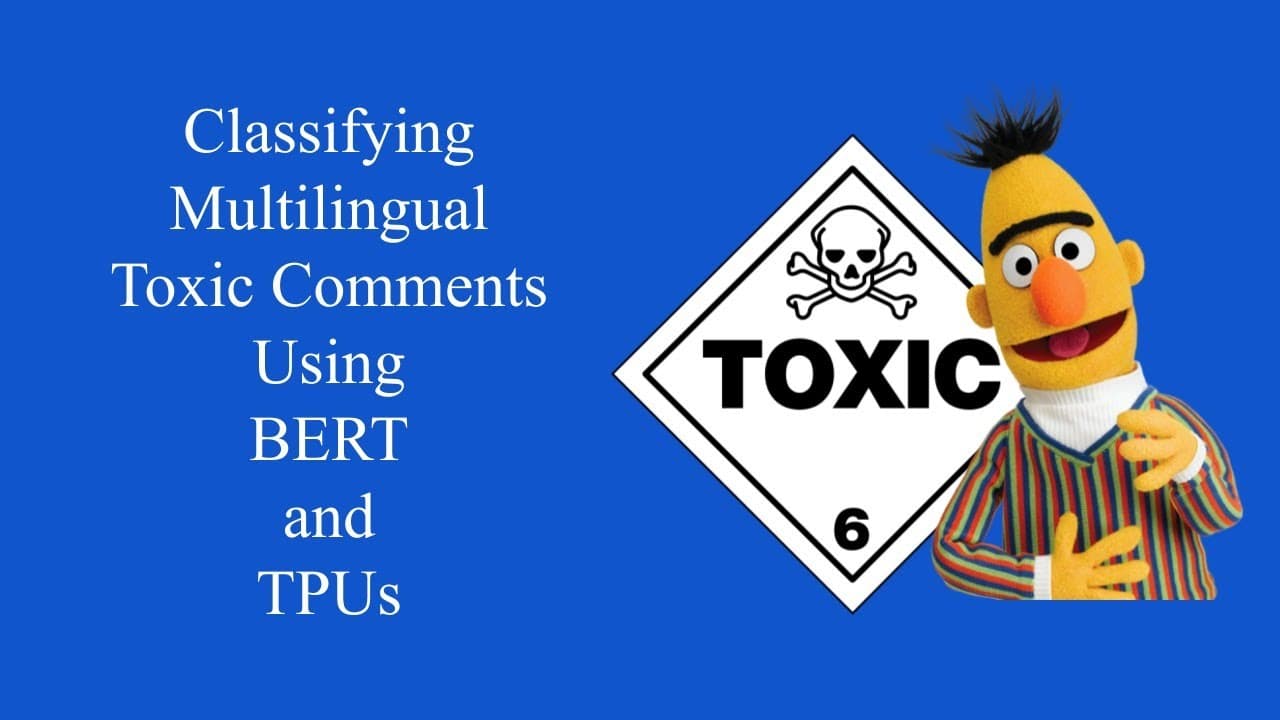
This video discusses how to use BERT and TPUs to build a model for the Kaggle Multilingual Toxic Comment Classification Challenge.
Transcript
you okay so hello everyone and welcome yeah okay so in this video I'm going to talk about the new challenge that we have one kaggle multilingual toxic comment classification and there have been many challenges like this in the in the past called toxic comment classification but we never had multilingual and yeah thanks for the Hat I couldn't find m... Read More
Key Insights
- 💬 The Kaggle Multilingual Toxic Comment Classification Challenge involves building a model to classify toxic comments in multiple languages.
- 💗 BERT and TPUs can be used to train the model faster and more efficiently.
- 😫 Modifying the data set and model classes from a previous project can facilitate the development of the toxic comment classification model.
Install to Summarize YouTube Videos and Get Transcripts
Explore YouTube Video Summarizer or Get YouTube Transcript Extractor
Questions & Answers
Q: What is the Kaggle Multilingual Toxic Comment Classification Challenge?
The Kaggle Multilingual Toxic Comment Classification Challenge is a competition focused on building a model that can classify toxic comments in multiple languages.
Q: How can BERT be used in the toxic comment classification challenge?
BERT can be used in the toxic comment classification challenge by fine-tuning a pre-trained BERT model on the provided data. BERT's ability to understand context and semantics makes it well-suited for text classification tasks.
Q: What is the role of TPUs in training the model?
TPUs, or Tensor Processing Units, are hardware accelerators that can significantly speed up the training process. In this video, TPUs are used to train the toxic comment classification model faster and more efficiently.
Q: How can the model's performance be improved?
The presenter suggests experimenting with different optimization parameters, such as learning rate and batch size, to improve the model's performance. Additionally, translating the data to English and combining it with the multilingual model could also lead to better results.
Summary & Key Takeaways
-
The video introduces the Kaggle Multilingual Toxic Comment Classification Challenge and the data files involved.
-
The presenter explains how to use BERT and TPUs to build a model for the challenge, using code examples and step-by-step instructions.
-
The video demonstrates how to modify the data set class and model class from a previous project to fit the needs of the toxic comment classification challenge.
-
The presenter provides insights into training the model with TPUs and suggests experimenting with different optimization parameters.
Read in Other Languages (beta)
Share This Summary 📚
Summarize YouTube Videos and Get Video Transcripts with 1-Click
Try YouTube Summary with ChatGPT & Claude or YouTube Transcript Generator
Explore More Summaries from Abhishek Thakur 📚


Summarize YouTube Videos and Get Video Transcripts with 1-Click
Try YouTube Summary with ChatGPT & Claude or YouTube Transcript Generator