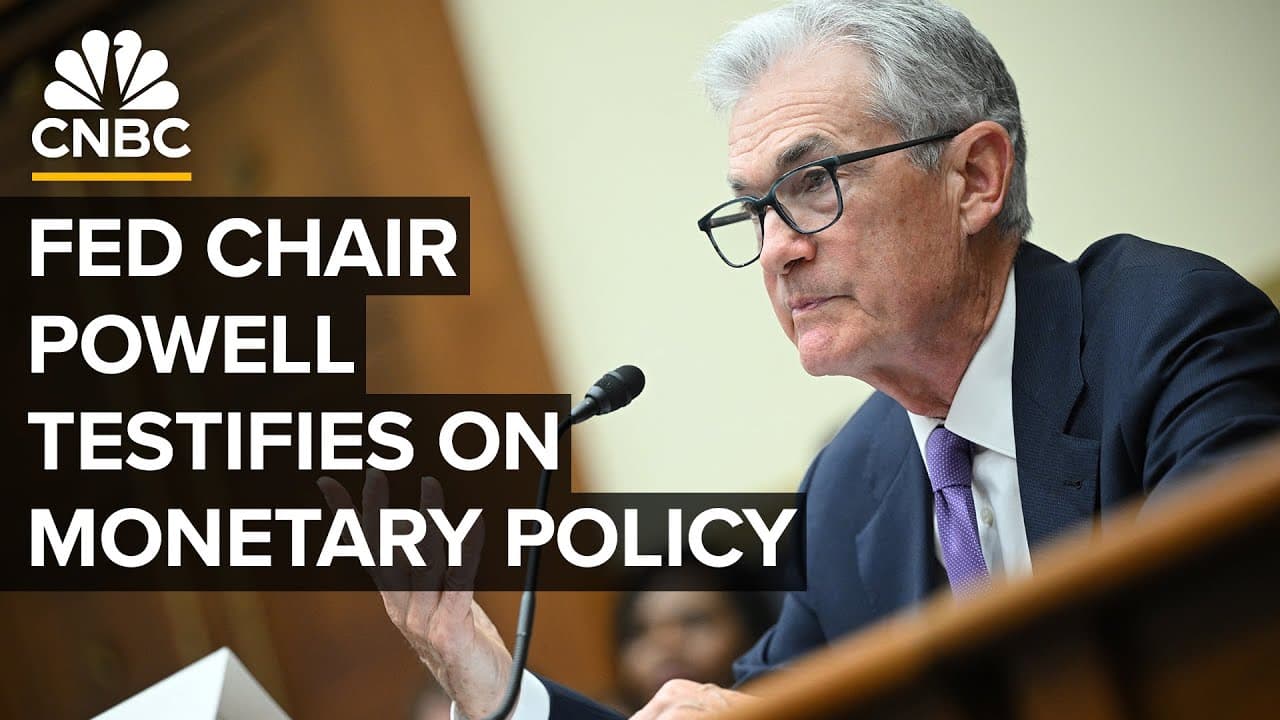
Federal Reserve Chair Powell testifies before the Senate committee on monetary policy — 7/9/24
TL;DR
The Federal Reserve discusses inflation, housing costs, and corporate influence on the economy.
Transcript
for for e for for I you senate committee on banking Housing and Urban Affairs will come to order uh welcome chair Paul nice to have you back good to have you first this time of year Ohioans know Americans know that our economy fundamentally is not a fair playing field instead we have a David and Goliath economy where the largest corporations use th... Read More
Key Insights
- 🧑🏭 Inflation remains a complicated issue driven by both demand and supply factors, heavily influenced by corporate pricing strategies.
- 😮 Housing affordability is severely impacted by rising interest rates, making home ownership increasingly unattainable for many Americans.
- 🪛 The Federal Reserve is under pressure to maintain independence from political influences, focusing on data-driven monetary policy.
- 🏦 Effective regulation of executive compensation in banks is critical to preventing financial instability and ensuring accountability.
- 🔬 Increased immigration may contribute positively to labor market dynamics but requires adequate housing supply to avoid inflationary pressures.
- 🎯 The Fed advocates for a balanced approach to support maximum employment while targeting inflation, emphasizing the need for cautious policymaking.
- 👷 There's a recognized necessity to enhance access to affordable housing through legislative action and economic policies that stimulate construction.
Install to Summarize YouTube Videos and Get Transcripts
Explore YouTube Video Summarizer or Get YouTube Transcript Extractor
Questions & Answers
Q: What is driving the current inflation rates according to the Federal Reserve?
The Federal Reserve attributes inflation primarily to a demand-supply imbalance, exacerbated by corporate greed and rising costs in essential sectors like housing. While raising interest rates aims to manage demand, many believe corporate pricing strategies are a significant factor in maintaining high inflation.
Q: How are rising interest rates impacting the housing market?
Rising interest rates have made mortgages less affordable for a larger segment of the population, particularly first-time homebuyers. The increased borrowing costs, combined with a shortage of housing supply, are pushing many families out of the market, ultimately driving rental prices up as well.
Q: What steps is the Federal Reserve taking to address corporate greed?
The Fed is working on regulatory measures to promote transparency and accountability in corporate pricing, particularly in highly impactful sectors like healthcare and finance. Lawmakers are pushing for changes that prevent excessive profit-taking at the expense of consumers.
Q: Why does the Fed believe it needs to wait for more data before cutting interest rates?
The Fed requires further confirmation that inflation is consistently moving towards the 2% target. It's cautious about making premature cuts which could lead to a resurgence in inflation without sufficient data showing sustained improvement.
Q: How does immigration influence the current labor market and inflation?
Increased immigration has contributed positively to addressing labor shortages, resulting in a more balanced labor market. However, migration is also complex as it can exacerbate housing shortages if sufficient affordable housing isn't available.
Q: What challenges does the Fed face regarding housing supply?
The Federal Reserve recognizes that while it cannot directly control housing supply, it can create a favorable monetary environment. It considers high inflation a barrier to construction activity and aims to lower inflation to facilitate more affordable housing development.
Q: What is the Federal Reserve's stance on regulating executive compensation in banks?
The Fed aims to implement regulatory frameworks that deter excessive risk-taking in executive compensation. This includes possible delays on bonuses and aligning pay structures with long-term stability, although action has been criticized for being slow.
Q: How does the Fed assess its impact on community banks?
The Fed closely monitors the effects of its policies on community banks, ensuring that new regulations and capital requirements do not unduly burden them, which would hinder their ability to serve local economies.
Summary & Key Takeaways
-
During a Senate committee hearing, the Federal Reserve chair highlighted the struggle against inflation and how it disproportionately affects working Americans, particularly regarding housing costs and access to mortgages.
-
The chair emphasized the role of corporate greed in escalating prices, advocating for stronger regulations to hold corporations accountable, especially in areas like healthcare and banking.
-
The discussion included concerns about the rising interest rates, which are worsening housing affordability and causing economic strain on families, particularly in relation to long-term financial commitments like mortgages.
Read in Other Languages (beta)
Share This Summary 📚
Summarize YouTube Videos and Get Video Transcripts with 1-Click
Try YouTube Summary with ChatGPT & Claude or YouTube Transcript Generator
Explore More Summaries from CNBC Television 📚


Summarize YouTube Videos and Get Video Transcripts with 1-Click
Try YouTube Summary with ChatGPT & Claude or YouTube Transcript Generator