AppleTV+ Loses Over $1 Billion a Year
TL;DR
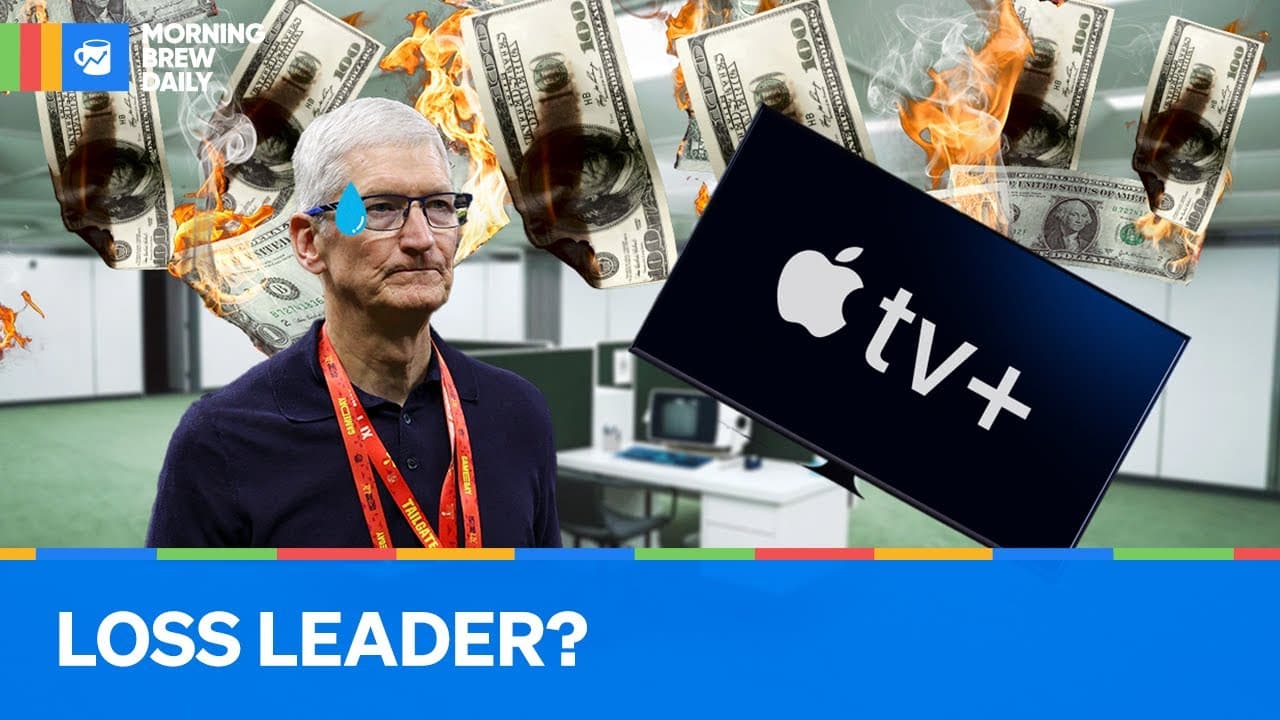
Apple TV+ loses $1 billion annually despite high-profile shows.
Transcript
Good Morning Brew Daily Show. I'm Neal Freyman. I'm Toby Howell. Today, Apple may want to sever itself from its streaming service, which is losing $1 billion each year. Then there's the BPM of Lady Gaga's new album, mean we're on the verge of a recession. We'll dig into the hashtag recession indicator means sweeping the internet. It's Monday, March... Read More
Key Insights
- Apple TV+ is currently losing over $1 billion annually, with only 45 million subscribers compared to competitors like Netflix and Disney+.
- The streaming service's financial losses are not significantly impacting Apple's overall profitability due to the company's massive net income.
- Apple TV+ invests heavily in high-quality content, featuring A-list celebrities, but struggles to achieve significant market penetration.
- The service's strategy may be similar to a loss leader, aiming to integrate users into Apple's broader ecosystem, though its effectiveness is unclear.
- The broader streaming industry often incurs initial losses before achieving profitability, as seen with Netflix and Disney+.
- The entertainment industry questions the rationale behind Apple's continued investment in a seemingly unprofitable venture.
- The recession indicator trend on social media reflects cultural anxieties rather than hard economic data, using memes to predict economic downturns.
- George Foreman's passing highlights his dual legacy as a boxing champion and successful entrepreneur with the iconic Foreman Grill.
Install to Summarize YouTube Videos and Get Transcripts
Explore YouTube Video Summarizer or Get YouTube Transcript Extractor
Questions & Answers
Q: Why is Apple TV+ losing $1 billion annually?
Apple TV+ is losing $1 billion annually due to its high production costs and limited subscriber base. The service invests heavily in high-quality content featuring A-list celebrities, but it has only attracted 45 million subscribers, which is significantly lower than competitors like Netflix and Disney+. Despite these financial losses, Apple's overall profitability remains unaffected due to its massive net income.
Q: How does Apple TV+ compare to its streaming competitors?
Apple TV+ lags behind its streaming competitors in terms of subscriber numbers, with only 45 million subscribers compared to Netflix's over 300 million and Disney+'s 126 million. While Apple TV+ invests heavily in high-quality content with A-list celebrities, it struggles to achieve significant market penetration and profitability, unlike its more established competitors.
Q: What is the strategy behind Apple TV+'s continued investment despite losses?
Apple TV+'s strategy may be similar to a loss leader, aiming to integrate users into Apple's broader ecosystem. By offering high-quality content, the service hopes to attract and retain subscribers who may then purchase other Apple products. However, the effectiveness of this strategy is unclear, as Apple reportedly lacks data to show whether its streaming subscribers are buying other Apple products.
Q: What is the significance of the recession indicator trend on social media?
The recession indicator trend on social media reflects cultural anxieties rather than hard economic data. People use memes to humorously predict economic downturns, drawing on cultural trends and consumer behavior. This trend highlights a divergence between soft data, like consumer surveys, and hard data, like employment numbers, which currently suggest the economy is in a relatively healthy spot.
Q: How did George Foreman's legacy extend beyond boxing?
George Foreman's legacy extends beyond boxing through his successful entrepreneurial venture with the Foreman Grill. The grill became synonymous with Foreman, selling over 100 million units worldwide and revolutionizing indoor grilling. It remains a best-selling product today, showcasing Foreman's impact on both the sports and business worlds, and highlighting his ability to connect with consumers.
Q: What challenges does the streaming industry face in achieving profitability?
The streaming industry often faces initial financial losses before achieving profitability. Services like Netflix and Disney+ incurred significant losses before becoming profitable, as they invested heavily in content and subscriber acquisition. Apple TV+ is currently experiencing similar challenges, with high production costs and a limited subscriber base, making it difficult to achieve profitability in a competitive market.
Q: Why is Apple's continued investment in Apple TV+ questioned by the entertainment industry?
The entertainment industry questions Apple's continued investment in Apple TV+ due to its ongoing financial losses and limited market penetration. Despite high-quality content and A-list celebrities, the service struggles to attract a large subscriber base. Competitors like Netflix and Disney+ have more established positions, leading to skepticism about the rationale behind Apple's investment in an unprofitable venture.
Q: How do cultural trends influence economic perceptions, as seen in the recession indicator trend?
Cultural trends influence economic perceptions by reflecting societal anxieties and behaviors, as seen in the recession indicator trend. People use memes and cultural references to humorously predict economic downturns, highlighting a divergence between soft data, like consumer surveys, and hard data, like employment numbers. This trend underscores how cultural perceptions can shape economic narratives, even without concrete data.
Summary & Key Takeaways
-
Apple TV+ is losing over $1 billion annually, with only 45 million subscribers, far below competitors like Netflix and Disney+. Despite these losses, Apple's overall profitability remains unaffected due to its massive net income. The service invests heavily in high-quality content featuring A-list celebrities but struggles to gain significant market penetration.
-
The streaming industry's typical pattern involves initial financial losses before achieving profitability, as seen with Netflix and Disney+. The entertainment industry questions Apple's rationale for continuing to invest in an unprofitable venture, while the service may aim to integrate users into Apple's ecosystem, though its success is unclear.
-
The recession indicator trend on social media reflects cultural anxieties rather than hard economic data, using memes to predict economic downturns. Meanwhile, George Foreman's passing highlights his dual legacy as a boxing champion and successful entrepreneur with the Foreman Grill.
Read in Other Languages (beta)
Share This Summary 📚
Summarize YouTube Videos and Get Video Transcripts with 1-Click
Try YouTube Summary with ChatGPT & Claude or YouTube Transcript Generator
Explore More Summaries from Morning Brew Daily 📚




Summarize YouTube Videos and Get Video Transcripts with 1-Click
Try YouTube Summary with ChatGPT & Claude or YouTube Transcript Generator