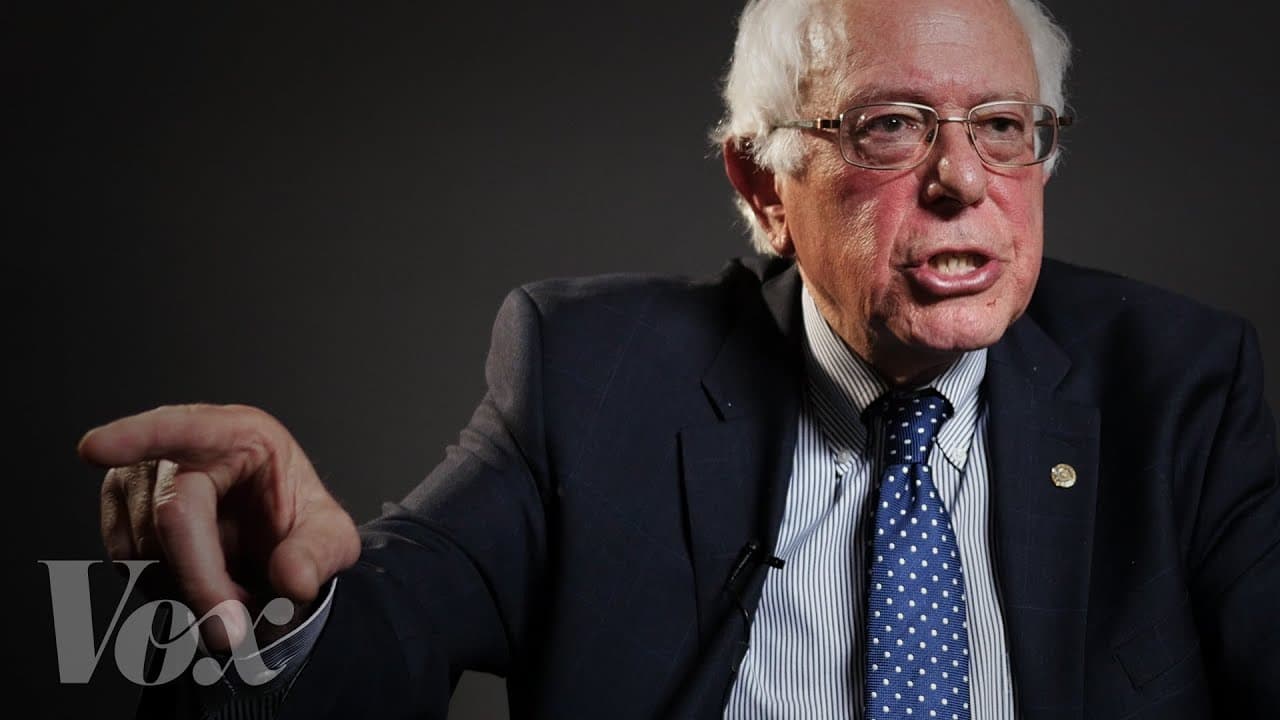
Bernie Sanders: "Open borders? That's a Koch brothers proposal"
TL;DR
Sanders argues open borders benefit the wealthy, harm American workers.
Transcript
Ezra Klein: Something that’s in what you said being a democratic socialist, is a more international view. I think if you take global poverty that seriously it leads you to conclusions that in the US are considered out of political bounds. Things like sharply raising the level of immigration we permit, even up to a level of open borders. About sharp... Read More
Key Insights
- Bernie Sanders rejects the idea of open borders, labeling it a proposal from the Koch brothers that would benefit wealthy elites by providing cheap labor.
- Sanders emphasizes the importance of maintaining a nation-state framework and prioritizing the needs of American citizens, particularly in terms of employment and wages.
- He highlights the high youth unemployment rates in the U.S., particularly among minorities, and argues against bringing in low-wage workers from abroad.
- Sanders advocates for domestic policies that create jobs, raise the minimum wage, and make education more accessible to combat poverty in America.
- He discusses the global wealth disparity, noting that the top 1% will soon own more wealth than the bottom 99%, and calls for international efforts to improve living standards in poorer countries.
- Sanders supports increasing taxes on the wealthy to fund infrastructure projects and social programs that benefit the middle and lower classes.
- He stresses the moral responsibility of industrialized nations to aid poorer countries through fair trade, education, healthcare, and job creation.
- Sanders believes that addressing global poverty should not come at the expense of American workers and their living standards.
Install to Summarize YouTube Videos and Get Transcripts
Explore YouTube Video Summarizer or Get YouTube Transcript Extractor
Questions & Answers
Q: What is Bernie Sanders' stance on open borders?
Bernie Sanders opposes open borders, viewing it as a right-wing proposal that would benefit wealthy elites by providing cheap labor. He believes it would harm American workers by driving down wages and increasing unemployment, particularly among minorities and young people.
Q: How does Sanders propose to address youth unemployment in the U.S.?
Sanders highlights the high youth unemployment rates, especially among minorities, and suggests creating jobs through infrastructure projects, raising the minimum wage, and making education more accessible. He believes these measures will help reduce poverty and provide better opportunities for young Americans.
Q: What does Sanders identify as a major issue in global wealth distribution?
Sanders points out the extreme imbalance in global wealth distribution, noting that the top 1% is set to own more wealth than the bottom 99%. He argues for international efforts to improve living standards in poorer countries, emphasizing the need for fair trade, education, and healthcare.
Q: How does Sanders propose to fund domestic social programs?
Sanders suggests increasing taxes on the wealthiest individuals to fund domestic social programs. He believes that by taxing the rich, the government can invest in infrastructure projects and initiatives that benefit the middle and lower classes, helping to reduce poverty and inequality.
Q: What moral responsibilities does Sanders believe industrialized nations have?
Sanders believes industrialized nations have a moral responsibility to aid poorer countries by ensuring they have access to decent jobs, education, healthcare, and nutrition. He argues that this should be done without lowering the living standards of workers in the industrialized world.
Q: Why does Sanders reject the idea of open borders?
Sanders rejects open borders because he believes it undermines the concept of a nation-state and would lead to lower wages and increased unemployment in the U.S. He argues that open borders are a right-wing proposal designed to benefit wealthy elites by providing cheap labor.
Q: What does Sanders suggest to combat poverty in America?
To combat poverty in America, Sanders advocates for creating jobs through infrastructure development, raising the minimum wage to at least $15 an hour, and ensuring access to education. He also supports taxing the wealthy to fund these initiatives and reduce economic inequality.
Q: How does Sanders view the redistribution of wealth in the U.S. over the past decades?
Sanders views the redistribution of wealth in the U.S. over the past decades as problematic, with wealth shifting from the middle class to the top 1%. He calls for policies that reverse this trend by increasing taxes on the wealthy and investing in programs that benefit the majority of Americans.
Summary & Key Takeaways
-
Bernie Sanders argues against open borders, claiming it would harm American workers by allowing an influx of low-wage labor, benefiting wealthy elites. He emphasizes the importance of a nation-state structure and prioritizing domestic policies that create jobs and raise wages.
-
Sanders highlights the significant youth unemployment rates in the U.S., particularly among minorities, and stresses the need for policies that address these issues. He advocates for raising the minimum wage and making education more accessible to combat poverty.
-
Addressing global wealth disparity, Sanders calls for international efforts to improve living standards in poorer countries without compromising American workers' standards. He supports taxing the wealthy to fund infrastructure and social programs domestically.
Read in Other Languages (beta)
Share This Summary 📚
Summarize YouTube Videos and Get Video Transcripts with 1-Click
Try YouTube Summary with ChatGPT & Claude or YouTube Transcript Generator
Explore More Summaries from Vox 📚


Summarize YouTube Videos and Get Video Transcripts with 1-Click
Try YouTube Summary with ChatGPT & Claude or YouTube Transcript Generator