Power Transmission in Circular Waveguides or Coaxial Lines - Microwave Engineering
TL;DR
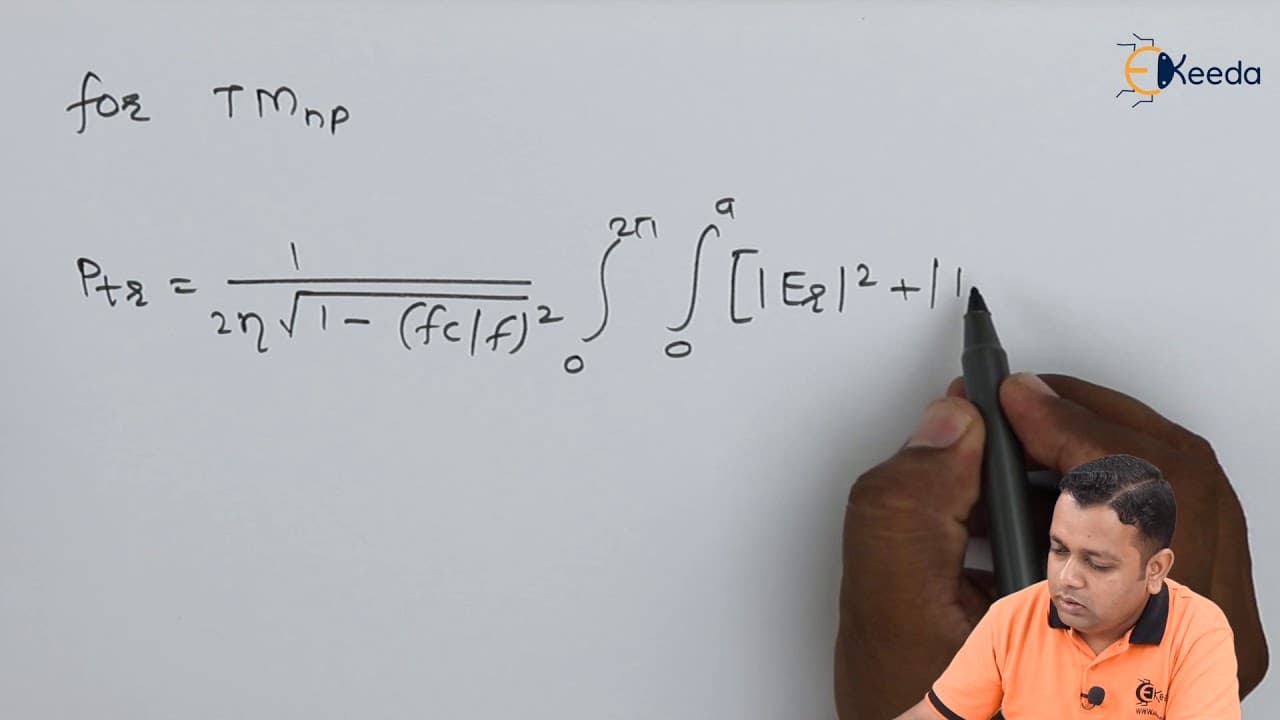
Understanding power transmission in circular waveguides using Pointing's theory and its application to micro-engineering.
Transcript
click the bell icon to get latest videos from Akira hello grains I welcome you all to this video we are with the chapter of micro-engineering where the microbial transmission through the circular wave world so far we have dealt with now we have also the knowledge of coaxial transmission line the conventional type that we have seen and for the circu... Read More
Key Insights
- ✊ Circular waveguides utilize the interaction of electric and magnetic fields for power transmission.
- 😵 Pointing's theory explains how the cross product of E and H vectors determines power flow direction.
- 📳 Transverse electric and magnetic modes offer alternatives to the ideal mode of propagation in waveguides.
- 🫥 Coaxial transmission lines feature characteristic impedance and potential rise for power transmission.
- ✊ Power losses in waveguides and transmission lines are essential considerations for efficient power delivery.
- ✊ Material properties like permittivity and permeability influence power transmission characteristics.
- 👋 Understanding wave impedance and intrinsic impedance is crucial for optimizing power transmission.
Install to Summarize YouTube Videos and Get Transcripts
Explore YouTube Video Summarizer or Get YouTube Transcript Extractor
Questions & Answers
Q: How is power transmission governed in circular waveguides?
Power transmission in circular waveguides is governed by Pointing's theory, where the product of electric and magnetic field intensities determines the direction and magnitude of power flow.
Q: What are the key components in the calculation of power transmission in circular waveguides?
The key components are the electric field intensity (E), magnetic field intensity (H), wave impedance (Z), and intrinsic impedance (η) derived from the material properties.
Q: Why are transverse electric and transverse magnetic modes considered in circular waveguides?
These modes offer alternatives for power transmission when the ideal mode of propagation, transverse electromagnetic, is not possible due to structural constraints in waveguides.
Q: How is power transmission in coaxial transmission lines different from circular waveguides?
Coaxial transmission lines involve the flow of current in a closed system, with potential rise and characteristic impedance playing crucial roles in power transmission calculations.
Summary & Key Takeaways
-
Power transmission in circular waveguides involves the interaction of electric and magnetic fields in micro-engineering.
-
The Pointing's theory explains how the cross product of E and H vectors governs power transmission.
-
Circular waveguides offer alternatives like transverse electric and transverse magnetic modes for power transmission.
Read in Other Languages (beta)
Share This Summary 📚
Summarize YouTube Videos and Get Video Transcripts with 1-Click
Try YouTube Summary with ChatGPT & Claude or YouTube Transcript Generator
Explore More Summaries from Ekeeda 📚

Summarize YouTube Videos and Get Video Transcripts with 1-Click
Try YouTube Summary with ChatGPT & Claude or YouTube Transcript Generator