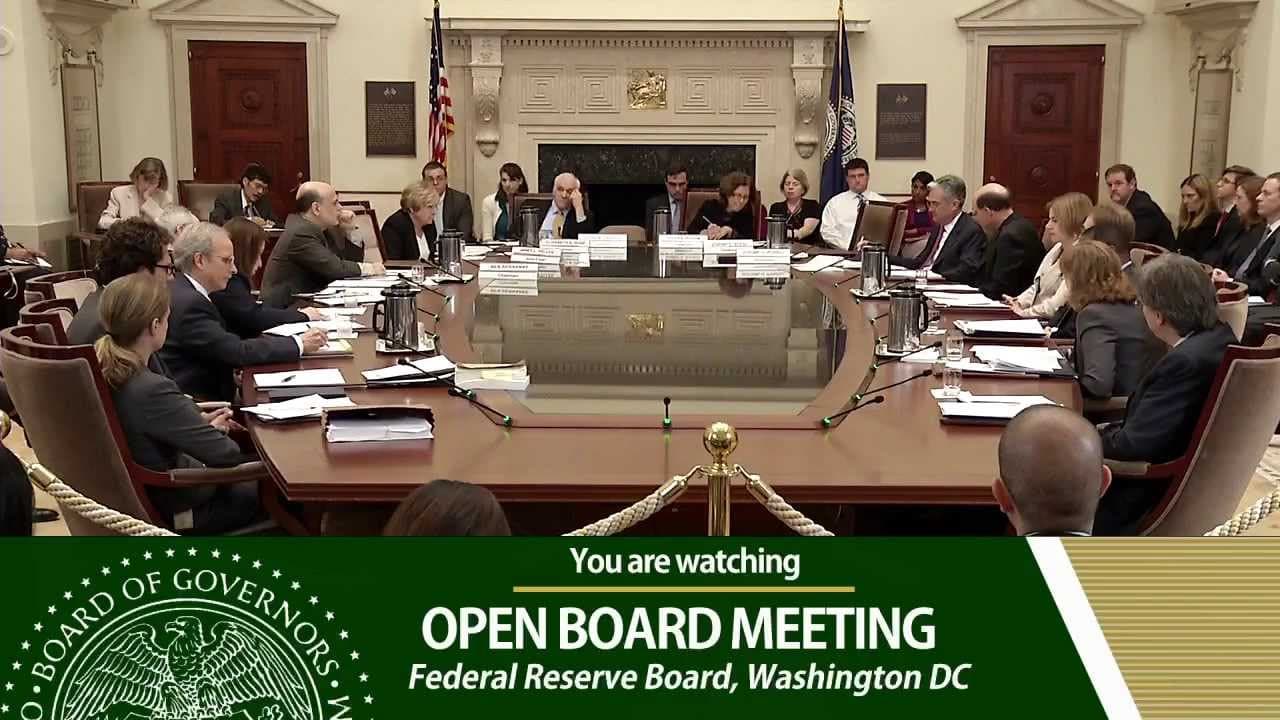
Open Board Meeting July 2, 2013
TL;DR
Final rule enhances U.S. banking system's resilience and stability through stricter capital requirements.
Transcript
CHAIRMAN BEN S. BERNANKE. Good morning. I'd like to begin by welcoming our guest to the Federal Reserve. Today's meeting marks an important step in the Board's efforts to enhance the resilience of the U.S. banking system and to promote broader financial stability. The final rule that we're considering today puts in place a comprehensive regulatory ... Read More
Key Insights
- 📏 Final rule enhances banking system resilience and promotes financial stability.
- ✋ Requires higher quality capital to absorb losses and reduce risk-taking incentives.
- ❓ Aligns with Basel III standards and fulfills U.S. commitment to implement the framework.
- 🏦 Differentiates treatment for smaller banks and larger internationally active organizations.
- ✳️ Disclosure requirements promote transparency and understanding of risks.
- 🛄 Stricter regulations aim to prevent underpricing of risks and protect investors and the public.
- 👋 Emphasizes the importance of regulatory safeguards and good risk management practices.
Install to Summarize YouTube Videos and Get Transcripts
Explore YouTube Video Summarizer or Get YouTube Transcript Extractor
Questions & Answers
Q: How does the final rule aim to enhance the resilience of the U.S. banking system?
The final rule requires banking organizations to hold more and higher quality capital, acting as a financial cushion against future losses, reducing incentives for excessive risk-taking, and ensuring safe and sound banks.
Q: What are the consequences of the final rule with respect to banks and regulatory standards?
The final rule consolidates progress in improving capital quality and quantity over the past years, enhances effectiveness of risk-weighted asset calculations, and fulfills U.S. commitment to implement Basel III capital framework.
Q: How does the final rule differentiate treatment for smaller banks and larger internationally active banking organizations?
Smaller banks see fewer modifications in the final rule to reduce complexity and regulatory burden, while larger banking organizations face additional capital-related initiatives such as stress testing requirements and capital surcharges.
Q: How do the disclosure requirements in the final rule promote transparency in the banking sector?
The disclosure requirements aim to increase publicly-available information about banking organizations, improving transparency, understanding, and fair pricing of risks for investors, creditors, and the public.
Summary & Key Takeaways
-
Important step in enhancing banking system resilience and financial stability.
-
Requires banking organizations to hold more capital to absorb future losses and reduce excessive risk-taking.
-
Aligns with Basel III standards, includes macroprudential aspects for broader financial stability agenda.
Read in Other Languages (beta)
Share This Summary 📚
Summarize YouTube Videos and Get Video Transcripts with 1-Click
Try YouTube Summary with ChatGPT & Claude or YouTube Transcript Generator
Explore More Summaries from Federal Reserve 📚





Summarize YouTube Videos and Get Video Transcripts with 1-Click
Try YouTube Summary with ChatGPT & Claude or YouTube Transcript Generator