Heart disease and heart attacks | Miscellaneous | Heatlh & Medicine | Khan Academy
TL;DR
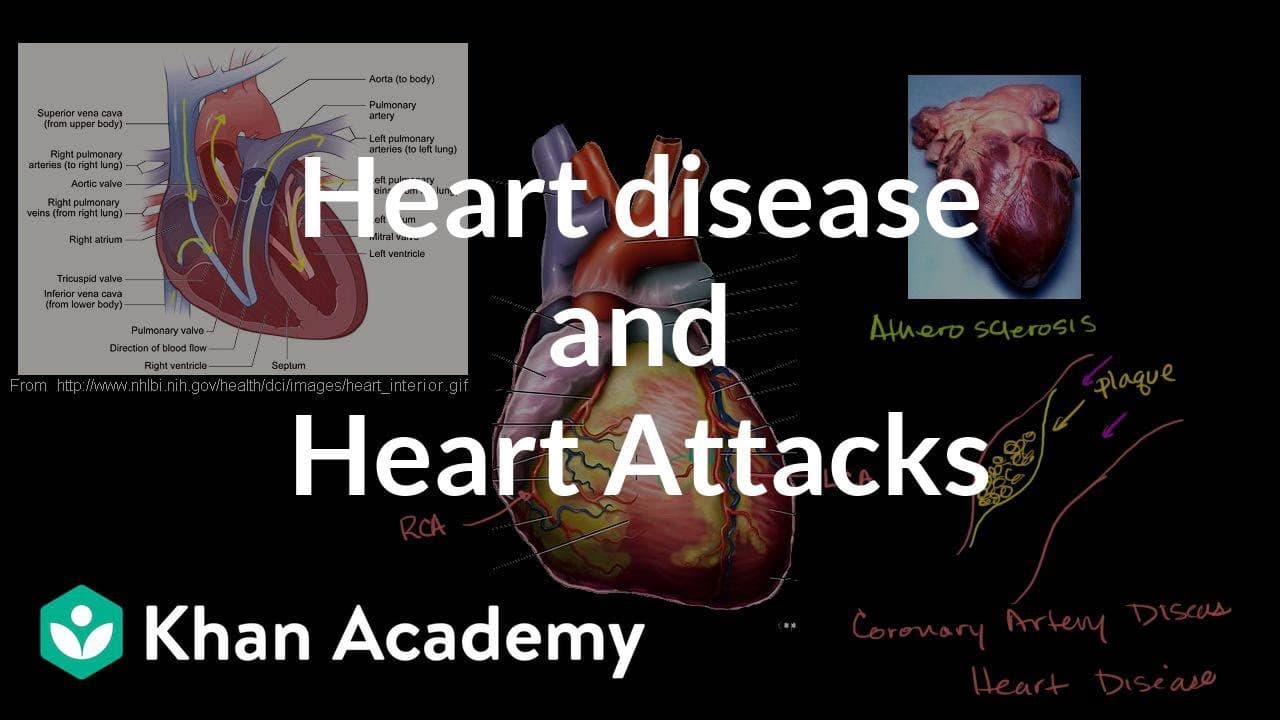
Heart disease and heart attacks are caused by the clogging of coronary arteries, leading to restricted blood flow and potential heart failure.
Transcript
I think most of us know what the heart does in our body. It pumps the blood and in particular it takes in the blood from the rest of the body. That is blue over here in this diagram, because that blood does not have carried oxygen And it pumps that blood to the lungs where the blood gets oxygenated. And then it comes back from the lungs, depicted a... Read More
Key Insights
- 🩸 The heart pumps oxygenated blood to the body and returns deoxygenated blood to the lungs.
- 🥰 Coronary arteries supply blood to the heart muscle itself and can become clogged with plaques, causing ischemia and coronary artery disease.
- 🥰 Heart disease can result in heart failure, where the heart is unable to adequately pump blood, and angina, which is characterized by chest pain.
- 🩸 Atherosclerosis refers to the buildup of plaques along artery walls, narrowing the blood vessels.
- 🥰 Heart attacks occur when a coronary artery becomes completely or almost completely blocked, depriving the heart muscle of oxygen and causing tissue death.
- 💓 Cardiac arrest is when the heart stops beating entirely, and it can be the result of a heart attack or other factors.
- 🥰 Heart attacks and heart failure are different conditions, with heart failure being the inability of the heart to meet the body's needs.
Install to Summarize YouTube Videos and Get Transcripts
Explore YouTube Video Summarizer or Get YouTube Transcript Extractor
Questions & Answers
Q: What are coronary arteries, and why are they important?
Coronary arteries are responsible for supplying oxygenated blood to the heart muscle, allowing it to function properly. Without adequate blood flow through these arteries, the heart can become weakened and lead to various heart conditions.
Q: What is atherosclerosis, and how does it contribute to heart disease?
Atherosclerosis is the buildup of plaques, which consist of lipids, cholesterol, and dead white blood cells, along the walls of arteries. These plaques can narrow the arteries, reducing blood flow and causing ischemia, leading to coronary artery disease.
Q: What is the relationship between heart disease and heart failure?
Heart disease, specifically coronary artery disease, can result in heart failure. Heart failure occurs when the heart is unable to pump enough blood to meet the body's needs. It can lead to symptoms such as shortness of breath, fatigue, and fluid retention.
Q: What is the difference between a heart attack and cardiac arrest?
A heart attack occurs when a coronary artery becomes completely or almost completely blocked, cutting off blood flow to a portion of the heart muscle. On the other hand, cardiac arrest is when the heart stops beating altogether. While a heart attack can lead to cardiac arrest, they are distinct events.
Summary & Key Takeaways
-
The heart pumps oxygenated blood to the rest of the body through arteries and returns deoxygenated blood to the lungs through veins.
-
Coronary arteries supply blood to the heart muscle itself, and when they become clogged with plaques, it leads to ischemia, restricting blood flow and causing coronary artery disease.
-
Coronary artery disease can result in heart failure, where the heart is unable to adequately pump blood, and angina, which is characterized by chest pain.
Read in Other Languages (beta)
Share This Summary 📚
Summarize YouTube Videos and Get Video Transcripts with 1-Click
Try YouTube Summary with ChatGPT & Claude or YouTube Transcript Generator
Explore More Summaries from Khan Academy 📚



Summarize YouTube Videos and Get Video Transcripts with 1-Click
Try YouTube Summary with ChatGPT & Claude or YouTube Transcript Generator