Why so many suburbs look the same
TL;DR
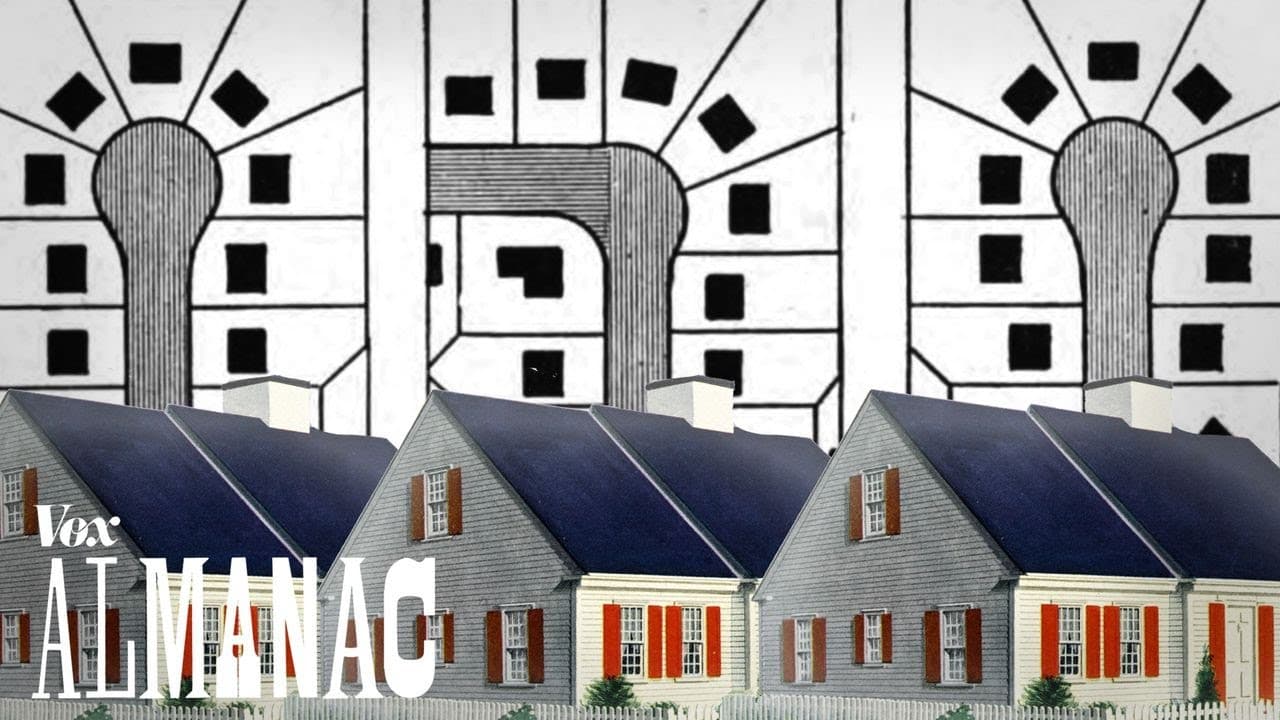
FHA guidelines shaped uniform suburban designs with cul de sacs.
Transcript
You ever feel like you’re just going in circles? So this is Hallsley, a still-developing subdivision in Midlothian Virginia. This place won the National Association of Homebuilders award in 2017, for best master planned community. And there are a ton of cul de sacs. 1. 2. 3. 4. Let’s just go to the map, save some time. Cul de sacs are everywhere. T... Read More
Key Insights
- The FHA's guidelines in the 1930s strongly influenced the design of suburbs, promoting car-centric layouts with cul de sacs.
- Cul de sacs became a symbol of suburban sprawl, resulting from FHA's focus on car-friendly designs over pedestrian pathways.
- The FHA's underwriting manual endorsed segregation, impacting neighborhood demographics and contributing to racial divides.
- Early suburban designs, like Radburn, New Jersey, inspired the FHA's guidelines but focused more on pedestrian-friendly elements.
- The FHA's preference for curvilinear streets over grid plans reduced construction costs but increased dependency on cars.
- Developers were financially incentivized to follow FHA guidelines, which dictated what was considered a 'good' neighborhood design.
- Despite changes over time, many suburbs still reflect the FHA's historical vision of ideal suburban life.
- Efforts to make suburbs more walkable continue, but the legacy of FHA's guidelines remains visible in modern suburban planning.
Install to Summarize YouTube Videos and Get Transcripts
Explore YouTube Video Summarizer or Get YouTube Transcript Extractor
Questions & Answers
Q: How did the FHA influence suburban design?
The FHA influenced suburban design by setting guidelines that promoted car-centric layouts, such as curvilinear streets and cul de sacs. These designs were considered ideal for ensuring safe investments, leading to a uniform appearance in suburbs. Developers followed these guidelines to secure FHA-insured loans, shaping the suburban landscape.
Q: What role did cul de sacs play in suburban development?
Cul de sacs became a symbol of suburban sprawl due to their promotion by the FHA as part of car-friendly designs. They were intended to slow down traffic and create community spaces but also increased dependency on cars for transportation. This design choice contributed to the uniform appearance of many suburbs.
Q: How did the FHA's guidelines impact neighborhood demographics?
The FHA's guidelines explicitly endorsed segregation as a measure of housing quality, influencing neighborhood demographics by promoting racial divides. This endorsement was part of the FHA's underwriting manual, which stated that stable neighborhoods required properties to be occupied by the same social and racial classes.
Q: What were some early influences on suburban planning?
Early influences on suburban planning included designs like Radburn, New Jersey, which emphasized pedestrian-friendly elements like footpaths. However, the FHA's guidelines focused more on car-centric designs, drawing from these early models but prioritizing curvilinear streets and cul de sacs over pedestrian pathways.
Q: Why were curvilinear streets favored over grid plans?
Curvilinear streets were favored over grid plans because they reduced construction costs by working around natural topography, like hills. The FHA considered these designs aesthetically pleasing and more suitable for car usage, which aligned with their vision of ideal suburban life, despite the increased dependency on automobiles.
Q: How did financial incentives influence suburban design?
Financial incentives influenced suburban design by encouraging developers to follow FHA guidelines to secure insured loans. These guidelines dictated what was considered a 'good' neighborhood design, leading developers to adopt car-centric layouts like cul de sacs to ensure their projects were financially viable.
Q: What is the legacy of FHA's guidelines in modern suburbs?
The legacy of FHA's guidelines in modern suburbs is visible in the continued prevalence of car-centric designs, such as cul de sacs and curvilinear streets. Although enforcement mechanisms have changed, the cultural and design impact of these guidelines persists, influencing how suburbs are planned and developed today.
Q: How are suburbs being made more walkable today?
Efforts to make suburbs more walkable today include redesigning existing cul de sacs to incorporate pedestrian pathways and improving public transportation access. These changes aim to reduce car dependency and create more community-oriented spaces, challenging the historical car-centric suburban design promoted by the FHA.
Summary & Key Takeaways
-
The Federal Housing Administration (FHA) played a crucial role in shaping suburban designs in the 1930s, promoting car-friendly layouts like cul de sacs. These designs were considered ideal for ensuring safe investments, leading to a uniform suburban appearance that persists today.
-
Cul de sacs, a key feature of suburban sprawl, emerged from the FHA's guidelines, which favored curvilinear streets over grid plans. This design choice emphasized car usage, reducing construction costs but increasing reliance on automobiles for daily activities.
-
While the FHA's guidelines included some positive elements like minimum property standards, they also endorsed segregation, impacting neighborhood demographics. Despite changes in enforcement, the FHA's vision continues to influence modern suburban planning.
Read in Other Languages (beta)
Share This Summary 📚
Summarize YouTube Videos and Get Video Transcripts with 1-Click
Try YouTube Summary with ChatGPT & Claude or YouTube Transcript Generator
Explore More Summaries from Vox 📚



Summarize YouTube Videos and Get Video Transcripts with 1-Click
Try YouTube Summary with ChatGPT & Claude or YouTube Transcript Generator