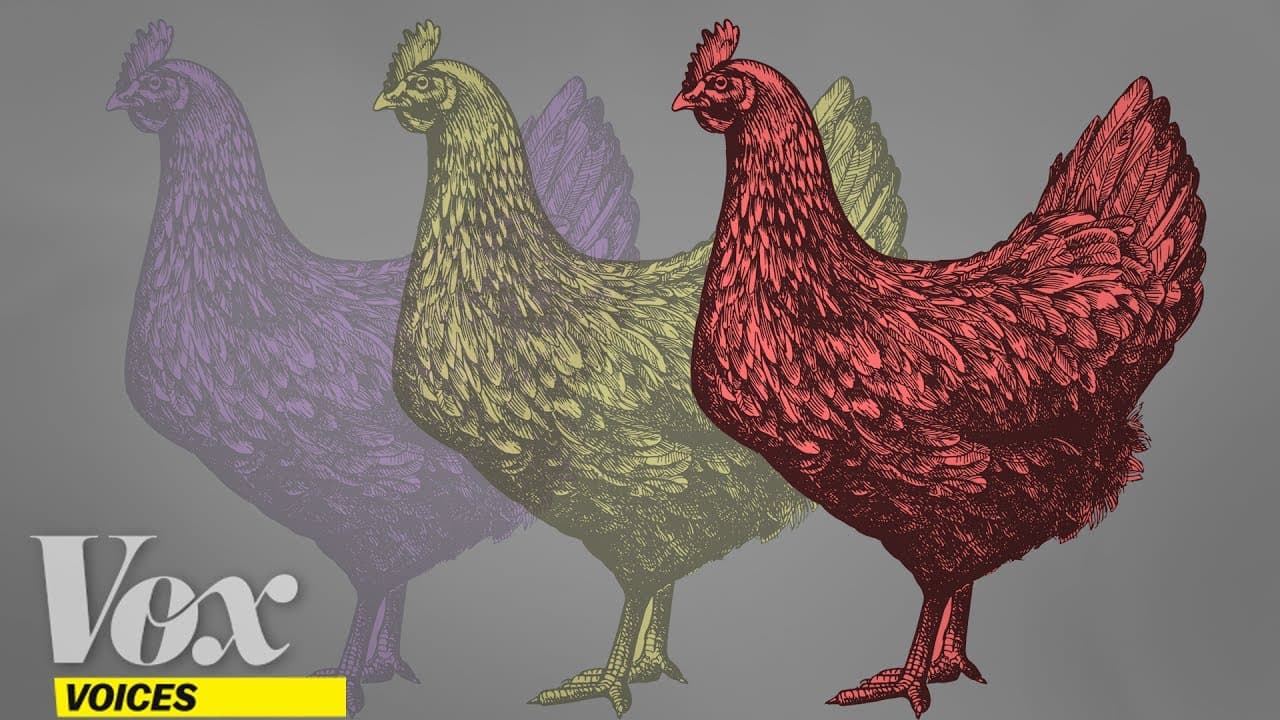
Want to save animal lives without going veg? Stop eating chickens.
TL;DR
Stop eating chickens to significantly reduce animal suffering.
Transcript
Everyone has met a vegan who has been rude to them or who has been outrageous or just angry or yelling at them. This milk was stolen from mothers. Mothers whose freedoms were taken from them! So it's not surprising that someone like Anthony Bourdain will call vegans Hezbollah— Vee-jans or ve-jans or whatever they call themselves, they’re the Hezbol... Read More
Key Insights
- Veganism is often perceived negatively due to the behavior of some advocates, which can hinder the movement's goals.
- People typically eat meat out of habit, convenience, and cost-effectiveness rather than a desire to harm animals.
- Avoiding chicken consumption can drastically reduce the number of animals affected by factory farming due to the high number of chickens required to match other meats.
- Studies indicate that over 80% of vegetarians revert to eating meat, often due to the difficulty of maintaining a strict diet.
- The percentage of vegetarians and vegans in the U.S. has remained stagnant despite decades of advocacy, suggesting a need for revised strategies.
- Matt Ball advocates for a shift in focus from promoting veganism to encouraging people to stop eating chickens as a more achievable goal.
- The organization One Step for Animals aims to reduce animal suffering by promoting the elimination of chicken consumption rather than full dietary changes.
- Despite increased meat consumption over the years, alternative advocacy methods may offer new opportunities to impact animal welfare positively.
Install to Summarize YouTube Videos and Get Transcripts
Explore YouTube Video Summarizer or Get YouTube Transcript Extractor
Questions & Answers
Q: Why do some people view veganism negatively?
Veganism is often viewed negatively due to the actions of a minority of advocates who are perceived as extreme or fanatical. These individuals may exhibit behaviors such as being overly aggressive or judgmental towards non-vegans, which can create a negative stereotype that hinders the movement's broader acceptance and goals.
Q: What is the primary reason people consume meat?
The primary reason people consume meat is not a desire to harm animals but rather due to habit, convenience, and cost-effectiveness. Eating meat is a deeply ingrained cultural norm, and many people choose it because it is familiar, readily available, and often cheaper than plant-based alternatives.
Q: How can avoiding chicken consumption impact animal welfare?
Avoiding chicken consumption can significantly impact animal welfare because chickens are the most consumed land animals in factory farming. It takes a large number of chickens to produce the same amount of meat as fewer cows or pigs, so reducing chicken consumption can drastically decrease the number of animals affected by factory farming practices.
Q: What challenges do vegetarians face in maintaining their diet?
Vegetarians often face challenges in maintaining their diet due to social and cultural pressures. Many revert to meat-eating because they find it difficult to adhere to a strict diet in a society that predominantly consumes meat. The pressure to maintain a 'pure' diet can be overwhelming, leading to a high rate of reversion to meat consumption.
Q: Why has the percentage of vegetarians and vegans in the U.S. remained low?
The percentage of vegetarians and vegans in the U.S. has remained low despite decades of advocacy because traditional messages may not resonate with the general public. The difficulty of maintaining a vegetarian or vegan diet and the social pressures associated with it contribute to the low adoption rates, indicating a need for new advocacy strategies.
Q: What alternative strategy does Matt Ball propose for animal advocacy?
Matt Ball proposes an alternative strategy for animal advocacy that focuses on reducing chicken consumption rather than promoting full veganism. He believes this approach is more achievable and can have a profound impact on reducing animal suffering since chickens are the most consumed and affected animals in factory farming.
Q: What is the goal of One Step for Animals?
The goal of One Step for Animals, co-founded by Matt Ball, is to reduce animal suffering by promoting the elimination of chicken consumption. Instead of advocating for complete dietary changes, the organization focuses on a single, impactful step that can significantly decrease the number of animals affected by factory farming.
Q: How has meat consumption changed over the years in the U.S.?
Meat consumption in the U.S. has increased over the years, despite ongoing advocacy for vegetarian and vegan diets. Since the publication of Peter Singer's 'Animal Liberation' in the 1970s, per capita meat consumption has risen, highlighting the challenges faced by traditional animal advocacy methods and the need for innovative approaches.
Summary & Key Takeaways
-
Veganism often faces criticism due to the extreme behaviors of some advocates, which can alienate potential supporters. Most people eat meat due to convenience and tradition, not malice. Shifting focus to reducing chicken consumption can significantly impact animal welfare, given the high number of chickens needed for meat compared to other animals.
-
Despite decades of advocacy, the percentage of vegetarians and vegans in the U.S. remains low. Many revert to meat-eating due to the pressure of maintaining a strict diet. Matt Ball suggests a new approach: encouraging people to stop eating chickens to make a substantial difference in animal suffering.
-
Matt Ball's organization, One Step for Animals, promotes reducing chicken consumption as a practical step towards minimizing factory farming's impact. This strategy could be more effective than traditional vegan advocacy, which has not significantly changed the number of vegetarians and vegans in the U.S. over the years.
Read in Other Languages (beta)
Share This Summary 📚
Summarize YouTube Videos and Get Video Transcripts with 1-Click
Try YouTube Summary with ChatGPT & Claude or YouTube Transcript Generator
Explore More Summaries from Vox 📚


Summarize YouTube Videos and Get Video Transcripts with 1-Click
Try YouTube Summary with ChatGPT & Claude or YouTube Transcript Generator