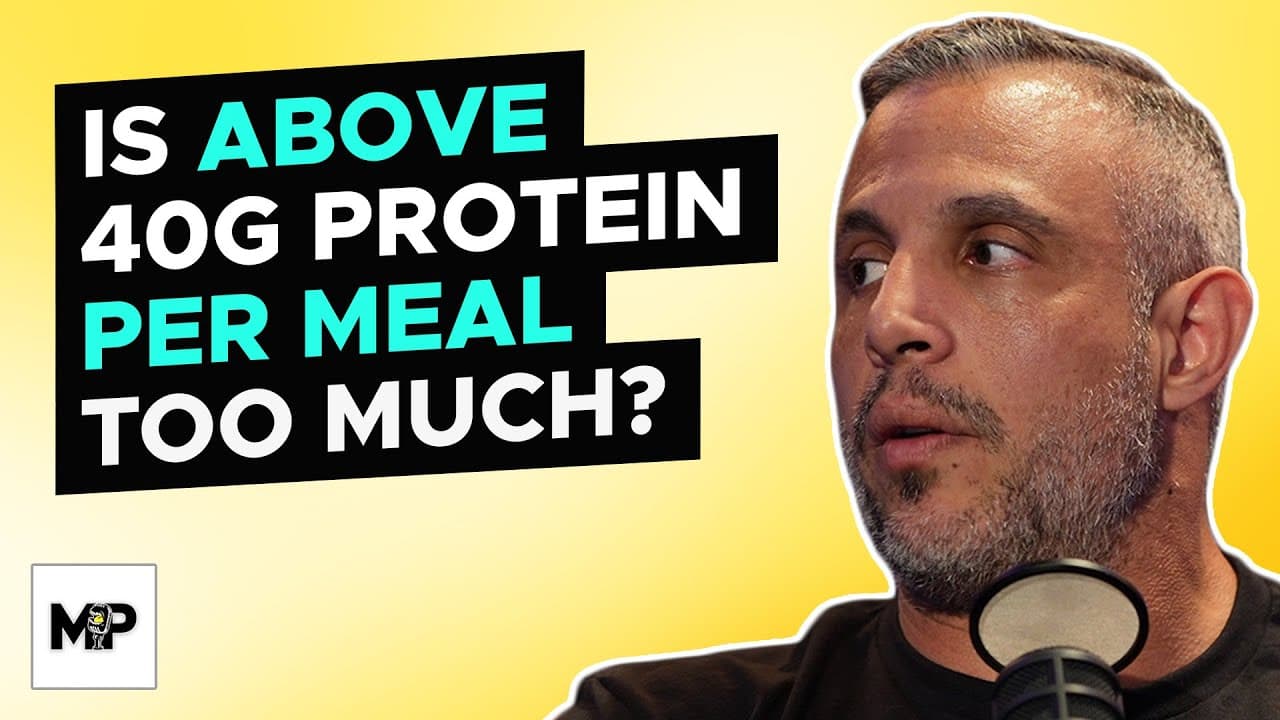
How Much Protein Can You Digest Per Meal?
TL;DR
Your body can efficiently utilize protein even if you consume more than 40 grams in one sitting. A study shows that consuming up to 100 grams of protein at once does not waste it; instead, the body uses it for muscle building and other functions. The myth that excess protein gets wasted originated from bodybuilding practices and supplement marketing.
Transcript
if you eat more than 40 gram of protein at one sitting you're wasting all that protein just kidding that's totally totally false in fact we now have a study that shows that your body actually utilizes the amino acids from protein that you consume even when it's a huge amount at one serving in fact the study used 100 gram of protein you utilize them... Read More
Key Insights
- The body can utilize amino acids from large protein intakes for muscle building.
- The myth of protein wastage originated from bodybuilding and supplement marketing.
- Bodybuilders historically ate multiple meals for calorie intake, not protein efficiency.
- Studies show high-protein diets lead to more muscle gain and fat loss compared to low-protein diets.
- Excess protein is less likely to be stored as fat compared to carbs and fats.
- Digestion is crucial; large protein meals can cause discomfort for some individuals.
- The study confirms that protein's anabolic effect extends with larger intakes.
- Protein consumption should be tailored to individual digestive comfort and lifestyle.
Install to Summarize YouTube Videos and Get Transcripts
Explore YouTube Video Summarizer or Get YouTube Transcript Extractor
Questions & Answers
Q: How much protein can the body digest in one meal?
The body can digest and utilize a significant amount of protein in one meal, with studies showing effective use of up to 100 grams. The notion that protein beyond 40 grams is wasted is a myth. The body uses the amino acids for muscle building and other functions, with excess being less likely to convert to fat compared to carbs and fats.
Q: Where did the myth of protein wastage originate?
The myth of protein wastage originated from bodybuilding practices and supplement marketing. Bodybuilders historically consumed multiple meals to meet calorie needs, not protein efficiency. Supplement companies perpetuated the myth to sell products, suggesting that more frequent protein intake would build more muscle.
Q: Does protein intake affect muscle gain and fat loss?
Yes, protein intake significantly affects muscle gain and fat loss. Studies show that high-protein diets lead to more muscle gain and fat loss compared to low-protein diets, even when calorie intake is the same. Protein is less likely to be stored as fat compared to carbohydrates and fats, making it a crucial component of effective diets.
Q: Is it better to eat small amounts of protein throughout the day?
Eating small amounts of protein throughout the day is not necessarily better for muscle building. The body's anabolic response to protein extends with larger intakes, debunking the myth that smaller, frequent servings are superior. Individual digestion and lifestyle should guide protein consumption rather than the fear of wastage.
Q: How does protein digestion impact dietary planning?
Protein digestion varies among individuals, impacting dietary planning. While the body can handle large protein intakes, some people may experience discomfort with large meals. It's important to tailor protein consumption to personal digestive comfort and lifestyle preferences to ensure optimal nutrition and health outcomes.
Q: What role does protein play in evolutionary nutrition?
Protein plays a crucial role in evolutionary nutrition, being prioritized for repair and rebuilding in the body. Historically, protein was scarce in hunter-gatherer diets, leading to its high value for survival. The body is adapted to use protein efficiently for muscle building and energy, reflecting its evolutionary importance.
Q: Can excess protein be stored as fat?
Excess protein can be stored as fat if calorie intake exceeds expenditure, but it is less likely compared to carbohydrates and fats. Protein's conversion to energy is a lengthy process, making it a less efficient source for fat storage. This characteristic supports high-protein diets for favorable body composition changes.
Q: What considerations should be made for protein consumption?
Considerations for protein consumption include individual digestive comfort, lifestyle, and dietary goals. While large protein intakes are effective, personal digestion varies, and discomfort can occur with high amounts. Balancing protein intake with lifestyle and health objectives ensures optimal nutrition and muscle-building outcomes.
Summary & Key Takeaways
-
Your body can efficiently use protein even if you consume over 40 grams in one meal. Studies indicate that protein is not wasted, and larger intakes can extend the anabolic effect. The myth of protein wastage was propagated by bodybuilding culture and supplement companies.
-
Protein's role in muscle building and fat loss is significant, with high-protein diets showing more favorable body composition changes. Excess protein is less likely to convert to fat compared to carbohydrates and fats, supporting its importance in diets.
-
While the body can handle large protein intakes, individual digestion varies. It's important to consider personal digestive comfort when planning protein consumption. The study suggests that protein's anabolic activity extends with larger servings, debunking the myth of protein wastage.
Read in Other Languages (beta)
Share This Summary 📚
Summarize YouTube Videos and Get Video Transcripts with 1-Click
Try YouTube Summary with ChatGPT & Claude or YouTube Transcript Generator
Explore More Summaries from Mind Pump Show 📚

Summarize YouTube Videos and Get Video Transcripts with 1-Click
Try YouTube Summary with ChatGPT & Claude or YouTube Transcript Generator