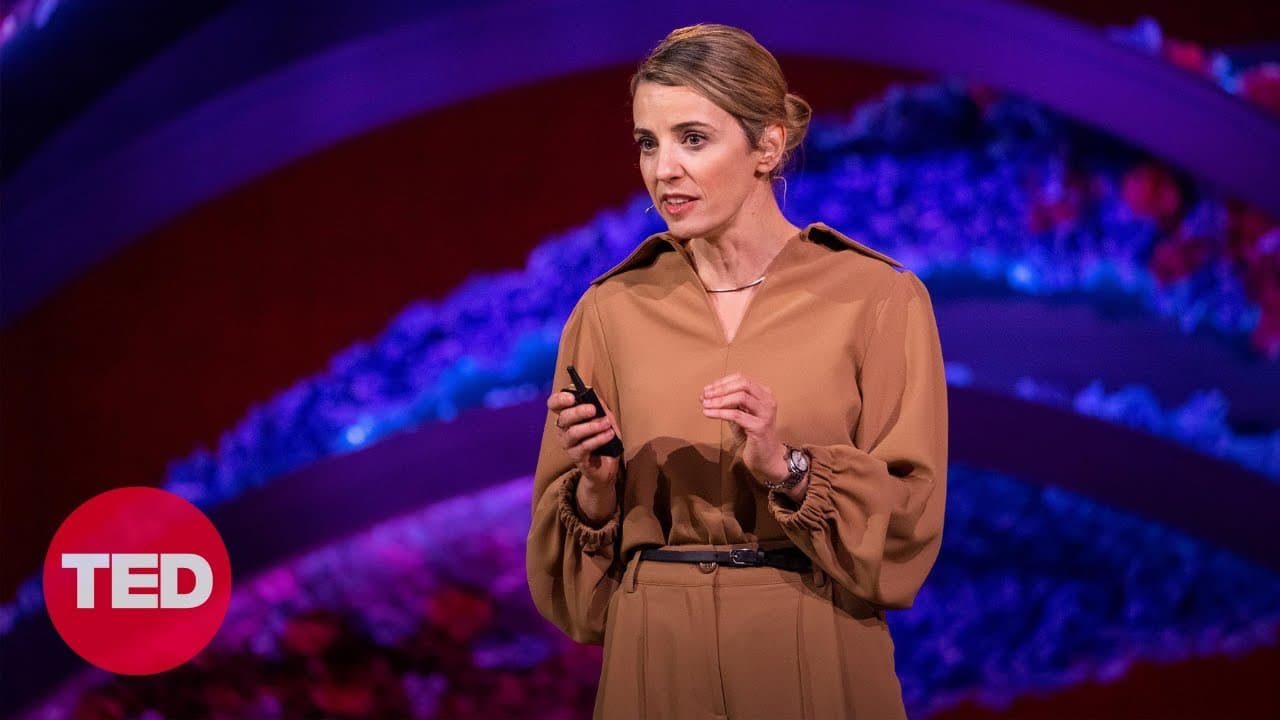
How to Share Public Money Fairly | Maja Bosnic | TED
TL;DR
This content discusses the importance of gender-responsive budgeting and highlights the impact of not considering gender in financial decisions.
Transcript
So I come from Bosnia. I mean, I live in Sweden now, but you don't need to know my whole life story. But the story that I do want to share is from my home country. So close to 50 percent of the land in Bosnia is dedicated to agriculture and farming. So the government decides to support farmers, to set up a budget, to set up the requirements for the... Read More
Key Insights
- 🌾 Close to 50% of the land in Bosnia is dedicated to agriculture and farming, but only men were receiving 90% of the funds from the government. This was due to a lack of gender analysis and requirements that excluded women from accessing the funds. However, with changes to provisions and the help of gender experts, more women are now receiving funds every year.
- 🌍 Gender-responsive budgeting is essential for fair and equitable distribution of public funds. It allows us to not only have sex-disaggregated data on people, but also to understand the faces of the people we are serving.
- 💼 Budgets go through four logical steps: calculating revenues, budget approval, spending, and budget oversight. However, traditional budgeting assumes a universal, homogenous recipient of funds and often fails to reach everyone.
- 📊 Gender analysis is a crucial part of incorporating a gender perspective in financial decisions and budgets. It helps us understand how different groups in society will be impacted by budgetary decisions and reduces gender gaps in access to resources, such as healthcare.
- 💪 Around 80 countries are working with gender budgeting, with Austria having it entrenched in their constitution. Canada is also considering the needs of Indigenous groups of people in their gender budgeting efforts.
- 💰 Gender-responsive budgeting is not just important for governments, but also for companies, NGOs, and individuals. It ensures equitable and fair distribution of resources, leading to better, more effective, and efficient budgets.
- 💻 A wealth of material on gender-responsive budgeting is available from organizations such as UN Women, IMF, World Bank, and the Swedish government. Accessing this material can provide valuable insights and tools for implementing gender-responsive budgeting.
- 🏆 Gender-responsive budgeting not only leads to gender equality as an objective but also results in better, more effective, efficient, and fair budgets.
Install to Summarize YouTube Videos and Get Transcripts
Explore YouTube Video Summarizer or Get YouTube Transcript Extractor
Questions & Answers
Q: What percentage of land in Bosnia is dedicated to agriculture and farming?
Close to 50 percent of the land in Bosnia is dedicated to agriculture and farming.
Q: Who received 90 percent of the funds allocated by the government to support farmers in Bosnia?
Only one group of citizens, men working in agriculture, received 90 percent of the funds allocated by the government.
Q: Why did the Ministry of Agriculture in Bosnia discover that women did not have access to the funds?
The Ministry of Agriculture realized that women did not have access to the funds because they had never done a gender analysis before, and the funds were distributed in a way that couldn't reach women due to land ownership requirements and lack of information sharing.
Q: How did the Ministry of Agriculture in Bosnia address the issue of women not having access to the funds?
The Ministry of Agriculture changed the provisions and with the help of gender experts, more and more women in Bosnia are now receiving funds every year.
Q: What is the significance of gender-responsive budgeting?
Gender-responsive budgeting ensures that budgets are fair and equitable. It emphasizes the need to know the faces of the people being served with public funds, and it leads to better, more effective, and efficient budgets.
Q: How many countries around the world are working with gender budgeting?
Around 80 countries around the world are actively working with gender budgeting.
Q: What is the impact of gender budgeting on budget decisions in Austria, Canada, Morocco, and Indonesia?
In Austria, gender budgeting is entrenched in the constitution, ensuring that all investment projects consider gender and gender equality. In Canada, gender budgeting also takes into account the needs of Indigenous groups of people. Morocco has been working with gender budgeting for 20 years, and Indonesia has recently analyzed its whole budget system to make it more gender-responsive.
Q: Why is it important for individuals and organizations to be interested and engaged in gender-responsive budgeting?
Gender-responsive budgeting is important because it involves our money and our budgets. It ensures equity and fairness in budget decisions, whether at a country level or within companies, NGOs, or even families. It gives a voice to those whose needs should be satisfied and leads to better, more effective, and fair budgets.
Summary & Key Takeaways
-
Around 50% of the land in Bosnia is dedicated to agriculture, but only men were receiving 90% of the funds from the government to support farmers.
-
The government did not know the gender breakdown of farmers and had requirements, such as land ownership certificates, that excluded many women from receiving funds.
-
The government changed their provisions after realizing the gender disparity, and now more women are receiving funds each year. Gender-responsive budgeting is important for equitable and effective allocation of public funds.
Read in Other Languages (beta)
Share This Summary 📚
Summarize YouTube Videos and Get Video Transcripts with 1-Click
Try YouTube Summary with ChatGPT & Claude or YouTube Transcript Generator
Explore More Summaries from TED 📚






Summarize YouTube Videos and Get Video Transcripts with 1-Click
Try YouTube Summary with ChatGPT & Claude or YouTube Transcript Generator