Cutting Forces in Orthogonal Cutting - Metal Cutting - Production Process 2
TL;DR
Understanding forces in metal cutting: EFC and EFt, their components, and conversion between oblique and orthogonal cutting.
Transcript
students let us start with the cutting forces in orthogonal cutting operation see here in the diagram this is the diagram show you the step turning of pressure on the cylindrical bar here this part is the machine part this part is the part to begin machine by this tool is a single point cutting tool and the tool is given three in this direction and... Read More
Key Insights
- 💇 Cutting forces in metal cutting operations include EFC (cutting force) and EFt (thrust force) with axial and radial components.
- ❓ Converting oblique cutting to orthogonal cutting is essential for accurate force measurement and analysis.
- 🖐️ Components like Fa (axial force) and Fr (radial force) play crucial roles in metal cutting operations.
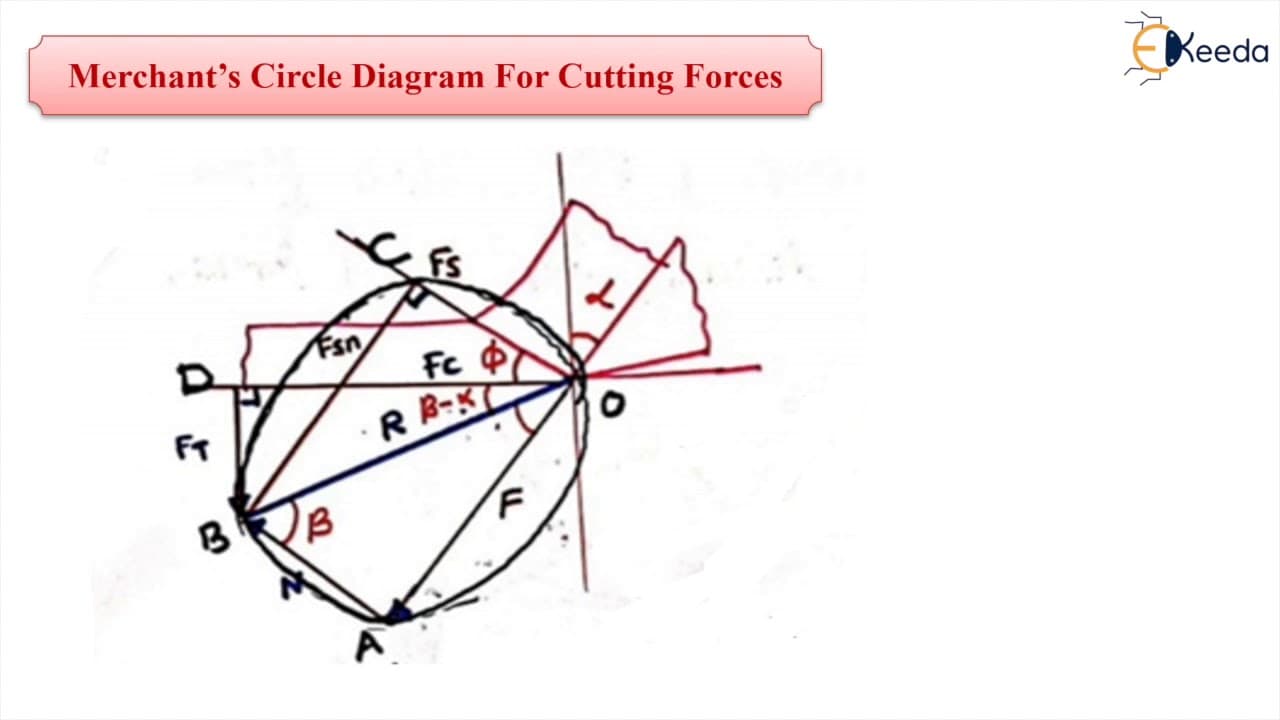
- 💇 The Merchant circle diagram provides a visual representation of cutting forces and relationships between components.
- 💇 Understanding the relationships between forces and angles helps in precise measurement and control of cutting operations.
- 🖐️ Frictional forces and shear forces are vital in metal cutting, and their normal components play significant roles in the chip formation process.
- 💇 The coefficient of friction and rake angle influence the cutting forces in metal cutting operations.
Install to Summarize YouTube Videos and Get Transcripts
Explore YouTube Video Summarizer or Get YouTube Transcript Extractor
Questions & Answers
Q: What are the main cutting forces in metal cutting operations?
The main cutting forces are EFC (cutting force) and EFt (thrust force), with components including axial force Fa and radial force Fr.
Q: How do axial force Fa and radial force Fr relate to the cutting force EFC?
Axial force Fa is parallel to the axis of the workpiece, while radial force Fr is perpendicular to the machine surface, with Fa being 30-60% of EFC and Fr being 20-40%.
Q: Why is converting oblique cutting to orthogonal cutting important?
Converting ensures that cutting forces are accurately measured, allowing for precise analysis and control of metal cutting operations.
Q: How does the Merchant circle diagram help analyze cutting forces?
The diagram visually represents cutting forces like EFC, FT, and FS in metal cutting, showing relationships between forces, angles, and components.
Summary & Key Takeaways
-
Diagrams illustrate metal cutting operation with forces like EFC and EFt.
-
Components like Fc, Fa, and Fr discussed, highlighting axial and radial forces.
-
Conversion of oblique cutting to orthogonal cutting explained.
Read in Other Languages (beta)
Share This Summary 📚
Summarize YouTube Videos and Get Video Transcripts with 1-Click
Try YouTube Summary with ChatGPT & Claude or YouTube Transcript Generator
Explore More Summaries from Ekeeda 📚





Summarize YouTube Videos and Get Video Transcripts with 1-Click
Try YouTube Summary with ChatGPT & Claude or YouTube Transcript Generator