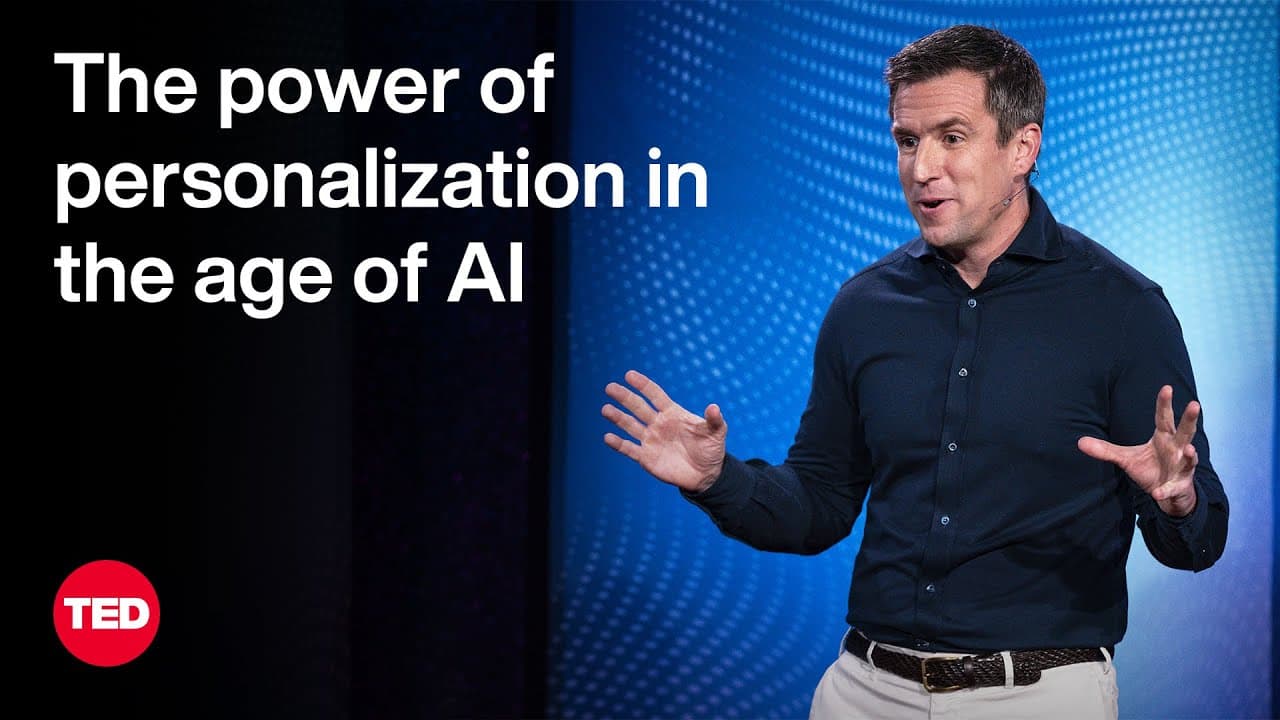
The Power of Personalization in the Age of AI | Mark Abraham | TED
TL;DR
Personalization in customer experience is critical but often poorly executed, leading to frustration.
Transcript
it was a bright sunny day and I was out for a run when the large dog escaped from behind his fence attacked me bit me right in the leg I fell sprain my wrist and to make matters worse I find out he's not up to date on his rabies shots okay off to the local urgent care I go i' been there a bunch of times before so I figured they'd my information on ... Read More
Key Insights
- 🏛️ True personalization enhances customer experiences by building on insights from previous interactions, unlike mere customization.
- 🉐 Companies recognized as leaders in personalization, like Netflix and Starbucks, achieve significant competitive advantages.
- 🖤 There is a striking lack of personalization in certain industries, such as healthcare and finance, with only 10% of firms qualifying as leaders.
- ❓ The “less is more” philosophy emphasizes fewer, more relevant communications to foster customer trust and satisfaction.
- 🥳 Personalization can dramatically increase customer willingness to share data, benefiting both parties in the relationship.
- 🐕🦺 Ongoing frustration with impersonal customer service is driving a demand for brands to re-engage with their audiences meaningfully.
- 🥺 The average consumer experiences digital marketing as spammy and intrusive, leading to high unsubscribe rates and dissatisfaction.
Install to Summarize YouTube Videos and Get Transcripts
Explore YouTube Video Summarizer or Get YouTube Transcript Extractor
Questions & Answers
Q: What is true personalization, and how does it differ from customization?
True personalization focuses on tailoring experiences based on previous interactions, intending to improve subsequent user experiences. In contrast, customization involves tailoring products to individual preferences, such as fabric types. True personalization requires a deeper understanding of customers, integrating insights to enhance user engagement effectively.
Q: How do personalization leaders benefit from their approach?
Personalization leaders experience faster growth, as evidenced by their ability to capture a projected $2 trillion in incremental growth. By providing tailored experiences, brands like Netflix and Starbucks not only boost customer satisfaction but also build competitive advantages, fostering customer loyalty and advocacy.
Q: What were some surprising findings from the personalization index research?
The index revealed that many surprising companies scored highly in personalization, while traditional sectors like healthcare, insurance, and financial services lagged. The research highlighted that only 10% of companies excel at personalization, revealing a significant gap in customer experience delivery across industries.
Q: What does the “less is more” philosophy entail in the context of personalization?
The "less is more" approach advocates for brands to reduce the volume of ads and communications sent to customers. By focusing on what is truly relevant, brands can build trust and enhance satisfaction. For instance, Fidelity employs this strategy, significantly improving engagement by prioritizing meaningful interactions over excessive outreach.
Q: How do consumers feel about their current experiences with brands?
Consumers are increasingly frustrated with impersonal interactions, feeling unheard amid an overwhelming influx of irrelevant marketing. This disconnect fosters anger towards corporations that do not prioritize personalization, pushing consumers to seek more fulfilling and meaningful relationships with brands.
Q: What impact does personalization have on customer data sharing?
Personalization enhances customers' willingness to share their data. When users perceive brands as respectful and genuinely interested in their needs, their consent to share personal information can increase from 30% to 90%. This enables brands to create a more personalized approach while fostering trust.
Q: Why is the current state of email marketing considered ineffective?
Email marketing is struggling due to the overwhelming volume of sent messages, which leads to declining open and conversion rates. Companies often bombard consumers with irrelevant content, resulting in higher unsubscribe rates and dissatisfaction. A focus on personalized content could turn this trend around.
Q: How can consumers influence companies to improve personalization?
Consumers can voice their dissatisfaction through feedback, surveys, and by choosing to disengage from brands that fail to meet their personalization expectations. This collective consumer action signals to companies the importance of personalizing experiences, prompting improvements in service delivery.
Summary & Key Takeaways
-
A troubling story illustrates the lack of effective personalization in customer experiences, showcasing the negative impact on service quality and customer satisfaction.
-
The concept of true personalization is defined and contrasted with customization, emphasizing the need for brands to improve user interactions based on prior data.
-
Companies seen as personalization leaders tend to achieve faster growth and higher customer satisfaction, while the majority struggle to implement effective strategies.
Read in Other Languages (beta)
Share This Summary 📚
Summarize YouTube Videos and Get Video Transcripts with 1-Click
Try YouTube Summary with ChatGPT & Claude or YouTube Transcript Generator
Explore More Summaries from TED 📚






Summarize YouTube Videos and Get Video Transcripts with 1-Click
Try YouTube Summary with ChatGPT & Claude or YouTube Transcript Generator