User-Centered Design for Immersive Communication
TL;DR
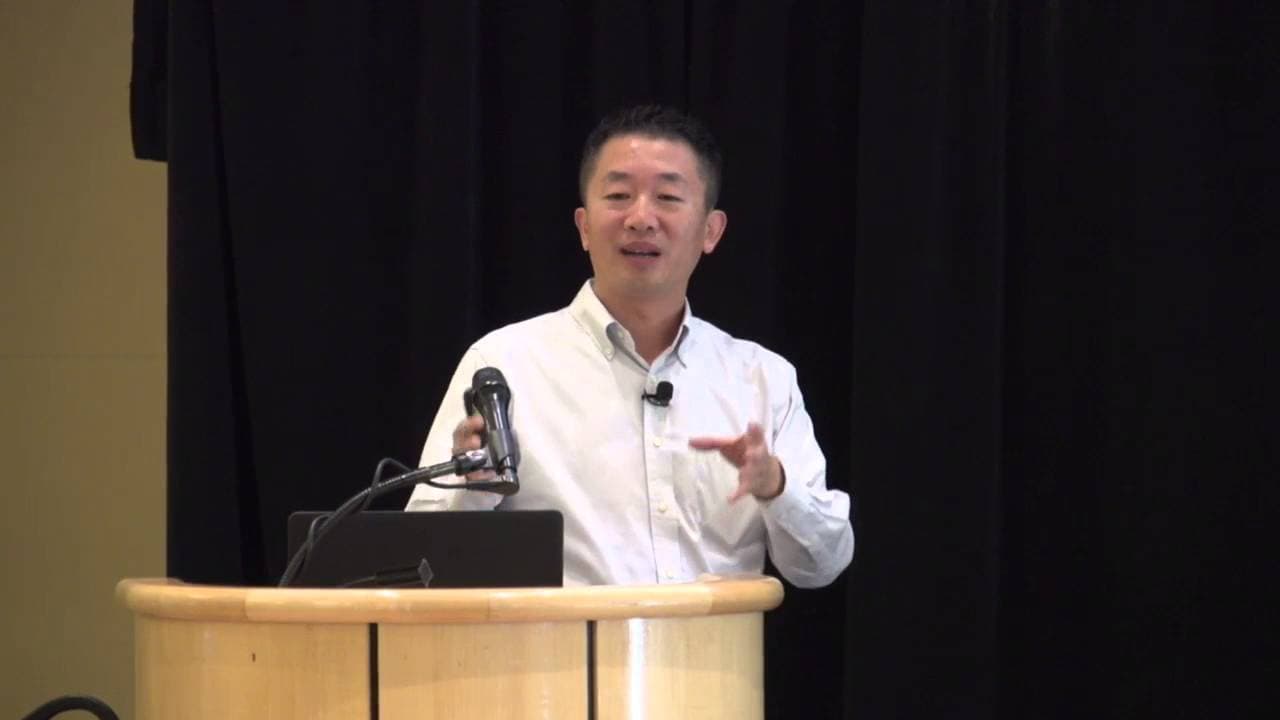
This content discusses a case study on user-centered design for immersive communication, exploring the challenges and opportunities in creating better immersive experiences.
Transcript
and I'm very pleased to introduce next dr. jamming dung from Huawei he's the chief user experience architect and senior design director at huawei and has many years of experience he has covered a wide range of areas in the user experience field including the strategy information architecture interaction design and standards and his contributions ar... Read More
Key Insights
- 🙈 Immersive communication is often associated with immersive technologies, but the design of telepresence systems has seen minimal changes over the years.
- 😀 Designing the next generation of telepresence systems requires considering user habits, technology readiness, and face-to-face limitations.
- 👯 Enhancing telepresence systems should focus on people, integrate personal devices, and provide more collaboration opportunities.
- 👤 Augmented presence offers a more flexible and user-centered approach to telepresence, simplifying logistics and enhancing the meeting experience.
- 👤 Improving the user experience in immersive communication goes beyond technological advancements to address user needs and preferences.
- 🤵 Traditional telepresence systems may not be ideal for internal communication in large meeting rooms due to limitations in visibility and presentation.
- 👨🔬 Research activities such as interviews, observations, and expert reviews can provide valuable insights for designing better immersive experiences.
Install to Summarize YouTube Videos and Get Transcripts
Explore YouTube Video Summarizer or Get YouTube Transcript Extractor
Questions & Answers
Q: Why have telepresence systems, despite being available for many years, seen little design improvements?
The focus has mostly been on improving technological aspects, such as audio quality and screen resolution, rather than addressing user needs and preferences.
Q: How do user habits pose a challenge in designing immersive communication systems?
Users are accustomed to traditional meeting environments and may find it difficult to adapt to wearing headsets or being in a virtual environment.
Q: What are some opportunities identified through research for enhancing telepresence systems?
The opportunities include focusing on people instead of just the environment, integrating personal devices for convenience, and exploring new collaboration methods.
Q: How does augmented presence differ from traditional telepresence systems?
Augmented presence places a greater emphasis on the user experience and simplifies meeting logistics, integrating personal devices, and offering features like real-time speech-to-text tagging and digital whiteboards for collaboration.
Summary & Key Takeaways
-
The content explores the concept of immersive communication and how it is commonly associated with immersive technologies such as headsets and displays.
-
The current telepresence systems, despite being available for over 10 years, have seen minimal changes in terms of user experience and design.
-
The speaker introduces a challenge to design the next generation of telepresence systems, considering factors like user habits, technology readiness, and face-to-face limitations.
Read in Other Languages (beta)
Share This Summary 📚
Summarize YouTube Videos and Get Video Transcripts with 1-Click
Try YouTube Summary with ChatGPT & Claude or YouTube Transcript Generator
Explore More Summaries from Stanford 📚



Summarize YouTube Videos and Get Video Transcripts with 1-Click
Try YouTube Summary with ChatGPT & Claude or YouTube Transcript Generator