How Do Parasitic Wasps Control Caterpillars?
TL;DR
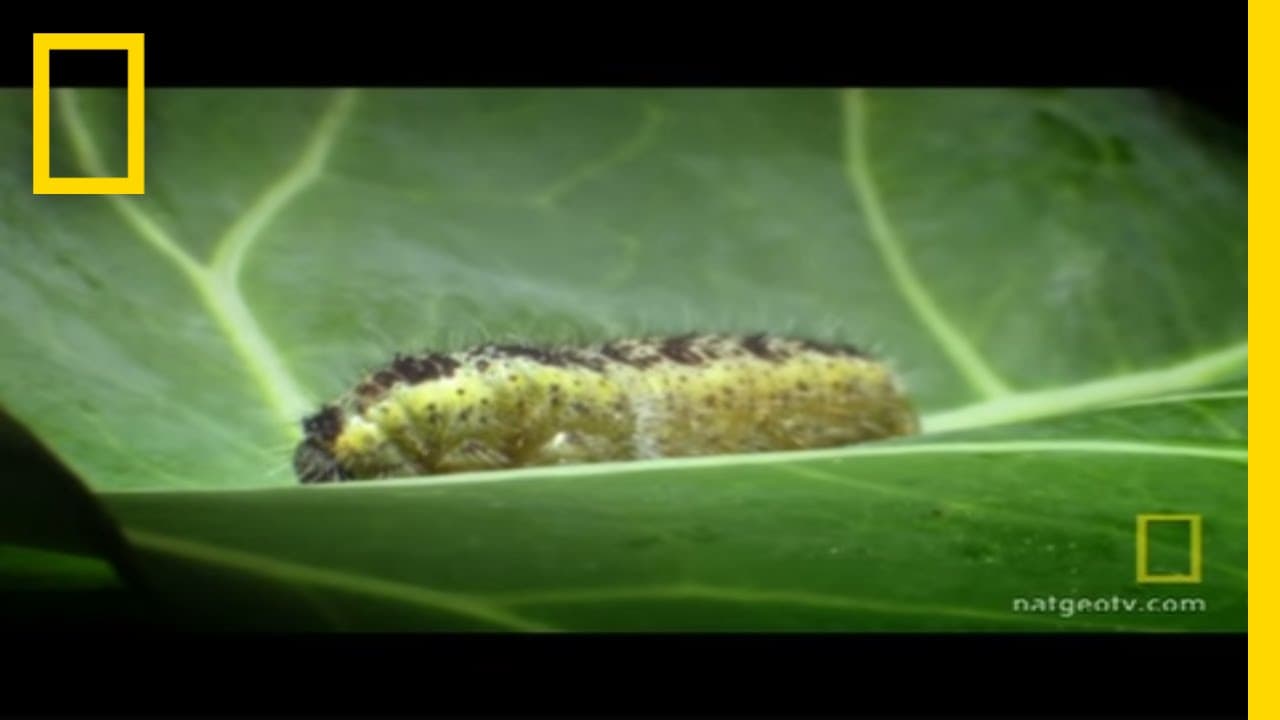
Parasitic wasp larvae manipulate caterpillars into nurturing them by feeding off their blood while avoiding vital organs. Once matured, the larvae cut through the caterpillar's skin and spin cocoons, with the caterpillar protecting them due to a virus-induced change in behavior, ultimately leading to its starvation.
Transcript
our parasitized caterpillar has spent the last 12 days gorging itself it now appears profoundly obese but this is not all fat the glomerata wasp larvae lie just under its skin each is the size of a grain of rice but together they account for over a third of the caterpillar's weight the larvae have not yet finished growing and need to keep their hos... Read More
Key Insights
- 💗 Parasitic wasp larvae grow inside a caterpillar, accounting for over a third of its weight.
- 😒 The mature larvae use saw-like teeth to cut through the caterpillar's skin and paralyze it.
- 🎲 The caterpillar, under the influence of a virus, protects the wasp cocoons from other parasites, until it dies of starvation.
Install to Summarize YouTube Videos and Get Transcripts
Explore YouTube Video Summarizer or Get YouTube Transcript Extractor
Questions & Answers
Q: How do the wasp larvae avoid damaging the caterpillar's vital organs?
The wasp larvae carefully feed on the caterpillar's blood without touching its vital organs, ensuring their host's survival until they are fully matured.
Q: How do the matured larvae break through the caterpillar's skin?
The larvae have developed tiny saw-like teeth, which they use to slice through the tough layers of the caterpillar's skin, paralyzing it at the same time.
Q: Why does the caterpillar spin a cocoon on top of the wasp cocoons?
The caterpillar, under the influence of a virus, instinctively helps protect the wasp cocoons by spinning its own cocoon on top of them, providing an extra layer of defense against other parasites.
Q: How does the caterpillar's behavior change under the influence of the virus?
The virus causes a bizarre corruption of the caterpillar's normal behavior, making it act as a bodyguard for the wasp cocoons, unceasingly protecting them until it eventually starves to death.
Summary & Key Takeaways
-
The parasitized caterpillar becomes obese due to the growing wasp larvae underneath its skin.
-
The matured larvae cut their way out of the caterpillar's skin to enter the next phase of their life cycle.
-
After breaking free, the larvae spin cocoons, and the caterpillar, under the influence of a virus, protects the cocoons until it starves to death.
Read in Other Languages (beta)
Share This Summary 📚
Summarize YouTube Videos and Get Video Transcripts with 1-Click
Try YouTube Summary with ChatGPT & Claude or YouTube Transcript Generator
Explore More Summaries from National Geographic 📚


Summarize YouTube Videos and Get Video Transcripts with 1-Click
Try YouTube Summary with ChatGPT & Claude or YouTube Transcript Generator