Endangered Horse Birth | National Geographic
TL;DR
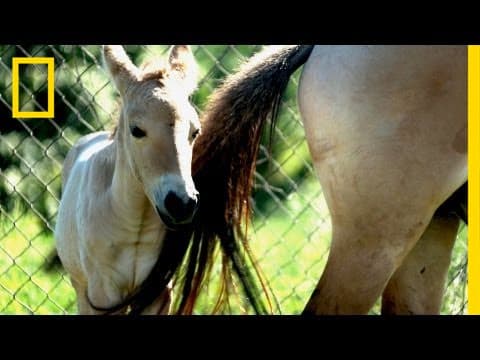
Researchers successfully produce a valuable and highly endangered Przewalski's horse foal through artificial insemination, benefiting genetic management and conservation efforts.
Transcript
she's very uh precocious she walks right up to people she looks for Mom for security to make sure it's okay but she's very outgoing the Philly we have is the most valuable that you can find on Earth right now this is the first ever that has been successfully produced by artificial insemination persi or chz walski either pronunciation is considered ... Read More
Key Insights
- 🏇 Przewalski's horses are extremely valuable and endangered, making the successful artificial insemination a significant milestone for their conservation.
- 🫒 Artificial insemination provides flexibility in genetic management and prevents the risks and expenses associated with moving live animals.
- 🖤 Trust-building and patience are crucial when working with Przewalski's horses due to their wild nature and lack of domestication.
- ❓ Captive-bred foals may not be suitable for release into the wild due to their inability to defend themselves from predators.
Install to Summarize YouTube Videos and Get Transcripts
Explore YouTube Video Summarizer or Get YouTube Transcript Extractor
Questions & Answers
Q: Why did it take 7 years to achieve successful artificial insemination, when it is done daily with domestic horses?
The procedure itself is the same, but handling and response of Przewalski's horses is uncertain. It took time to learn how to handle them in a way that they willingly participate, without being able to lead or touch them like domestic horses.
Q: Will the foal be released into the wild?
No, she will stay in captivity for at least two years. Since she was captive-bred, she lacks the ability to defend herself from predators in the wild. It is uncertain if she will be transferred to another zoo.
Q: How does artificial insemination benefit genetic management of endangered species?
It allows researchers to collect samples from males in other institutions and transport them to females, minimizing the need to move live animals. This reduces risks, costs, and provides more flexibility in conservation efforts.
Q: What are the challenges of working with Przewalski's horses?
Building trust with these horses takes a long time. They can't be led or controlled like domestic horses and have to willingly participate. It requires patient handling and a routine approach to establish trust.
Summary & Key Takeaways
-
This is the first successful artificial insemination of a Przewalski's horse, which is the most valuable horse breed on Earth.
-
Przewalski's horses are native to Mongolia and China, went extinct in the wild in the 1900s, but were saved through captive breeding programs in zoos.
-
Artificial insemination allows for easier genetic management without the need to move live animals, reducing risks and expenses.
Read in Other Languages (beta)
Share This Summary 📚
Summarize YouTube Videos and Get Video Transcripts with 1-Click
Try YouTube Summary with ChatGPT & Claude or YouTube Transcript Generator
Explore More Summaries from National Geographic 📚

Summarize YouTube Videos and Get Video Transcripts with 1-Click
Try YouTube Summary with ChatGPT & Claude or YouTube Transcript Generator