Linkage institutions and political parties | US government and civics | Khan Academy
TL;DR
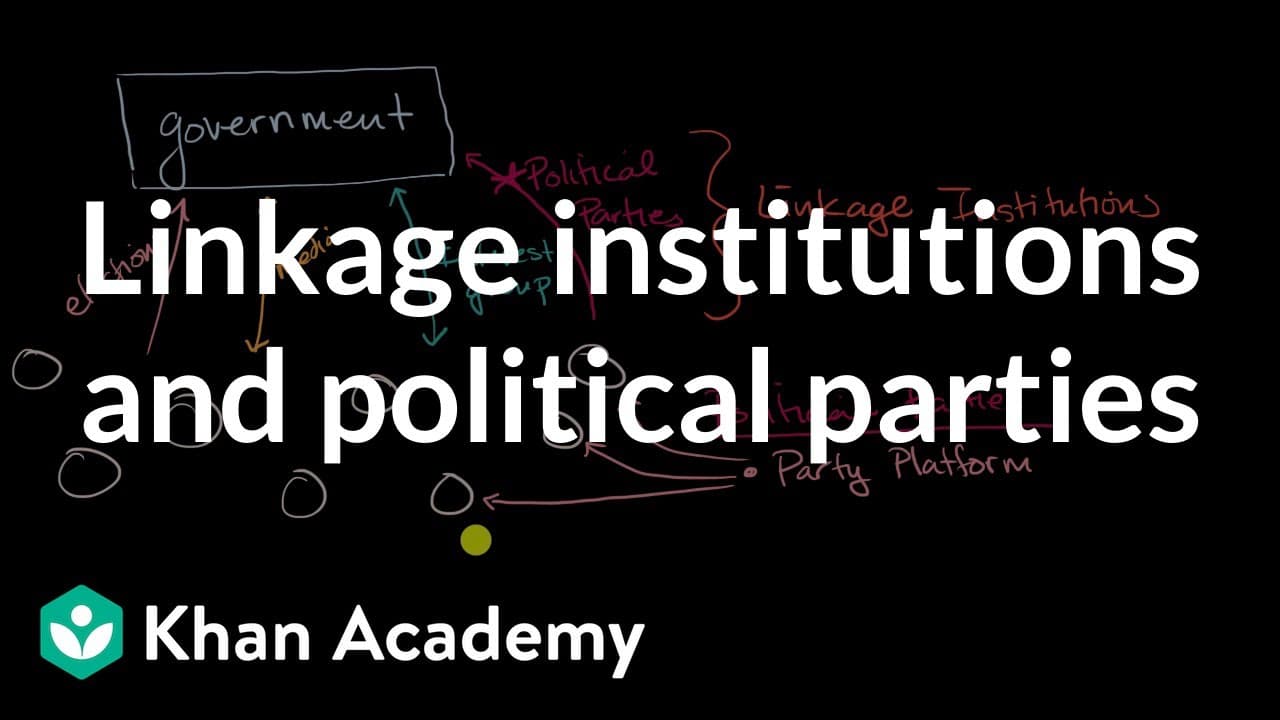
Linkage institutions such as elections, the media, interest groups, and political parties allow citizens to communicate their preferences to the government.
Transcript
- [Instructor] In many videos, we have talked about the makeup of government, either the federal or the state level. We've talked about branches of government. We've talked about checks and balances. What we're gonna talk about in this video is how people interface with the government, and in particular, what are the channels that allow them to com... Read More
Key Insights
- 🥳 Linkage institutions, including elections, the media, interest groups, and political parties, provide avenues for citizens to communicate their preferences to the government.
- 🥰 The media has a two-way role, both as a communication channel for the government and a platform for citizens' views to be heard and amplified.
- 👥 Interest groups lobby the government, participate in the media, and try to influence elections to promote their members' interests.
- 🥳 Political parties have party platforms that guide their actions and influence both party members and elected officials.
- 🥳 Political parties mobilize and educate voters, recruit candidates, manage campaigns, and strive to ensure elected officials align with the party platform.
- 🥳 The leadership structure within political parties aims to align elected officials with the party's agenda, promoting a unified front and increased influence.
- 🥳 Political parties can contribute to gridlock when opposing parties cannot find common ground, leading to decreased government efficiency.
Install to Summarize YouTube Videos and Get Transcripts
Explore YouTube Video Summarizer or Get YouTube Transcript Extractor
Questions & Answers
Q: How do citizens communicate their preferences to the government?
Citizens communicate their preferences to the government through various channels, including elections, the media, interest groups, and political parties. These channels provide opportunities for citizens to express their views, influence policy-making, and participate in democratic processes.
Q: How does the media influence elections?
The media serves as a platform for communication between the government and citizens. It plays a critical role in influencing elections by amplifying views, informing voters, and shaping public opinion. Media coverage of candidates, campaigns, and issues can significantly impact voter perceptions and electoral outcomes.
Q: What is the role of interest groups in the political process?
Interest groups, such as AARP, the NAACP, or the NRA, lobby the government, participate in the media, and try to influence elections. They represent the collective interests of their members and seek to shape public policy and ensure their members' concerns are considered by policymakers.
Q: How do political parties influence the government and elections?
Political parties, like the Democrats and Republicans in the United States, play a crucial role in the political process. They articulate party platforms, mobilize and educate voters, recruit candidates, manage campaigns, and align elected officials with the party's agenda. By doing so, political parties influence government actions and electoral outcomes.
Summary & Key Takeaways
-
Citizens interface with the government through various channels such as elections, the media, interest groups, and political parties.
-
Elections provide a direct way for citizens to communicate their preferences and influence government actions.
-
The media serves as a platform for communication between the government and citizens, with the potential to influence elections.
-
Interest groups lobby the government and participate in the media to influence policy-making and elections.
-
Political parties play a crucial role as linkage institutions by articulating party platforms, mobilizing and educating voters, recruiting candidates, managing campaigns, and aligning elected officials with the party's agenda.
Read in Other Languages (beta)
Share This Summary 📚
Summarize YouTube Videos and Get Video Transcripts with 1-Click
Try YouTube Summary with ChatGPT & Claude or YouTube Transcript Generator
Explore More Summaries from Khan Academy 📚



Summarize YouTube Videos and Get Video Transcripts with 1-Click
Try YouTube Summary with ChatGPT & Claude or YouTube Transcript Generator