Wow, A Simulation That Matches Reality! 🤯
TL;DR
A new paper introduces fast, accurate aerodynamic simulations for thin shells and aircraft, improving design iterations significantly.
Transcript
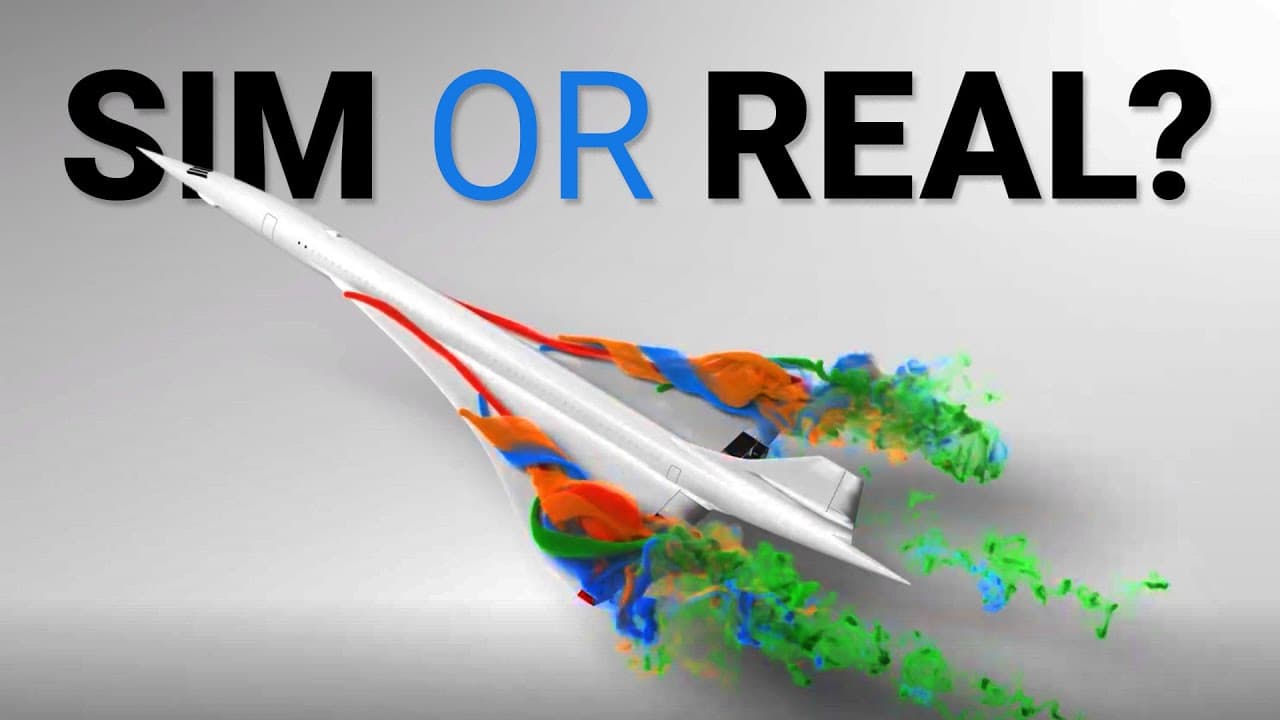
Dear Fellow Scholars, this is Two Minute Papers with Dr. Károly Zsolnai-Fehér. Today, we are going to look at an incredible new paper, where we are going to simulate flows around thin shells, rods, the wind blowing at leaves, airflow through a city, and get this, we will produce spiral vortices around an aircraft, and even perform some wind... Read More
Key Insights
- 🤔 The paper introduces a fast and accurate aerodynamic simulation method for thin shells, rods, leaves, cities, and aircraft.
- 😵💫 It showcases the ability to accurately predict spiral vortices and boundary layer separations in real-time simulations.
- ⌛ The massively parallel algorithm enables significant time savings in aerodynamic simulations, completing tasks in just 60 minutes.
- 🎨 Engineers can efficiently iterate on design ideas, improving knowledge and leading to better vehicle and wind turbine designs.
- 👶 The new method outperforms previous simulations in accuracy and computation time, showcasing significant advancements in aerodynamic design processes.
- 🏮 The paper highlights the importance of balancing accuracy and efficiency in aerodynamic simulations for practical engineering applications.
- 🎨 Rapid design iteration enabled by the new simulation method accelerates decision-making processes and enhances overall design quality.
Install to Summarize YouTube Videos and Get Transcripts
Explore YouTube Video Summarizer or Get YouTube Transcript Extractor
Questions & Answers
Q: What is the main focus of the new paper on rapid aerodynamic simulations?
The paper emphasizes simulating flows around thin shells, rods, leaves, cities, and aircraft with high accuracy and speed, revolutionizing aerodynamic design processes.
Q: How does the new simulation method compare to previous ones in terms of accuracy and efficiency?
The new simulation method outperforms its predecessors by providing more accurate results, particularly in predicting boundary layer separations and turbulent flows, while significantly reducing computation time to just 60 minutes.
Q: What makes the new aerodynamic simulation method so fast and efficient?
The new method is massively parallel, dividing computing tasks efficiently to utilize graphics cards fully, enabling rapid simulation completion in just 60 minutes, hence speeding up design iterations and decision-making processes.
Q: How can engineers benefit from the rapid aerodynamic simulation advancements described in the paper?
Engineers can iterate on early design ideas quickly, test multiple concepts within hours, and only commit to longer simulations when necessary, leading to enhanced knowledge, better vehicle designs, and improved wind turbines.
Summary & Key Takeaways
-
The paper focuses on simulating flows around thin shells, rods, leaves, cities, and aircraft, showcasing spiral vortices and wind tunnel simulations.
-
The simulation method accurately predicts aerodynamic effects like boundary layer separations and turbulent flows for engineering applications.
-
The proposed massively parallel algorithm delivers real-time results in just 60 minutes, enhancing design iteration speed and efficiency.
Read in Other Languages (beta)
Share This Summary 📚
Summarize YouTube Videos and Get Video Transcripts with 1-Click
Try YouTube Summary with ChatGPT & Claude or YouTube Transcript Generator
Explore More Summaries from Two Minute Papers 📚




Summarize YouTube Videos and Get Video Transcripts with 1-Click
Try YouTube Summary with ChatGPT & Claude or YouTube Transcript Generator